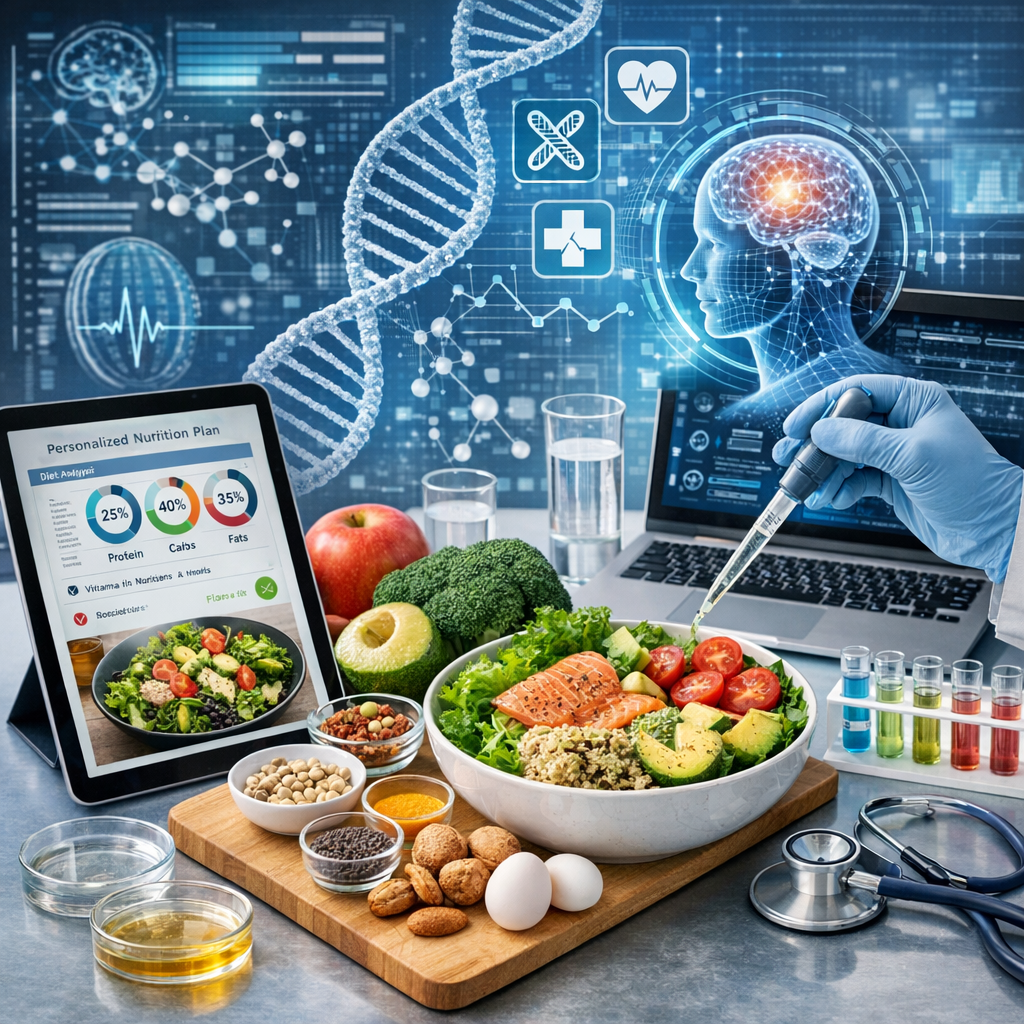
Unveiling the Future of Food: Evidence-Based Protocols Merging AI and Clinical Nutrition for Precision Health
Introduction
As we navigate the complex world of health and wellness, there’s a paradigm shift propelling us into a new era where food is not just sustenance but medicine tailored to individual needs. The fusion of artificial intelligence (AI) with clinical nutrition is at the forefront of this transformation, offering evidence-based protocols for precision health. This cutting-edge approach leverages vast data sets and innovative algorithms to individualize nutritional recommendations, aiming to optimize health outcomes and prevent disease.
The modern consumer is becoming increasingly aware of the pivotal role nutrition plays in health. Traditional one-size-fits-all dietary guidelines often fall short in addressing unique genetic, biochemical, and lifestyle factors that influence an individual’s health. Enter AI and clinical nutrition—a synergy that’s revolutionizing how we approach dietary interventions.
In this context, AI serves as a powerful tool, encompassing machine learning and deep learning techniques that analyze and interpret complex data. These technologies consider a multitude of factors, including genetic predispositions, microbiome composition, and metabolic rate, to customize dietary plans that align with personal health goals and medical conditions. Clinical nutritionists, equipped with these insights, can offer more targeted and effective dietary recommendations.
The implications are profound. Imagine a world where AI assists in decoding your unique biological profile, pinpointing nutrient deficiencies, and highlighting food interactions that matter most to you. This transformation not only promises enhanced health outcomes but also empowers individuals to make informed decisions, fostering a greater sense of agency over their health journey.
With a growing body of research supporting the role of precision nutrition, this innovative approach promises to reduce the prevalence of chronic diseases such as diabetes, obesity, and cardiovascular ailments. As we stand on the brink of this exciting frontier, exploring the synergy between AI and clinical nutrition unveils a future where personalized nutrition becomes the norm—a future where everyone has the potential to thrive.
Features
Recent advancements in AI-driven nutrition research highlight a significant shift towards personalized health. Several professional and medical studies exemplify the impact and potential of merging AI with clinical nutrition.
One such study conducted by the National Institutes of Health (NIH) explored AI models to predict blood glucose responses to different foods. The study utilized data from continuous glucose monitors and dietary logs from participants to create personalized algorithms that outperform traditional carbohydrate-counting methods. This paves the way for better management of blood sugar levels in individuals with diabetes, showcasing the precision and reliability of AI-enhanced dietary interventions. (Read more: [NIH Precision Nutrition Study](https://www.nih.gov/news-events/nih-research-matters/how-ai-may-help-precision-nutrition))
Another study published in the journal Nutrients investigated the role of AI in analyzing gut microbiome data to improve dietary recommendations. The research highlighted how machine learning models can predict individual responses to specific diets by considering microbiome composition, ultimately aiding in the development of personalized therapeutic diets for patients with gastrointestinal disorders. (Read more: [Nutrients – AI and Microbiome Research](https://www.mdpi.com/journal/nutrients))
Moreover, a notable project under the European Union’s Olus Project aimed to integrate AI with nutritional genomics to combat obesity and related diseases. By analyzing genetic markers, lifestyle factors, and dietary habits, the project developed personalized weight management programs that demonstrated significant improvements in participants’ metabolic health. (Read more: [EU Olus Project](https://ec.europa.eu/info/research-and-innovation/projects_en))
In academia, researchers at Stanford University have employed AI to understand the intricate relationship between diet, genetics, and overall health. Their insights have led to protocols that help clinicians develop individualized nutrition plans, reducing the risk of chronic illnesses. This study underlines the transformative potential of integrating AI into clinical settings, optimizing treatments tailored to individual biological profiles. (Read more: [Stanford University Study](https://www.stanford.edu/news/2021/09/15/ai-tools-advance-precision-nutrition/))
These studies indicate a promising future where AI-driven nutritional protocols become a cornerstone of preventive healthcare, optimizing diets to fit our unique biological signatures. The convergence of these technologies points towards a healthier future, addressing chronic health issues at their root by empowering individuals with strategies informed by their own genetic and biochemical data.
Conclusion
As we delve deeper into the era of precision health, the fusion of AI and clinical nutrition emerges as a groundbreaking strategy to enhance dietary interventions. By tailoring nutrition to individual genetic dispositions and lifestyle factors, AI not only refines the accuracy of dietary recommendations but also empowers unique pathways to health and well-being.
The evidence is clear: personalized nutrition can safeguard against chronic diseases and improve overall health outcomes. From predicting blood glucose levels more accurately to designing diets based on the gut microbiome, AI’s capabilities are revolutionary. As these technologies advance, they promise to redefine health and wellness strategies, making them more adaptable and personal.
The journey toward fully realizing this potential may be ongoing. Still, the integration of AI into nutritional science represents a pivotal evolution in healthcare—one that prioritizes individual data for authentic health personalization. By embracing this future, we take a significant step toward a world where nutrition is as unique as the individuals it aims to nourish.
Concise Summary
Incorporating AI into clinical nutrition signifies a significant evolution in healthcare, paving the way for personalized nutrition. AI analyzes genetic, biochemical, and lifestyle factors to create customized dietary plans, enhancing health outcomes and reducing chronic diseases. Studies from NIH, Nutrients journal, and Stanford University underscore AI’s capacity to revolutionize dietary interventions, offering personalized recommendations for ailments like diabetes and obesity. As AI-driven protocols become a cornerstone in preventive health care, the future promises individually tailored nutritional strategies, transforming food into a precise, health-optimizing tool.

Dominic E. is a passionate filmmaker navigating the exciting intersection of art and science. By day, he delves into the complexities of the human body as a full-time medical writer, meticulously translating intricate medical concepts into accessible and engaging narratives. By night, he explores the boundless realm of cinematic storytelling, crafting narratives that evoke emotion and challenge perspectives.
Film Student and Full-time Medical Writer for ContentVendor.com