From Nutrigenomics to Nutri-experience: How Virtual Reality Is Transforming Personalized Nutrition Education
Introduction
In recent years, the intersection of technology and nutrition science has ushered in a revolutionary era of personalized nutrition, where dietary recommendations are tailored to our unique genetic makeup, eating habits, and lifestyle preferences. At the heart of this wave is nutrigenomics, a field that examines how our genes interact with nutrients. While nutrigenomics underpins personalized diets, technology is enhancing the ways these insights are communicated and experienced globally.
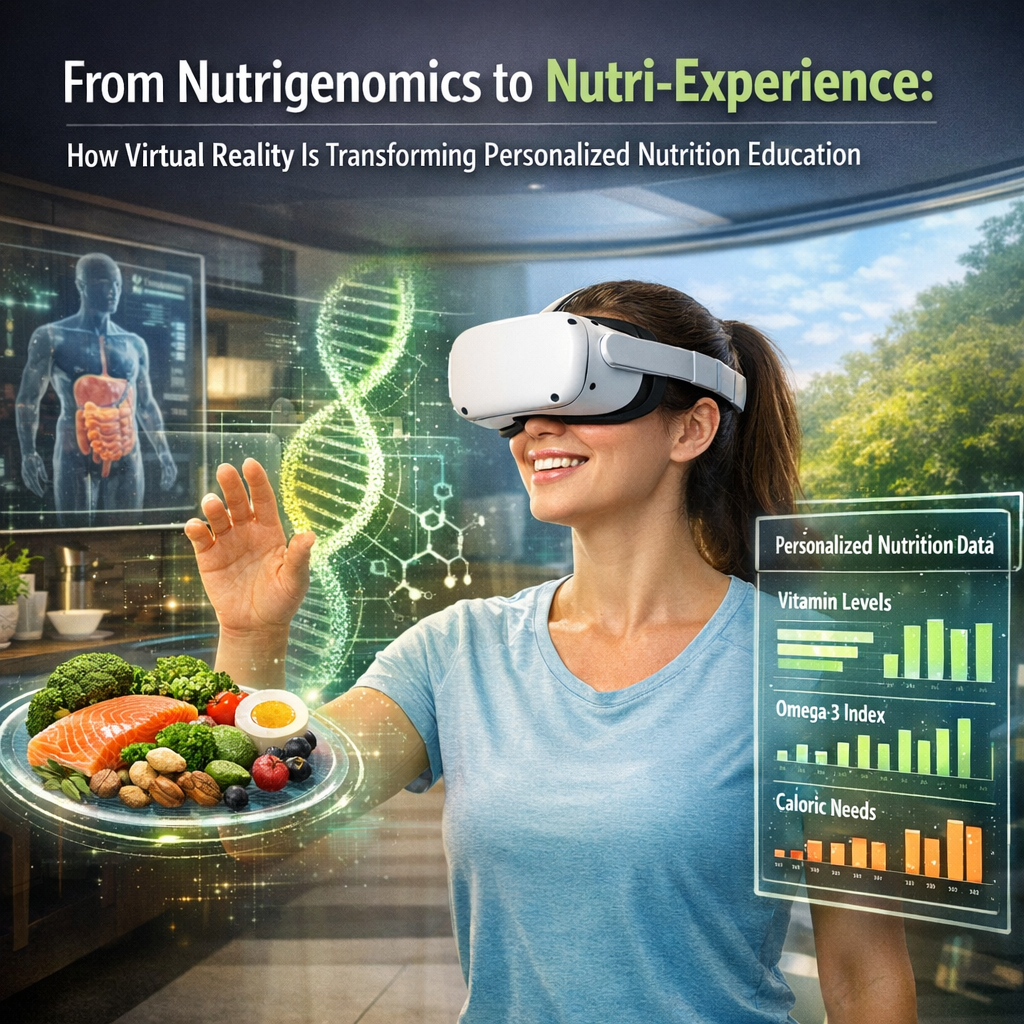
Enter Virtual Reality (VR), a cutting-edge tool redefining how we engage with nutrition education. No longer are nutritional guidelines confined to text-heavy reports or generic advice. VR can take users on immersive journeys through their biological interiors, highlighting how different nutrients affect their bodies. Imagine virtually walking through your digestive system or seeing the impact of a vitamin C-rich fruit on your immune cells in real-time; these experiences make complex biochemical interactions tangible and engaging.
Furthermore, VR can simulate real-life scenarios, helping users understand the implications of their nutritional choices in a controlled, risk-free environment. For instance, it can showcase how consuming a sugar-laden meal might lead to long-term metabolic issues or demonstrate the benefits of incorporating more fiber into one’s diet. Such experiential learning is not only educational but can also empower individuals to make healthier lifestyle choices.
The implications span far beyond those merely looking for traditional dieting tips. Educational institutions can utilize VR to teach students about biology and nutrition in dynamic new ways. Healthcare providers might use VR as a tool for patient education, ensuring comprehension that transcends standard consultations. Even food companies could employ VR experiences to illustrate the benefits of their health-oriented products directly to consumers.
The fusion of nutrigenomics and VR is more than a fleeting trend; it’s a significant turning point in how we perceive, interact with, and internalize nutrition education. As VR technology becomes more accessible and sophisticated, we stand on the brink of a new era of nutri-experience, where knowledge becomes an immersive reality. This potent combination holds the promise to dramatically improve public health by advancing personalized nutrition education in a visually compelling and easily digestible format.
Features
Scientific studies increasingly reflect the transformative potential of combining nutrigenomics with VR technology in education. A study in the *Journal of Medical Internet Research* highlighted how personalized feedback based on genetic analysis can significantly enhance dietary changes among participants when delivered through engaging, interactive media like VR. By understanding their genetic predispositions, participants were more motivated to adhere to dietary recommendations because they personally related to the information.
In parallel, research conducted at the University of Reading emphasizes the effectiveness of immersive technologies in education. Their study found that VR facilitates higher retention rates of information compared to traditional learning methods. With the addition of nutrigenomic data, VR can vividly illustrate the invisible biological processes triggered by certain foods, visually reinforcing how and why specific dietary changes are beneficial. Such interactive learning experiences enhance understanding and retention far more than traditional text-based education.
Moreover, a 2022 study published in *Nutrients* reported that VR applications have been successfully used to simulate real-world dietary scenarios. This allows users to visualize the long-term effects of their nutritional choices without any actual risk. The controlled setting of VR experiences permits experimentation with dietary plans tailored to one’s genetic information, providing a practical and persuasive learning tool.
Healthcare practitioners and dietitians are also beginning to see the value of VR in consultations and patient education. A recent survey of healthcare providers revealed that most believed VR could enhance patients’ understanding of complex nutritional information, thus promoting better compliance with dietary recommendations.
These studies collectively demonstrate VR’s potential to revolutionize personalized nutrition education. By making the abstract and complex become visible and comprehensible, VR not only aids in knowledge dissemination but also encourages behavioral change, thus promoting healthier lifestyles and potentially reducing diet-related health issues on a larger scale.
Conclusion
The integration of virtual reality with nutrigenomics heralds a new dawn in personalized nutrition education. By transforming abstract genetic data into tangible and immersive educational experiences, VR empowers individuals to understand and act upon nutrition advice rooted in the personal information of their own bodies. Beyond the immediate benefits for individual consumers, this combination plays a significant role in educational sectors, healthcare, and even consumer industries, creating a ripple effect that could well redefine public health paradigms. As these technologies continue to evolve, their potential social, educational, and medical impacts will become increasingly important in shaping a healthier future. The interplay between understanding our genetic predispositions and experiencing their impacts first-hand through VR ensures that as we step into our future, we are not just informed but are active participants in improving our health and well-being.
Concise Summary
The integration of virtual reality (VR) with nutrigenomics is transforming personalized nutrition education by providing immersive, engaging experiences that make complex genetic data tangible. VR allows users to explore their biological processes, enhancing understanding and retention of nutritional information. Educational institutions, healthcare providers, and food companies can harness VR to teach, guide, and market effectively. As VR technology becomes more accessible, its potential to promote healthier lifestyles and reduce diet-related health issues grows, redefining public health paradigms. This fusion marks a pivotal evolution in how nutrition is perceived and applied in daily life.

Dominic E. is a passionate filmmaker navigating the exciting intersection of art and science. By day, he delves into the complexities of the human body as a full-time medical writer, meticulously translating intricate medical concepts into accessible and engaging narratives. By night, he explores the boundless realm of cinematic storytelling, crafting narratives that evoke emotion and challenge perspectives.
Film Student and Full-time Medical Writer for ContentVendor.com