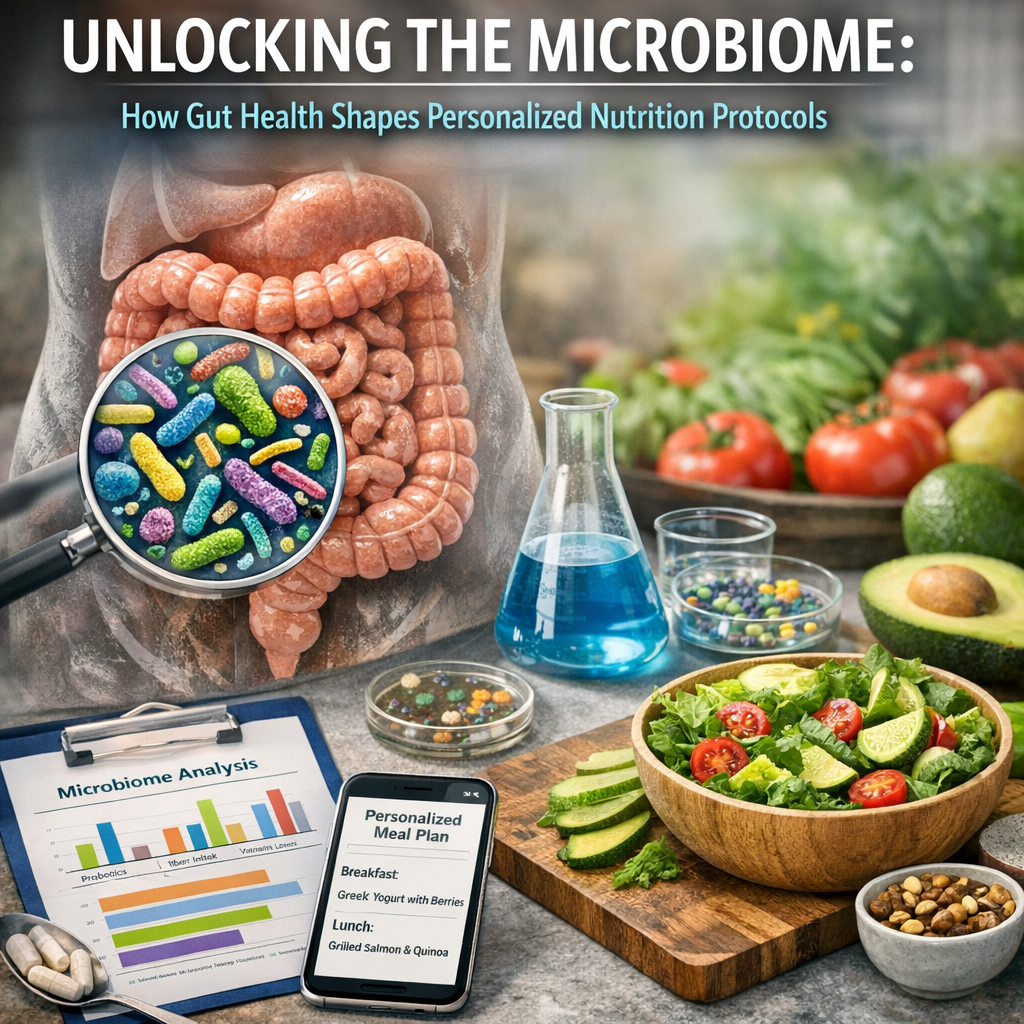
Unlocking the Microbiome: How Gut Health Shapes Personalized Nutrition Protocols
Introduction
In recent years, there has been a burgeoning interest in understanding the complex world of gut health and its far-reaching influence on overall wellness. The term “microbiome” refers to the trillions of microorganisms residing in our gastrointestinal tract, and these little inhabitants play a crucial role in our health, affecting everything from our immune system to brain function. As more research highlights the importance of the gut microbiome, it becomes evident that personalized nutrition protocols tailored to individual microbiome compositions could revolutionize the way we approach health and nutrition.
The gut microbiome functions as a dynamic ecosystem, with bacteria, fungi, viruses, and other microorganisms working symbiotically with their human host. These microorganisms aid in digestion, produce essential vitamins, and protect against harmful pathogens. One of the most profound revelations in recent gut health research is the microbiome’s influence on metabolic processes and its correlation with diseases such as obesity, diabetes, and inflammatory bowel disease (IBD).
The personalized nutrition revolution is rooted in the understanding that each person’s microbiome is as unique as their fingerprint. Several factors influence the composition of the microbiome, including genetics, diet, environment, and lifestyle. As such, a one-size-fits-all approach to nutrition may not be effective. Personalized nutrition introduces the concept of customizing dietary interventions based on the microbiome’s unique structure, aiming to optimize individual health outcomes.
This approach is empowered by technological advancements and innovative research methods that allow for precise mapping and analysis of the gut flora. As scientists continue to unlock the secrets of the microbiome, they are paving the way for health interventions that are finely tuned to personal biological landscapes. By leveraging information gleaned from gut health studies, nutritionists and health practitioners can craft dietary protocols that promote optimal gut flora, enhancing overall well-being.
Features
A growing body of scientific research underscores the significance of the microbiome in shaping personalized nutrition protocols. In a pivotal study published in the journal *Cell*, researchers examined the glycemic responses of individuals to various foods. The study revealed high variability in blood sugar responses among individuals consuming the same meals, suggesting that personalized dietary plans could better manage glucose levels, potentially offering a solution for mitigating metabolic disorders such as diabetes. [Cell Study on Glycemic Responses](https://www.cell.com/cell/fulltext/S0092-8674(15)01481-6).
Additionally, a study published in *Nature Medicine* highlights the impact of the gut microbiome on body mass and metabolic health. Researchers found that specific gut bacteria were associated with obesity and metabolic disease, suggesting modulation of the microbiome through dietary changes could be a compelling avenue for personalizing weight management strategies. [Nature Medicine Study](https://www.nature.com/articles/s41591-020-1000-2).
Another comprehensive study published in *The Lancet* suggests that probiotics and prebiotics can positively influence gut flora. These substances foster the growth of beneficial bacteria, which could aid in managing inflammatory conditions like IBD and irritable bowel syndrome (IBS), providing a clinically significant impact on gut health-based personalized dietary interventions. [The Lancet on Probiotics](https://www.thelancet.com/journals/lancet/article/PIIS0140-6736(19)30450-8/fulltext).
The ongoing Global Gut Project is another initiative aimed at building extensive microbiome databases. By gathering and analyzing microbiome data from diverse populations, researchers are gaining critical insights into how different dietary habits, environments, and genetics shape individual microbiomes. The project’s findings are anticipated to support the development of tailored nutrition protocols to promote optimal gut health globally. [Global Gut Project](http://globalgutproject.org).
As these studies illustrate, personalized nutrition protocols informed by microbiome analysis promise to transform dietary recommendations, addressing the unique health concerns and goals of each individual with unprecedented precision.
Conclusion
In conclusion, the gut microbiome stands at the forefront of nutritional science, poised to redefine our understanding of health and wellness. Embracing the uniqueness of each person’s microbiome allows for the creation of personalized nutrition protocols that cater to individual health dynamics. As research progresses, the compelling interplay between gut health and personalized nutrition offers the potential to revolutionize dietary strategies, leading to improved health outcomes tailored to personal needs. Harnessing this knowledge means embracing a world where health interventions are no longer generic but finely attuned to our intricate biological landscapes, with the promise of a healthier and more vibrant life.
By integrating the insights garnered from microbiome research, individuals can proactively shape their health journeys, making informed lifestyle choices that resonate with their microbiological identity. The path forward involves a commitment to continuous learning and adaptation as we navigate the vast and intricate landscape of the human microbiome.
Concise Summary
The intricate relationship between the gut microbiome and health is revolutionizing how we approach personalized nutrition. Each person’s unique microbiome—composed of various microbes such as bacteria and fungi—affects digestion, immunity, and overall wellness. As studies reveal the microbiome’s significant influence on diseases like obesity and diabetes, tailored dietary interventions are gaining prominence. Research illustrates that individual responses to foods vary greatly, emphasizing the need for customized dietary plans. By leveraging microbiome insights, nutritionists can optimize individual health, promising a transformative shift towards more precise and effective health interventions.

Dominic E. is a passionate filmmaker navigating the exciting intersection of art and science. By day, he delves into the complexities of the human body as a full-time medical writer, meticulously translating intricate medical concepts into accessible and engaging narratives. By night, he explores the boundless realm of cinematic storytelling, crafting narratives that evoke emotion and challenge perspectives.
Film Student and Full-time Medical Writer for ContentVendor.com