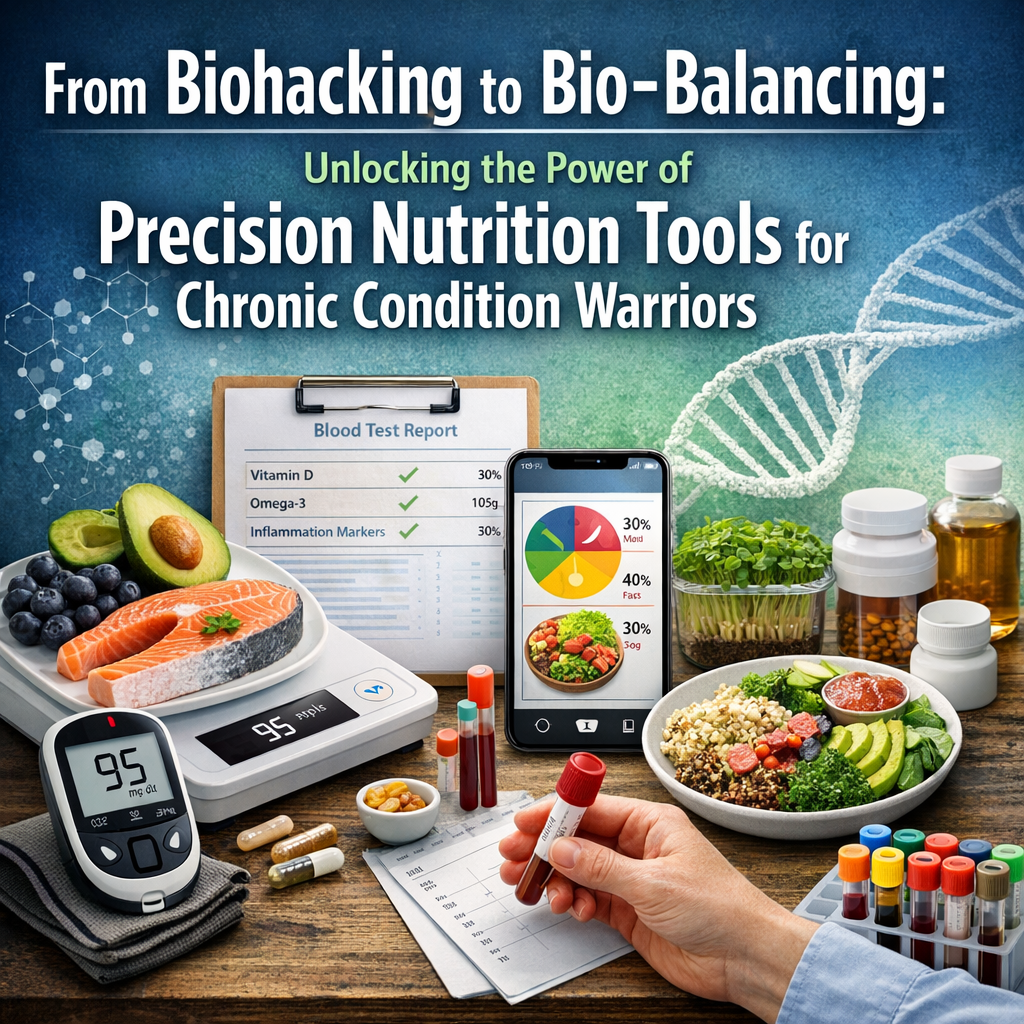
From Biohacking to Bio-Balancing: Unlocking the Power of Precision Nutrition Tools for Chronic Condition Warriors
In the world of health and wellness, buzzwords come and go, but some concepts emerge that have the potential to genuinely transform lives. In recent years, biohacking has taken center stage as individuals search for ways to optimize their health and performance. However, a new paradigm is gaining traction—bio-balancing, especially through precision nutrition. For chronic condition warriors, this approach offers a promising avenue for achieving better health outcomes.
Biohacking typically involves experimenting with various lifestyle modifications, supplements, and technologies to maximize physical and mental performance. While this pioneering approach appeals to those with a “DIY” philosophy towards health, it often lacks emphasis on customization and sustainability. Enter bio-balancing, a more refined strategy that focuses on personal health optimization through precision nutrition tools tailored to individual needs.
For individuals managing chronic conditions such as diabetes, arthritis, and heart disease, precision nutrition goes beyond mere dietary advice. It involves leveraging advanced technologies and evidence-based practices to create a highly personalized nutrition plan. This approach considers genetic makeup, microbiome composition, environmental factors, and lifestyle preferences, thereby transforming how we approach dietary intervention in chronic disease management. With this strategy, patients can better mitigate symptoms and enhance overall wellbeing.
The transition from a one-size-fits-all model to a personalized approach can help patients mitigate symptoms, improve quality of life, and enhance overall wellbeing. Precision nutrition is not solely about the types of food consumed; it’s about understanding how specific nutrients interact with an individual’s unique biological pathways. With the rise of wearable technology, genetic testing kits, and personalized nutrition platforms, bio-balancing empowers users to monitor dietary impacts with scientific precision.
In essence, bio-balancing bridges the gap between experimental biohacking and actionable, personalized health strategies. It offers a balanced, integrative approach that is both comprehensive and sustainable. When applied effectively, precision nutrition can significantly aid chronic condition warriors in their quest for improved health management.
Features
The potential of precision nutrition for chronic condition management is supported by numerous scientific studies and clinical trials. A prominent study published in the journal *Cell* highlights how personalized nutrition, based on predictive algorithms and individual glycemic responses, can significantly improve dietary outcomes. Researchers found that tailoring diet recommendations to personal data, rather than relying solely on dietary guidelines, led to better blood sugar control in participants. This is especially crucial for managing conditions like diabetes, where maintaining stable blood sugar levels is critical.
Moreover, the integration of genetic testing in dietary planning has gained traction thanks to advancements in nutrigenomics, the study of nutrient-gene interactions. A landmark study in *Nature* explored how individuals metabolize nutrients differently based on genetic variations, ultimately affecting their risk of developing chronic diseases. This body of research supports the idea that precision nutrition can help mitigate disease risk and manage existing conditions more effectively.
Additionally, the gut microbiome has emerged as a critical player in chronic disease management, as evidenced by research in the journal *Science*. The role of gut health in autoimmunity, inflammation, and metabolic function underscores the need for targeted nutrition strategies. Personalized interventions focused on microbiome health have shown promise in easing symptoms for conditions such as inflammatory bowel disease and rheumatoid arthritis.
Wearable technology also plays a role in this precision approach. A study published in *The Lancet Digital Health* demonstrated how continuous glucose monitors and other wearable sensors can provide real-time dietary feedback, allowing users to adjust their nutrition on the fly.
Ultimately, these emerging technologies and methodologies create an ecosystem where chronic condition warriors can engage with their health in a more informed and effective manner. By integrating these precision tools into daily life, individuals are better equipped to make nutritional choices that align with their unique health needs.
Conclusion
As we stand at the intersection of technology and nutrition science, the path from biohacking to bio-balancing offers an exciting frontier for chronic condition warriors. The emphasis on precision nutrition allows for a transition from generalized health tips to tailored strategies that consider individual genetic, microbial, and lifestyle variables. As this field continues to develop, embracing bio-balancing could markedly improve chronic disease management, enhance the quality of life, and empower individuals to make more informed health decisions.
Pioneering studies and technologies underscore the transformative potential of this approach. By embracing precision nutrition, individuals battling chronic conditions can move towards a future where their unique biology informs and guides their nutritional choices, all while leveraging data-driven insights for improved outcomes.
Through continuous innovation and the integration of scientific evidence, bio-balancing is poised to become an integral part of modern health strategies. For chronic condition warriors, this shift not only represents a new way of thinking about health but also a pathway to truly personalized care and empowerment.
Concise Summary
Bio-balancing, through precision nutrition, offers a personalized approach to health management for individuals with chronic conditions like diabetes, arthritis, and heart disease. This strategy tailors nutritional plans based on genetic, microbial, and lifestyle factors, enhancing quality of life and health outcomes. Technologies such as wearable devices and genetic testing empower users to make informed dietary choices. Supported by scientific studies, this method transforms traditional dietary advice, offering customized interventions. As technology and nutrition science advance, the integration of bio-balancing in health practices can revolutionize personal health management, offering a sustainable, personalized path to improved wellbeing.
References
1. [Personalized Nutrition by Prediction of Glycemic Responses. *Cell*.](https://www.cell.com)
2. [Nutrigenomics and Personalized Nutrition: Science-Based Methods to Optimize Dietary Variety for Diverse Consumers. *Nature*.](https://www.nature.com)
3. [The Gut Microbiome and Disease: A Clinical Perspective. *Science*.](https://www.sciencemag.org)
4. [Wearable Technology and the Integration of Dietary and Exercise Science. *The Lancet Digital Health*.](https://www.thelancet.com/journals/landig)

Dominic E. is a passionate filmmaker navigating the exciting intersection of art and science. By day, he delves into the complexities of the human body as a full-time medical writer, meticulously translating intricate medical concepts into accessible and engaging narratives. By night, he explores the boundless realm of cinematic storytelling, crafting narratives that evoke emotion and challenge perspectives.
Film Student and Full-time Medical Writer for ContentVendor.com