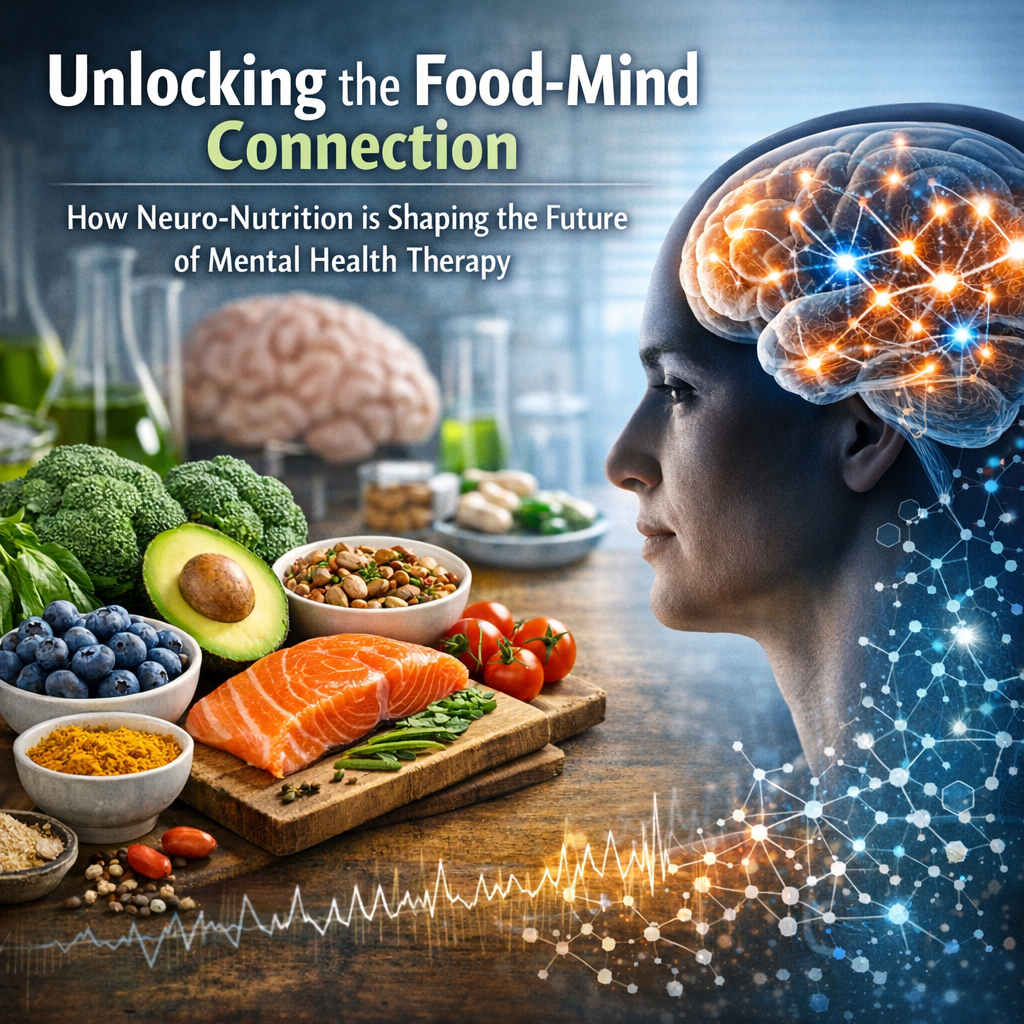
Unlocking the Food-Mind Connection: How Neuro-Nutrition is Shaping the Future of Mental Health Therapy
Introduction:
In an age where mental health disorders are on the rise, the search for effective treatment options has expanded beyond traditional therapies and pharmaceuticals. Instead, a fascinating and emerging field is gaining attention—neuro-nutrition, which explores the profound connection between diet and brain health. This approach posits that what we consume can significantly alter our mental well-being, influencing aspects such as mood, cognitive function, and even the risk of developing neurodegenerative conditions.
The food-mind connection isn’t a new concept. Ancient cultures have long believed in the interdependence of diet and emotional health. However, contemporary science is only now unraveling the complex biochemical pathways that underline this relationship. Advancements in neuroscience and nutrition are helping to decode how certain nutrients can impact the brain’s structure and functionality, opening up innovative ways to tackle mental health issues.
A cornerstone of neuro-nutrition is the understanding that the brain, like any other organ, requires specific nutrients to operate optimally. Essential fatty acids, vitamins, minerals, and antioxidants play crucial roles in supporting neural pathways. Disruptions in the supply of these nutrients due to poor dietary habits can potentially lead to or exacerbate mental health issues such as depression, anxiety, and Alzheimer’s disease.
Furthermore, the gut-brain axis—a complex communication network linking the emotional and cognitive centers of the brain with intestinal functions—is gaining recognition for its role in neuro-nutrition. Emerging research suggests that a healthy gut microbiota, supported by a balanced diet, can enhance mental clarity and emotional resilience by influencing the production of neurotransmitters like serotonin.
Consequently, neuro-nutrition is gradually transforming the landscape of mental health therapy. This shift is marked by a growing emphasis on natural and integrative approaches, where diet forms a pivotal part of treatment alongside traditional methods. As more people seek holistic alternatives, understanding the food-mind connection becomes pivotal in shaping the future of mental health.
Features:
Recent professional and medical studies have shed light on the multifaceted ways neuro-nutrition can influence mental health. A groundbreaking study published in the journal Nutritional Neuroscience emphasizes the role of omega-3 fatty acids in mood regulation and cognitive performance. These essential fats, found in abundance in sources like fish oil and flaxseed, have been shown to reduce the symptoms of depression and enhance brain function by altering membrane fluidity and signaling pathways within the brain [source](https://doi.org/10.1016/j.jpsychires.2014.09.001).
Another pivotal study from the British Journal of Nutrition highlights the importance of the Mediterranean diet, rich in fruits, vegetables, whole grains, nuts, and olive oil, for mental health. Researchers concluded that individuals adhering to this diet have a lower risk of depression due to the diet’s anti-inflammatory properties and its support of a balanced gut microbiota [source](https://www.cambridge.org/core/journals/british-journal-of-nutrition/article/effects-of-mediterranean-diet-on-depression/10.1017/S0007114510003513).
Additionally, the role of B vitamins, particularly B6, B9 (folate), and B12, is well-documented in the context of neuro-nutrition. These vitamins are vital for homocysteine metabolism, a process that, when disrupted, is linked with cognitive decline and mood disorders. A comprehensive review in Psychological Medicine reports that deficiencies in these vitamins can lead to increased levels of homocysteine, thereby elevating the risk of depression and neurodegenerative diseases [source](https://doi.org/10.1017/S0140525X06009095).
Moreover, the study of probiotics and their impact on the gut-brain axis is gaining momentum. A 2017 study published in Frontiers in Neurology discovered that certain probiotic strains could alleviate symptoms of anxiety and depression by modulating inflammatory markers and enhancing the production of brain-derived neurotrophic factor (BDNF), a protein integral to neuroplasticity [source](https://doi.org/10.3389/fnins.2017.00442).
These studies collectively underscore the potential of dietary interventions as a practical strategy for mental health support, showcasing neuro-nutrition as a promising avenue for therapeutic development.
Conclusion:
The field of neuro-nutrition offers exciting and promising opportunities for advancing mental health therapy beyond conventional methods. By enhancing our understanding of the critical role that nutrition plays in brain function, we can better appreciate the importance of diet as a tool for mental wellness. As scientific inquiry continues to reveal the intricate connections between our diet and mental health, it becomes increasingly clear that a nutrient-rich, balanced diet can be a powerful complement to traditional mental health treatments.
This holistic approach not only empowers individuals with the knowledge and tools needed to improve their overall well-being but also paves the way for more personalized and integrative mental health strategies. As awareness of the food-mind connection grows, the potential for neuro-nutrition to revolutionize mental health care becomes not just possible, but probable. Whether someone is seeking to enhance mood, cognitive function, or reduce the risk of mental illness, embracing nutritionally sound eating habits stands as a foundational step toward a more resilient mind.
Concise Summary
Neuro-nutrition, the study of the connection between diet and brain health, is transforming mental health therapy by highlighting the impact of nutrients on conditions like depression and anxiety. Essential fatty acids, B vitamins, and a balanced gut microbiota are critical for optimal brain function. Recent studies underscore how dietary interventions, such as omega-3s and the Mediterranean diet, can significantly enhance mood and cognitive abilities. This integrative approach, emphasizing the food-mind connection, promises to complement traditional mental health therapies, facilitating a holistic pathway to mental wellness and a resilient mind.

Dominic E. is a passionate filmmaker navigating the exciting intersection of art and science. By day, he delves into the complexities of the human body as a full-time medical writer, meticulously translating intricate medical concepts into accessible and engaging narratives. By night, he explores the boundless realm of cinematic storytelling, crafting narratives that evoke emotion and challenge perspectives.
Film Student and Full-time Medical Writer for ContentVendor.com