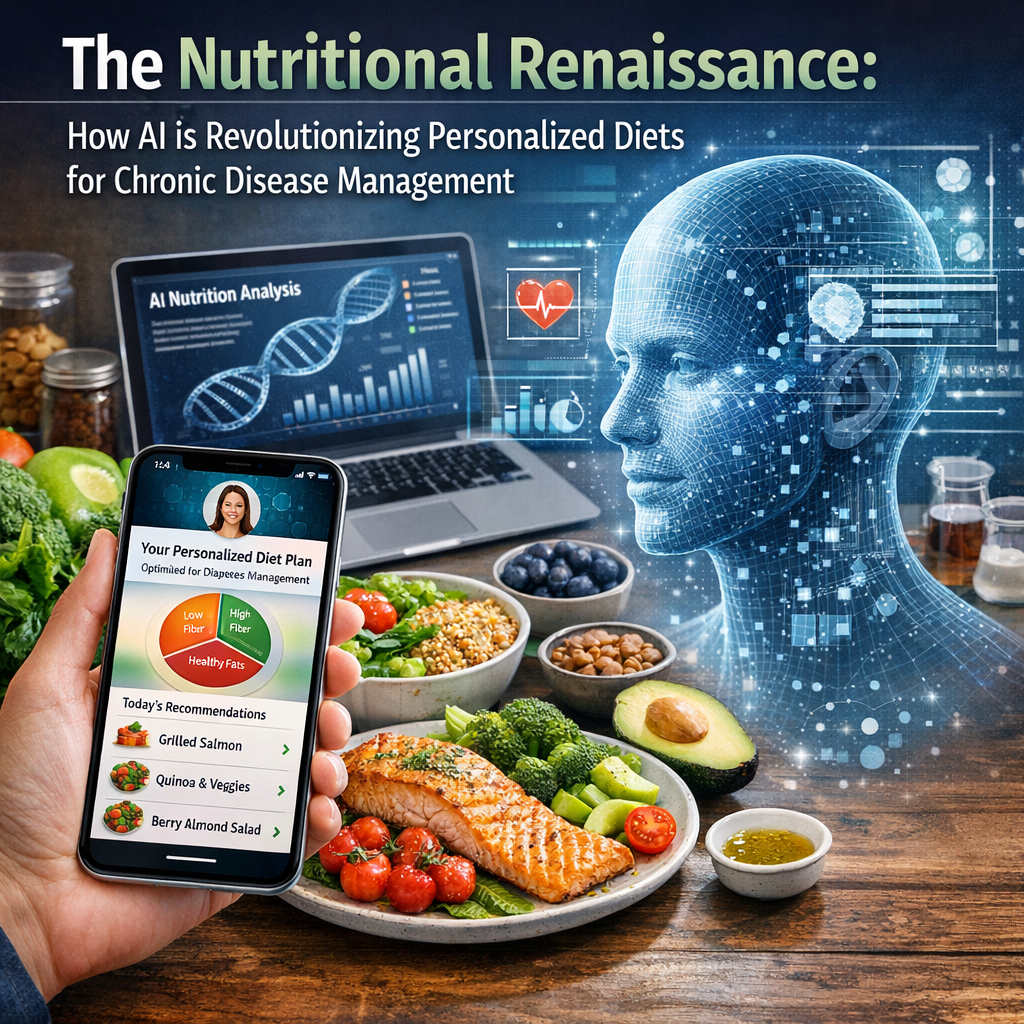
The Nutritional Renaissance: How AI is Revolutionizing Personalized Diets for Chronic Disease Management
In recent years, an impressive blend of technology and nutrition science has revolutionized the way we address chronic diseases. Traditionally, managing diseases like diabetes, cardiovascular conditions, or autoimmune disorders relied heavily on standardized treatment plans, which, while effective for some, often failed to consider individual differences. Now, thanks to the growing capabilities of artificial intelligence (AI), there’s an emergence of personalized nutrition plans that serve as tailored, precise interventions designed to suit every unique bio-profile. This dynamic transformation marks the advent of what can be deemed a ‘nutritional renaissance.’
AI has enabled advancements in understanding the human body’s interactions with food at a granular level, creating personalized diets that go beyond generic recommendations. The application of AI in nutrition comes at a time when chronic diseases are on the rise globally, fueled by modern lifestyles and dietary patterns that may not always align with individual health needs. By integrating vast arrays of dietary and health data, AI technology can recommend dietary changes that not only align with personal preferences but also offer therapeutic benefits tailored to one’s genetic, biological, and lifestyle profiles.
One of the key drivers in this revolution is the ability of AI to process large datasets quickly and uncover new patterns and correlations. AI’s predictive analytics excel at determining how specific dietary adjustments can affect disease progression or management based on unique variables such as DNA, microbiome composition, and even lifestyle factors. Moreover, AI can continuously adapt these dietary suggestions as new data becomes available, leading to dynamic and responsive diet plans. This capability is crucial for chronic disease sufferers, as their nutritional needs can evolve over time due to changes in health status, medication effects, or new research findings.
Today, innovative AI-driven platforms and apps are providing patients with real-time nutritional advice, encouraging proactive management of conditions like diabetes, obesity, or hypertension. Meanwhile, AI algorithms are empowering healthcare professionals by offering them precise tools for creating optimal and unique nutritional plans for their patients. This not only enhances dietary adherence but maximizes the therapeutic potential of nutrition, essentially allowing food to function as medicine. This intelligent personalization aligns seamlessly with homeopathic and natural treatment philosophies, integrating seamlessly with holistic approaches to health.
Features: Studies Supporting AI-Personalized Nutrition
Several professional and medical studies have substantiated AI’s role in redefining dietary guidelines for chronic disease management. A pivotal study published in [*Nature Food*](https://www.nature.com/articles/s41538-020-0078-8) demonstrates how AI can analyze complex interactions within the human microbiome, ultimately providing personalized nutrition advice that can contribute to improved metabolic health. Participants in the study who followed AI-generated dietary recommendations exhibited improved blood sugar levels, reduced inflammation, and better overall gut health, proving the efficacy of precisely tailored diets in disease management.
Another significant study from the [*American Journal of Clinical Nutrition*](https://academic.oup.com/ajcn/article/112/5/1255/5951037) highlights how AI models can integrate diverse data inputs to predict individualized glycemic responses to foods. By incorporating variables such as genetic information, glucose response, physical activity levels, and more, AI models provided precise dietary suggestions that were substantially more effective at improving blood glucose levels in prediabetic and diabetic individuals compared to traditional carbohydrate counting methods.
In addition, AI’s application in nutritional genomics has shown promising results. Research conducted by the [Nutrigenomics Institute](https://www.nutrigenomics.org/research) found that AI-integrated dietary interventions, when matched to an individual’s genetic profile, significantly improved outcomes for those with cardiovascular diseases. Participants adhering to AI-generated nutrition plans experienced reductions in heart disease markers like LDL cholesterol and better management of hypertension.
These advances herald a promising era where AI-driven personalized nutrition could potentially transform chronic disease management by allowing individuals to experience benefits akin to those from tailor-fitted medicinal treatments. As AI technology continues to evolve, it offers hope for refined, non-invasive dietary therapies that complement natural and homeopathic approaches, offering patients a comprehensive path to health and wellness.
Conclusion
The advent of AI in personalized diets for chronic disease management is transformative. By providing targeted nutritional interventions, AI can significantly impact patient outcomes, making it a powerful tool in the arsenal of complementary and alternative medicine. As AI continues to evolve, its integration into nutritional science is set to redefine the parameters of chronic disease treatment, bridging the gap between traditional medical approaches and holistic paradigms. In an age where personalization is key, AI stands as the cornerstone of a future where nutritional choices are not only healthier but also more harmonious with one’s unique biological makeup. Bridging science and nature in this way promises a healthier, more sustainable path to disease management, fostering a movement towards more individualized care that echoes the principles of natural and homeopathic treatments.
Concise Summary: AI is transforming chronic disease management by providing personalized nutrition plans tailored to individual bio-profiles. By analyzing vast health and dietary data, AI recommends specific dietary changes beneficial for conditions like diabetes and cardiovascular diseases. Studies support AI’s efficacy in improving metabolic health and managing diseases better than traditional methods. AI-driven nutrition aligns with natural health approaches, offering dynamic, non-invasive treatments that adapt over time. This revolution in personalized diet management heralds a new era of healthcare, marrying technology with holistic strategies for improved patient outcomes.

Dominic E. is a passionate filmmaker navigating the exciting intersection of art and science. By day, he delves into the complexities of the human body as a full-time medical writer, meticulously translating intricate medical concepts into accessible and engaging narratives. By night, he explores the boundless realm of cinematic storytelling, crafting narratives that evoke emotion and challenge perspectives.
Film Student and Full-time Medical Writer for ContentVendor.com