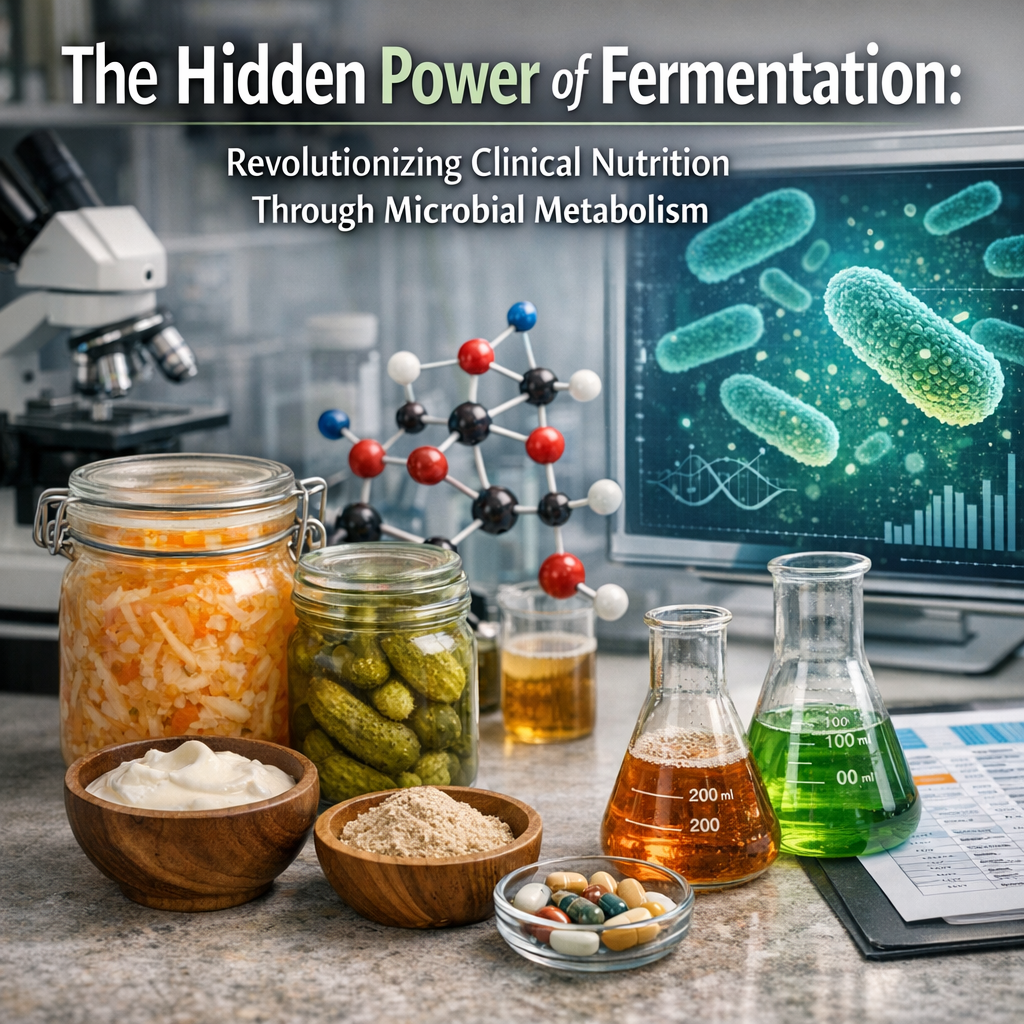
The Hidden Power of Fermentation: Revolutionizing Clinical Nutrition Through Microbial Metabolism
Introduction
In the evolving field of clinical nutrition, fermentation is gaining attention due to its potential to improve health outcomes. This traditional food preservation method is a biochemical marvel that uses microbial metabolism to unlock numerous health benefits. Fermentation involves converting carbohydrates to alcohol or organic acids using bacteria, yeasts, or molds under anaerobic conditions. This process not only enhances nutrient bioavailability but also enriches food with probiotics, compounds that bolster gut health and overall well-being.
For centuries, cultures worldwide have used fermentation to strengthen their dietary regimes. From Korean kimchi to German sauerkraut, fermented foods are rich in live bacteria crucial for maintaining a healthy gut microbiome. Scientific research increasingly reveals the microbiome’s critical role in health and disease, impacting immune function and mental health.
The nuances of microbial metabolism through fermentation are profound. Beneficial bacteria and yeasts not only aid digestion but also produce compounds like vitamins, peptides, and bioactive molecules. These are vital in cultivating a balanced gut ecosystem.
Clinical nutrition is gaining insights from traditional practices. Health practitioners and nutritionists are incorporating fermented foods into dietary programs, recognizing their supportive role in digestion and nutrient absorption. Additionally, fermented foods’ enzymatic actions reduce the presence of anti-nutrients, such as phytates and lectins, making nutrients more accessible to the body.
Revitalizing fermentation in modern clinical nutrition is not just respecting tradition but is backed by research linking the practice to improved health metrics. By integrating this potent ancient art, we harness nature’s mechanisms to promote holistic health and well-being.
Features
Research in nutrition science is unraveling complex interactions within our gut microbiome. A pivotal study published in the journal Cell delved into how gut microbes, influenced by diet and fermented foods, contribute to immune function and pathogen protection. The study found that consuming fermented foods like yogurt and kefir enhances gut microbiota diversity, crucial for a robust immune response [Cell Study](https://www.cell.com).
Furthermore, a landmark study in Nature Communications analyzed the metabolic pathways activated by fermented foods. Results revealed significant production of short-chain fatty acids (SCFAs) during fermentation. SCFAs such as butyrate, propionate, and acetate exhibit anti-inflammatory properties and enhance intestinal barrier function, reducing gastrointestinal disorder risk commonly seen in western diets [Nature Communications Study](https://www.nature.com).
Another noteworthy study in The Journal of Nutritional Biochemistry explored fermented foods’ role in mental health. Production of neurotransmitter precursors like gamma-aminobutyric acid (GABA) during fermentation was linked to enhanced mood and cognitive function. These findings underscore fermented foods’ potential to support mental well-being, deeply intertwined with physical health [Journal of Nutritional Biochemistry Study](https://www.jnutbio.com).
Additionally, fermented foods are potent sources of live probiotics. A study in The American Journal of Clinical Nutrition indicated that consistent intake of foods like miso, tempeh, and kombucha led to a decrease in systemic inflammation and improved insulin sensitivity, making them essential for dietary interventions for metabolic syndromes [The American Journal of Clinical Nutrition Study](https://www.ajcn.nutrition.org).
Conclusion
The resurgence of interest in fermentation as a dietary and therapeutic practice underscores a pivotal shift in clinical nutrition. As we understand the gut microbiome’s role in human health, consuming fermented foods emerges as a powerful, natural strategy to optimize health. These foods reintroduce essential nutrients and probiotics into our diet and facilitate microbial diversity critical for robust health. Embracing fermentation is more than returning to culinary roots; it embraces the interactions between gut bacteria and overall health. By integrating these microbial allies into our diets, we unlock potential for longevity and vitality, revolutionizing nutrition through the lens of microbial metabolism.
Concise Summary:
Fermentation, an ancient practice now gaining modern interest, is transforming clinical nutrition by harnessing microbial metabolism for health benefits. This process enhances nutrient bioavailability and enriches foods with probiotics essential for a healthy gut microbiome. Scientific studies show fermented foods like yogurt, kefir, miso, and kimchi support immune function, reduce inflammation, and improve mental health through neurotransmitter precursors. By revitalizing fermentation, we tap into nature’s mechanisms, optimizing health by incorporating fermented foods into diets, supporting digestion, nutrient absorption, and overall well-being—marking a significant shift in nutritional strategies.

Dominic E. is a passionate filmmaker navigating the exciting intersection of art and science. By day, he delves into the complexities of the human body as a full-time medical writer, meticulously translating intricate medical concepts into accessible and engaging narratives. By night, he explores the boundless realm of cinematic storytelling, crafting narratives that evoke emotion and challenge perspectives.
Film Student and Full-time Medical Writer for ContentVendor.com