Biohacking Your Grocery List: How to Design a Health-Optimized Diet with AI-Powered Nutritional Intelligence
Introduction
In a world where technology dictates the pace of advancement, our approach to health and nutrition is no exception. The integration of artificial intelligence into various domains has transformed many aspects of our daily lives, and now, it’s reshaping how we perceive and manage our dietary habits. Enter biohacking—an innovative way to enhance your health through personalized nutrition strategies powered by AI.
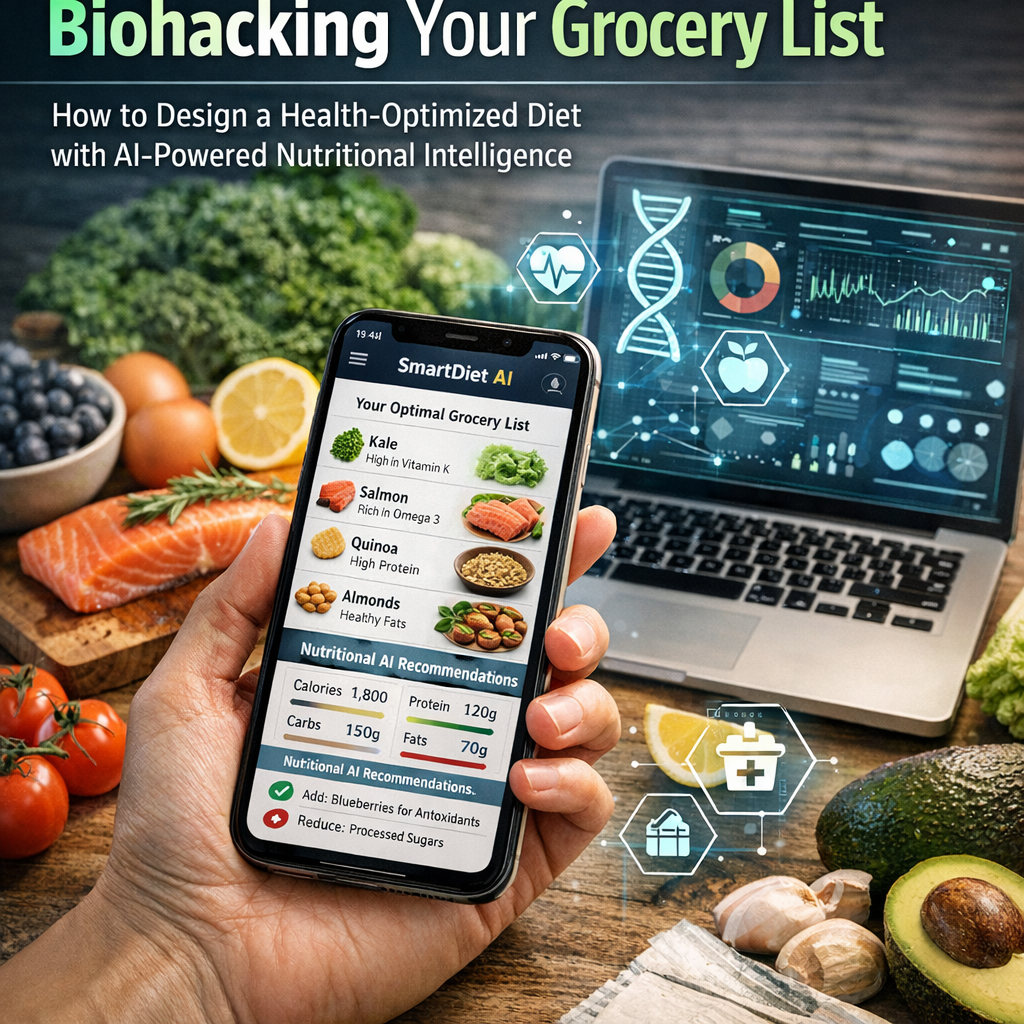
Biohacking involves modifying or “hacking” your biology to achieve better health, performance, and well-being. At the forefront of this movement is the use of AI-powered tools to analyze and optimize dietary choices based on individual health data, lifestyle, and preferences. These tools provide tailored recommendations that go beyond generic diet plans, helping you craft a diet that aligns with your specific health goals, whether it’s boosting immunity, increasing mental acuity, or maintaining an ideal weight.
The concept of biohacking isn’t limited to tech enthusiasts or health gurus; it’s accessible to anyone willing to take a proactive approach to their well-being. AI technology can sift through vast quantities of nutritional data to uncover patterns and insights that would be impossible to discern manually. It enables consumers to make informed decisions about what to include in their grocery lists to enhance overall health.
In today’s fast-paced world, where time is often a limiting factor, AI-powered nutritional intelligence empowers users to save time by efficiently navigating the complexities of dietary choices. With this technology, creating a health-optimized grocery list becomes a streamlined process. From identifying nutrient-dense foods to avoiding potential allergens or dietary restrictions, AI tools offer a level of precision and personalization previously unattainable.
Features: Professional and Medical Studies
Several studies underscore the transformative potential of AI in personalizing nutrition. A 2020 study published in the journal [Nature Medicine](https://www.nature.com/articles/s41591-020-0934-z) explored the use of machine learning algorithms to predict individual glycemic responses to different foods. The study demonstrated that personalized dietary advice based on AI predictions could significantly improve metabolic health compared to generic dietary recommendations.
Moreover, research by the [Stanford Medicine Center for Innovation in Global Health](https://globalhealth.stanford.edu/research.html) highlights the role of AI in enhancing understanding of nutritional needs on a genetic level. By considering genetic data alongside other health metrics, AI can devise dietary strategies tailored to mitigate inherited risks or amplify natural strengths, thereby aligning one’s diet more closely with their biological needs.
Practically, AI-driven apps and platforms like Nutrino and Viome are paving the way for dietary personalization. These tools collect data from various sources—such as user input, wearable devices, and genetic testing—to curate nutrition plans that optimize health outcomes. A study published in the [Journal of Medical Internet Research](https://www.jmir.org/2021/3/e27818/) found that personalized nutrition based on analysis from AI-led platforms resulted in better adherence to dietary recommendations, compared to generic advice.
The implementation of AI in crafting health-optimized diets is not without concerns, particularly regarding data privacy and the accuracy of predictions. However, ongoing advancements in AI algorithms and data security measures continually address these challenges. A 2021 paper in the [Journal of the American Medical Informatics Association](https://academic.oup.com/jamia/article/28/3/588/6024992) discussed the ethical considerations and evolving standards around the use of AI in healthcare settings, emphasizing the potential for this technology to revolutionize dietary habits within ethical frameworks.
Conclusion
Biohacking your grocery list through AI-powered nutritional intelligence opens up new avenues for personalized health optimization. By leveraging data-driven insights and advanced algorithms, AI provides a level of dietary customization that aligns with individual health profiles and lifestyle preferences. This innovation makes it easier than ever to design a diet that not only meets but enhances personal health requirements.
As AI technology continues to evolve, its application in nutrition is set to expand, offering more nuanced and precise dietary guidance. The ultimate goal of combining biohacking with AI is to shift away from one-size-fits-all dietary solutions, ushering in an era where nutrition is as unique as the individuals served. Embracing this technology-driven approach to diet can lead to significant improvements in health and well-being, marking a new chapter in the pursuit of optimal health through informed and personalized nutrition strategies.
Concise Summary
Biohacking, through the use of AI-powered nutritional intelligence, offers a personalized approach to health optimization by analyzing individual health data and lifestyle preferences. By using advanced algorithms, AI tools can create tailored dietary recommendations, leading to increased adherence and improved health outcomes. While addressing concerns around data privacy and prediction accuracy, this innovative approach shifts away from generic diet plans, allowing for diets that cater to unique health needs. As AI technology advances, its role in nutrition will continue to grow, marking a shift towards highly personalized dietary solutions.

Dominic E. is a passionate filmmaker navigating the exciting intersection of art and science. By day, he delves into the complexities of the human body as a full-time medical writer, meticulously translating intricate medical concepts into accessible and engaging narratives. By night, he explores the boundless realm of cinematic storytelling, crafting narratives that evoke emotion and challenge perspectives.
Film Student and Full-time Medical Writer for ContentVendor.com