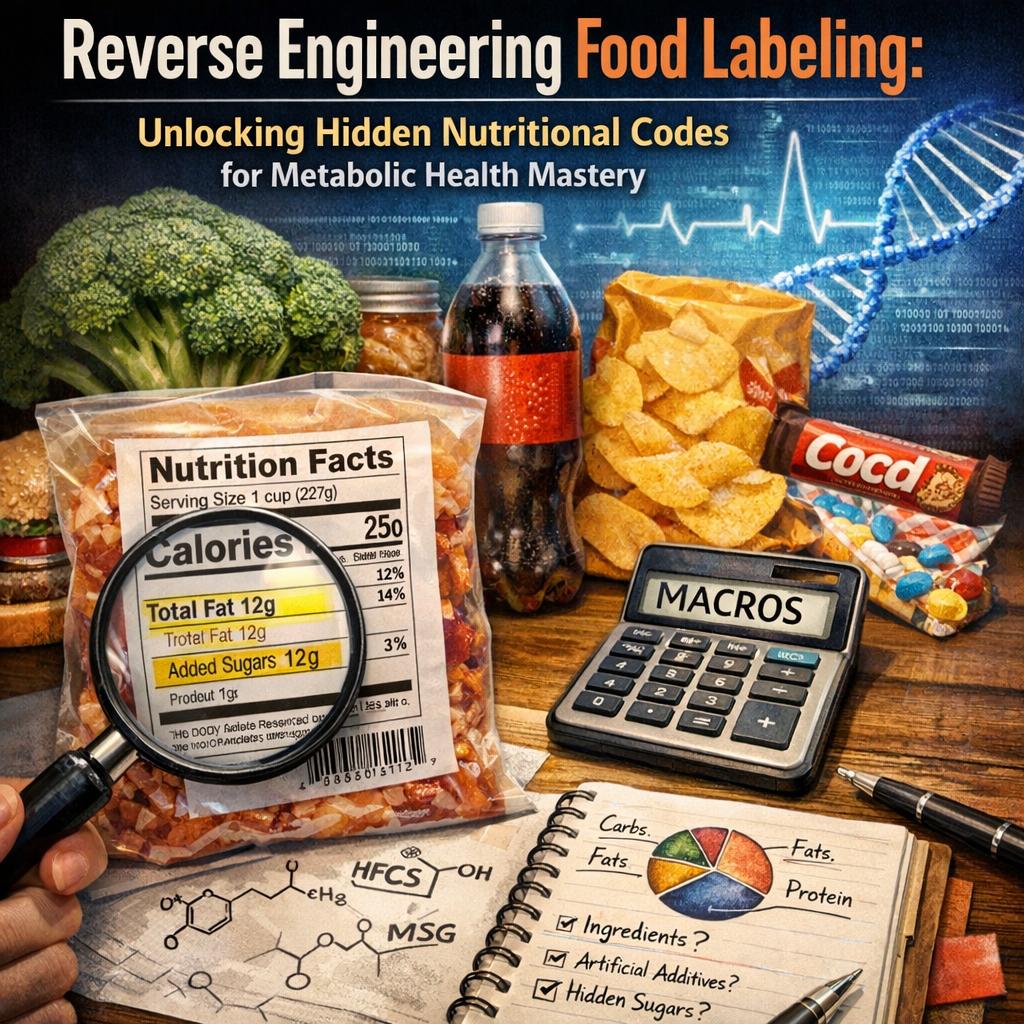
Reverse Engineering Food Labeling: Unlocking Hidden Nutritional Codes for Metabolic Health Mastery
Introduction
In the dynamic world of nutritional science, deciphering the complex language of food labels may seem like a task for experts. Yet, as more people become interested in their health, understanding these labels is key to achieving optimal metabolic health. This guide empowers consumers to make informed choices amidst the challenges of chronic diseases and obesity, often linked to poor dietary habits.
In a grocery landscape filled with processed foods branded as “low-fat,” “all-natural,” and “sugar-free,” it is critical to understand what these claims truly mean. Synthetic additives and preservatives, often hidden behind appealing marketing, can negatively impact metabolic function, leading to issues like inflammation, insulin resistance, and weight gain.
To navigate this, one must first ask: What truly constitutes healthful food? Understanding food labels requires more than just knowing the ingredients; it involves considering their origin, processing, and the environmental factors influencing their production. Good ingredients promote metabolic harmony, offering sustained energy, efficient digestion, and balanced hormonal functions.
Interpreting the nutritional content involves looking beyond calories to macronutrients and micronutrients like carbohydrates, fats, proteins, vitamins, and minerals, all of which play essential roles in metabolic health. Often, overlooked elements such as fiber, artificial additives, and allergens have the most significant impact. This guide provides strategies to decode labels and adjust your diet for long-term metabolic mastery.
Features
A growing body of professional and medical studies highlights the importance of food labeling on health outcomes. Dr. Marion Nestle, a notable public health advocate, discusses misleading labels’ role in unhealthy dietary choices, emphasizing the need for consumers to scrutinize terms like “natural” or “fortified”. [1](https://www.foodpolitics.com)
A revealing study published in the *Journal of Nutrition Education and Behavior* demonstrated that better label literacy leads to healthier food choices, contributing to effective weight management. This emphasizes educational initiatives’ importance in helping consumers decode labels effectively. [2](https://www.jneb.org)
In 2021, research published in *The American Journal of Clinical Nutrition* investigated the effects of food additives like trans fats and artificial sweeteners on metabolic health. It found a significant correlation between these substances and increased risks of metabolic syndrome. This research underscores the importance of scrutinizing labels for hidden additives that may disrupt metabolic processes. [3](https://academic.oup.com/ajcn)
Additionally, unclear “serving sizes” on packaging can lead to underestimated calorie intake. These sizes, defined by manufacturers rather than health standards, can mislead consumers in managing their portions. Thus, understanding the “Nutrition Facts” panel is crucial to avoid such pitfalls.
Initiatives like the global EPODE program aim to combat childhood obesity through improved dietary understanding, highlighting food labels’ critical role in public health. [4](https://epodeinternationalnetwork.com)
Conclusion
Mastering the art of interpreting food labels is not just a pathway to better metabolic health but also a journey towards informed decision-making and preventative wellness. Recognizing the implications of dietary choices allows us to tailor nutrition to optimize body functions, enhance energy levels, and reduce disease risk.
When strategically decoded, food labels become guiding tools to nutrient-rich, wholesome dietary habits, helping us avoid metabolic disruptors and embrace health-promoting ingredients. Adopting a mindset that views food labels as a gateway to a healthier lifestyle will contribute to individual well-being and shape the health profiles of entire communities. Understanding each ingredient’s narrative and every serving essentially engineers a blueprint for sustained metabolic mastery.
Concise Summary
Understanding food labels is crucial for achieving optimal metabolic health. As consumers become more conscious about their health, decoding these labels helps in making informed dietary choices. Keywords like “low-fat,” “natural,” and “sugar-free” often mask additives detrimental to metabolic function. Studies underscore the impact of label literacy on healthier food choices, emphasizing the need for consumer education. Initiatives like EPODE focus on combating obesity through improved label understanding. Strategically decoded food labels guide us toward healthier eating habits, avoiding metabolic disruptors, and supporting overall well-being.

Dominic E. is a passionate filmmaker navigating the exciting intersection of art and science. By day, he delves into the complexities of the human body as a full-time medical writer, meticulously translating intricate medical concepts into accessible and engaging narratives. By night, he explores the boundless realm of cinematic storytelling, crafting narratives that evoke emotion and challenge perspectives.
Film Student and Full-time Medical Writer for ContentVendor.com