Is Your Microbiome the Real MVP in Your Body’s Defense Against Aging and Disease?
Introduction:
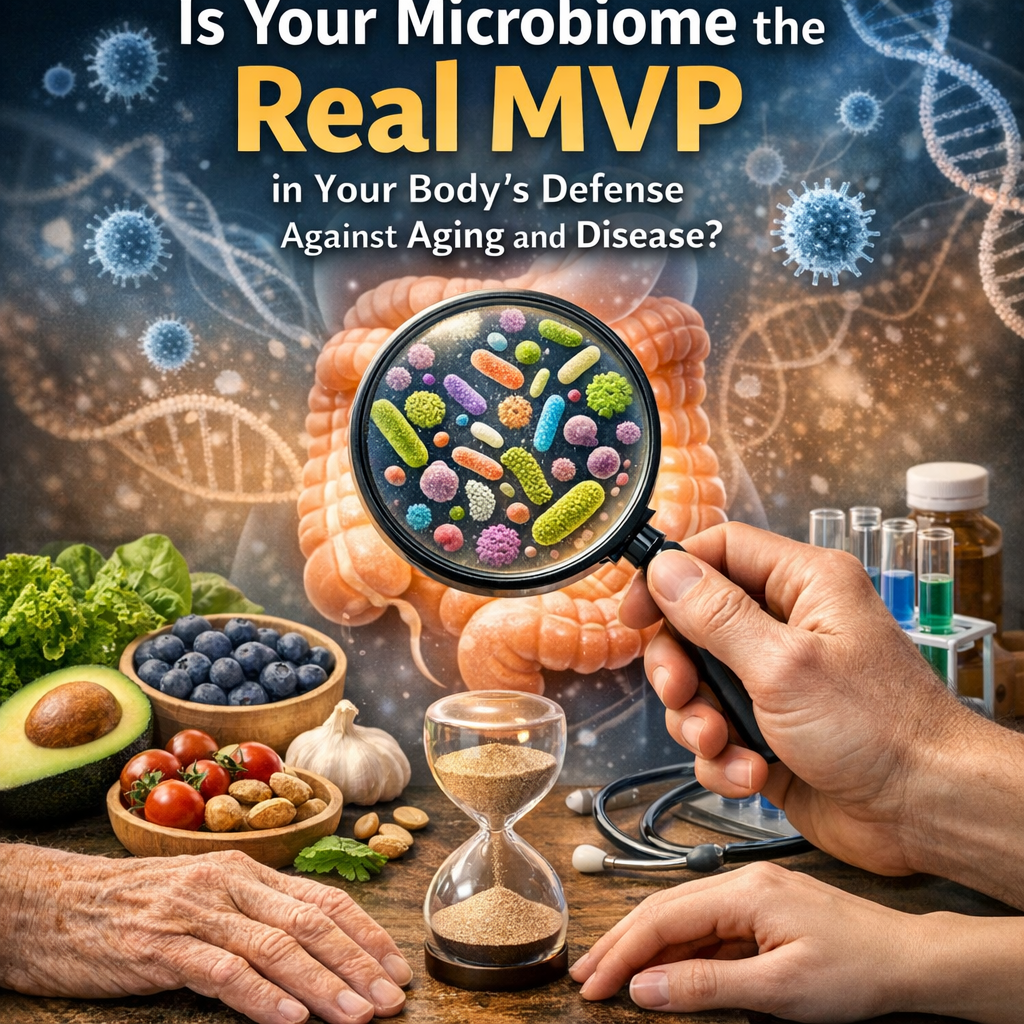
In recent years, the quest for longevity and wellness has sparked significant interest in the complex system of microorganisms residing in our bodies, collectively known as the microbiome. While this intricate world of bacteria, viruses, fungi, and other microbes is mostly found in the gut, its influence extends far beyond digestion. Emerging research suggests that the microbiome may play a pivotal role in shielding the body from the ravages of aging and disease.
Historically, the focus in health and wellness has been on the role of genetics, lifestyle, and environment in determining our well-being. However, as our understanding of the microbiome deepens, it’s becoming clear that these microorganisms act as unsung heroes, orchestrating a symphony that impacts everything from our immune response to our mental health. Unlike genetic predispositions, which we cannot change, the makeup of our microbiome can be altered through diet, lifestyle choices, and other interventions, making it a compelling focal point for those seeking natural and holistic approaches to health.
The significance of a healthy microbiome is particularly pronounced in the realm of immune function. A well-balanced microbiome communicates with immune cells, priming them to ward off infections and diseases while maintaining tolerance and preventing autoimmune reactions. This microbial ecosystem also influences inflammation, a known driving force behind many age-related diseases, including heart disease, diabetes, and Alzheimer’s.
Moreover, a burgeoning body of evidence suggests that the microbiome may impact the aging process itself. By modulating the body’s metabolic processes, the microbiome can affect how we store fat, regulate blood sugar, and manage oxidative stress, all crucial factors in healthy aging. As scientists continue to unravel the complex interplay between our microbiome and overall health, it becomes increasingly crucial to consider this hidden organ as an integral part of strategies aimed at promoting longevity and disease prevention.
Features:
Recent scientific investigations have provided compelling evidence supporting the microbiome’s central role in health and aging. A seminal study published in [Nature](https://www.nature.com/articles/nature26147) explored the relationship between gut microbiota and the immune system, demonstrating that a diverse and balanced microbiome is crucial for maintaining a robust immune response throughout life. The researchers highlighted that gut bacteria influence the production of antimicrobial peptides, which are vital in defending against pathogenic invaders.
Additional evidence comes from a study conducted by the University College Cork, which showed that a rich microbiome is associated with increased production of short-chain fatty acids (SCFAs) that regulate inflammation and bolster gut barrier function, thus preventing the entry of inflammatory agents into the bloodstream ([ScienceDirect](https://www.sciencedirect.com/science/article/pii/S0014579318300010)). This mechanism is significant, as chronic inflammation is linked to numerous age-related diseases.
Furthermore, an intriguing study published in [Cell](https://www.cell.com/trends/neurosciences/fulltext/S0166-2236(16)30009-7) underscored the role of the microbiome in mental health, another critical aspect of aging. Researchers found that certain strains of gut bacteria produce neurotransmitters such as serotonin and dopamine, which are crucial for maintaining mental well-being and cognitive function as we age. This discovery opens new avenues for understanding how microbial interventions could mitigate the cognitive decline often associated with aging.
In another groundbreaking study, researchers from Harvard have begun to map the connections between specific bacterial strains and longevity. Their findings, published in the prestigious journal [Science](https://www.science.org/doi/10.1126/science.abj4856), suggest that particular microbiota combinations can extend lifespan by reducing harmful metabolites and stimulating protective metabolic pathways.
These studies collectively highlight the microbiome’s significant influence on aging and disease. By modulating inflammation, supporting immune function, influencing metabolic pathways, and impacting mental health, the microbiome emerges as a key player in our body’s defense mechanisms. Recognizing the potential to cultivate a thriving microbiota through diet, prebiotics, and probiotics could revolutionize aging and disease prevention strategies, offering natural, sustainable pathways to improved health.
Conclusion:
As our understanding of the microbiome expands, so does its potential as a targeted strategy for promoting health and longevity. The intricate interplay between these microscopic communities and our body’s physiology underscores their significance as more than just a supporting cast. Instead, they are key players in maintaining homeostasis, preventing disease, and potentially enhancing lifespan.
For those exploring natural health remedies, prioritizing microbiome health could provide significant dividends. Incorporating foods rich in fiber, fermented products, and possibly personalized probiotics might not only bolster gut health but also enhance overall vitality and resilience against diseases. With continued research, the microbiome stands to redefine our approach to aging, turning what was once considered an inevitable decline into a manageable, and even reversible, aspect of the human experience. Embracing this burgeoning field could lead to breakthroughs in preventive medicine and offer a new paradigm in the fight against aging and disease.
Concise Summary:
The microbiome, a community of microorganisms in the body, significantly influences health, aging, and disease prevention. Emerging research highlights its roles in modulating immune response, reducing inflammation, and impacting mental health and metabolic functions. Unlike genetics, the microbiome can be altered through diet and lifestyle, offering natural health strategies. Studies show its potential in preventing age-related diseases and promoting longevity. Prioritizing microbiome health can enhance vitality and resilience, revolutionizing preventive medicine and reshaping approaches to aging. Researchers are unlocking its secrets, promising new paradigms in health and wellness management.

Dominic E. is a passionate filmmaker navigating the exciting intersection of art and science. By day, he delves into the complexities of the human body as a full-time medical writer, meticulously translating intricate medical concepts into accessible and engaging narratives. By night, he explores the boundless realm of cinematic storytelling, crafting narratives that evoke emotion and challenge perspectives.
Film Student and Full-time Medical Writer for ContentVendor.com