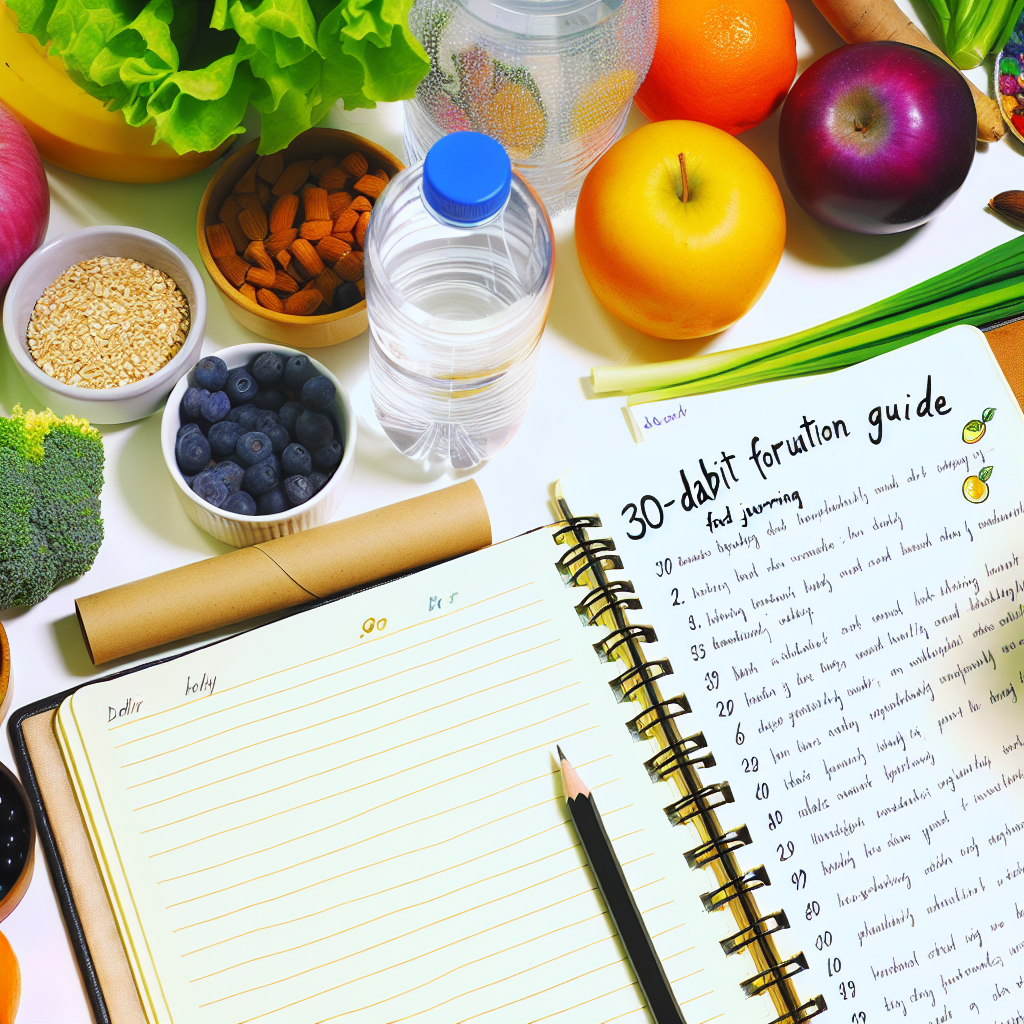
Food Journaling – 30-Day Habit Formation Guide
Introduction
In the bustling world of health and wellness, the concept of food journaling has emerged as a powerful tool for those seeking to make informed dietary choices, track food reactions, and ultimately transform their wellbeing. A food journal is much more than merely noting down daily meals; it is an introspective exercise that facilitates awareness, accountability, and change. With obesity, chronic illnesses, and lifestyle diseases on the rise, food journaling has become a cornerstone for natural and holistic health approaches, including natural cures, homeopathic, and herbal treatments.
Food journaling allows individuals to document their eating habits, thoughts, and feelings around food, providing a tangible record of dietary patterns that can highlight triggers and trends. This simple practice helps in identifying food intolerances, understanding emotional eating habits, and making connections between what we consume and how we feel physically and mentally. It’s a bridge to mindfulness, encouraging individuals to engage with their food choices with intention rather than operating on autopilot.
The practice of food journaling over a deliberately structured 30-day period can significantly enhance one’s journey toward better health. This duration is pivotal; it aligns closely with the habit formation theory, which suggests that it takes about three to four weeks to establish a new habit naturally. As you embark on this 30-day journey, your food journal will serve as a mirror reflecting your nutritional experiences, a map guiding your dietary decisions, and a diary capturing the nuances of your eating life.
Moreover, integrating food journaling into one’s lifestyle can complement alternative healing methods. By precisely documenting your dietary inflow and correlating it with the effects of homeopathic remedies or herbal treatments, you can fine-tune your path towards natural healing. This dedicated documentation process empowers you to become your own health detective, unraveling the complexities of dietary influences and natural cures as you align with your body’s unique needs.
Features
The efficacy of food journaling is backed by substantial research, reinforcing its status as a viable tool for health improvement. Numerous professional and medical studies have explored its benefits, particularly in weight loss, nutrition therapy, and psychological wellbeing.
One compelling study published in The American Journal of Preventive Medicine in 2008 found that individuals who kept a food diary lost twice as much weight as those who did not. The research underscores the importance of accountability and self-monitoring in achieving dietary goals. Participants who tracked their food intake were more conscious of their eating behaviors, leading to healthier choices.
Additionally, a study featured in the Journal of the Academy of Nutrition and Dietetics highlighted the integral role of food journaling in behavior change. It emphasized that consistent self-monitoring of food intake is one of the most effective strategies for nutrition therapy, enabling dietitians and health professionals to provide personalized guidance tailored to individual patterns revealed through journaling.
Moreover, food journaling is recognized for its mental health benefits. A study published in the Psychosomatic Medicine journal linked food diaries with improved psychological wellbeing. Participants who regularly documented their food consumption alongside their emotional states reported heightened mood and reduced stress levels. This practice encourages mindfulness, helping individuals to untangle emotional triggers from hunger cues.
Food journaling also aligns with the principles of natural and holistic health. According to a study in Complementary Therapies in Clinical Practice, integrating food journaling with homeopathic and herbal treatments can enhance the effectiveness of these alternative options. By chronicling reactions to herbal supplements and documenting dietary habits, individuals can identify synergistic combinations that promote optimal health naturally.
Conclusion
Embarking on a 30-day food journaling journey offers a pathway to enhanced self-awareness, improved dietary habits, and a harmonious relationship with food. By committing to this practice, individuals can unveil patterns, decode food-related emotions, and align their dietary choices with their health goals. Whether you seek to complement holistic treatments or simply aspire to a healthier lifestyle, your food journal will be an invaluable tool in your arsenal.
As you document your dietary journey, embrace it as a living dialogue between you and your nutrition, one that evolves with each entry. In the realm of natural cures, homeopathic, and herbal treatments, your food journal serves as a compass, guiding you towards a balanced and fulfilling life. Unlock the potential of food journaling today and take the first step towards a transformative health journey.
Summary
Food journaling is an empowering practice that enhances dietary awareness and accountability. This 30-day guide facilitates the journey towards better health by helping individuals identify food patterns, improve emotional eating, and complement holistic treatments. Embracing food journaling can lead to better weight management and improved mental well-being, supported by substantial research such as the studies published in The American Journal of Preventive Medicine and Psychosomatic Medicine. By making food choices mindfully, individuals can achieve their wellness goals and embrace a balanced relationship with nutrition.

Dominic E. is a passionate filmmaker navigating the exciting intersection of art and science. By day, he delves into the complexities of the human body as a full-time medical writer, meticulously translating intricate medical concepts into accessible and engaging narratives. By night, he explores the boundless realm of cinematic storytelling, crafting narratives that evoke emotion and challenge perspectives.
Film Student and Full-time Medical Writer for ContentVendor.com