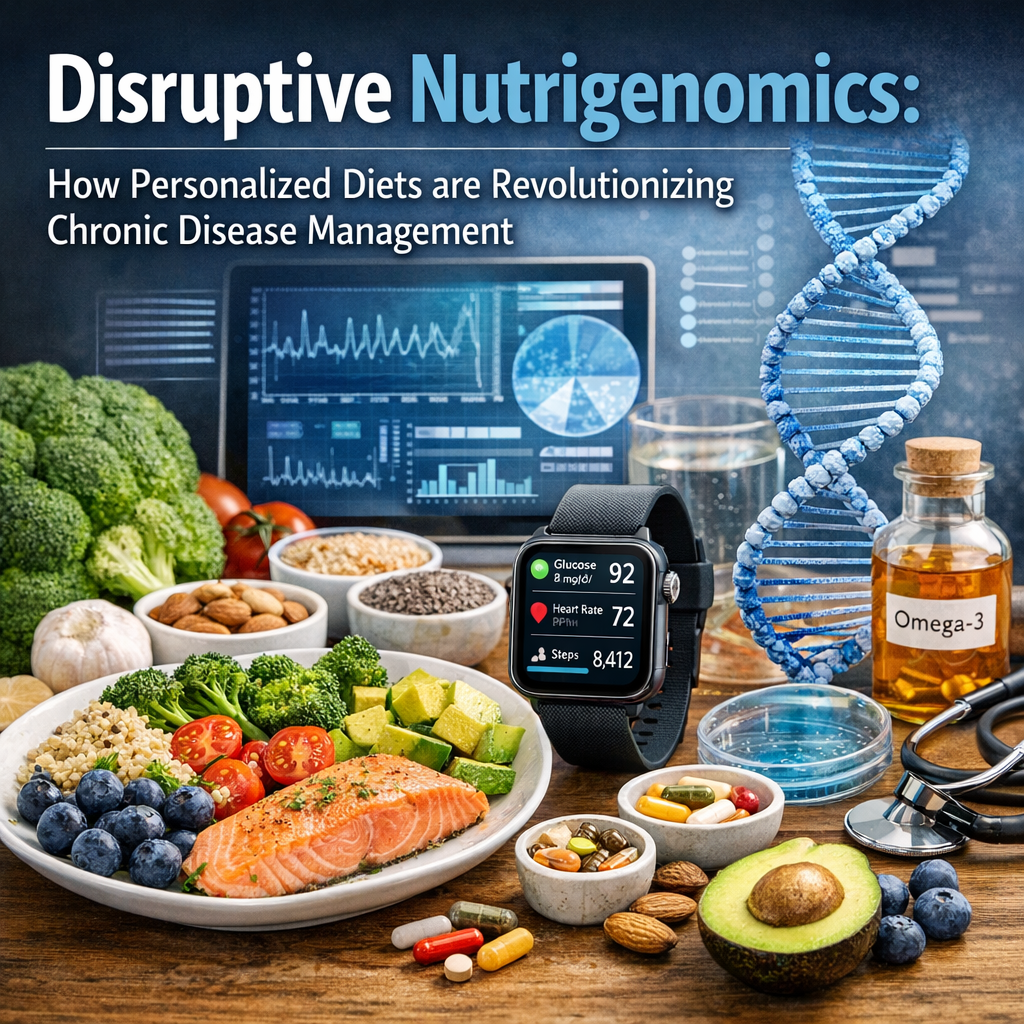
Disruptive Nutrigenomics: How Personalized Diets are Revolutionizing Chronic Disease Management
Topic Introduction
The landscape of chronic disease management is undergoing a seismic shift, thanks in large part to the burgeoning field of nutrigenomics. This innovative discipline sits at the intersection of nutrition and genetics, focusing on how individual genetic differences influence responses to nutrients and ultimately affect health. Nutrigenomics is more than just a buzzword; it’s a highly personalized approach to dietary planning that has the potential to revolutionize the way we manage chronic diseases such as diabetes, cardiovascular disease, and even certain types of cancer.
At the heart of nutrigenomics is the understanding that one size does not fit all. Traditional dietary recommendations often fail to account for genetic diversity, potentially rendering them ineffective or even harmful for some individuals. By leveraging advancements in genetic testing and bioinformatics, nutrigenomics offers a window into personalizing diets based on DNA analysis. This helps pinpoint not only nutrient needs but also potential dietary triggers that could exacerbate chronic conditions.
Imagine a diabetes patient who no longer has to rely solely on general low-carb diets. Through a nutrigenomic approach, their diet could be tailored to optimize carbohydrate metabolism based on individual genetic markers. Similarly, someone predisposed to high cholesterol levels due to specific genetic variants might benefit more from a particular balance of fats rather than just following a generic low-fat diet.
The implications for public health are enormous. Chronic diseases are leading causes of death and disability worldwide, claiming more than 40 million lives each year according to the World Health Organization. If personalized, nutrigenomic-based diets can improve disease management, the benefits could be transformative—from enhancing quality of life for patients to reducing healthcare costs across populations.
Nutrigenomics is not without its challenges. There are ethical considerations, data privacy issues, and the need for more extensive research to understand fully the complex relationship between genes and diet. However, the promise it holds makes it an avenue worth exploring for anyone committed to making informed dietary choices based on scientific evidence.
Features
Recent advances in nutrigenomics have been propelled by several high-profile studies that underscore its potential. One noteworthy research project is the “[Food4Me](https://pubmed.ncbi.nlm.nih.gov/23551994/)” study, which explores personalized nutrition at a large scale across several countries. The Food4Me study investigates the effects of personalized dietary advice based on individuals’ genetic, phenotypic, and lifestyle data. The results highlight significant improvements in dietary behavior and health outcomes when using a personalized nutrition approach compared to more conventional, non-targeted dietary recommendations.
Another pivotal study from Stanford University examined the impact of genotype-based dietary interventions for weight loss. [The study](https://jamanetwork.com/journals/jama/fullarticle/2673150) revealed that participants who received a gene-based personalized diet plan lost more weight and improved lipid profiles more effectively than those following standard dietary guidelines. This supports the concept that genetic predispositions can directly influence dietary effectiveness on health outcomes.
Moreover, research has begun to unravel how specific genes, such as the FTO gene—often associated with obesity—respond to particular dietary components. In a [study published in the New England Journal of Medicine](https://www.nejm.org/doi/full/10.1056/NEJMoa1614365), individuals carrying variants of the FTO gene showed different responses to diet in terms of weight management. These findings underscore the importance of genetic makeup in dictating dietary success, further propelling the conversation on the need for personalized nutritional interventions.
Nutrigenomics also holds promise beyond weight management. The potential benefits extend to reducing risks and better managing chronic diseases like Type 2 diabetes. Several [studies](https://www.nature.com/articles/ejhg201390) have identified specific genes that influence insulin sensitivity and glucose tolerance, suggesting targeted dietary interventions could alleviate symptoms and even mitigate disease progression.
Conclusion
As we stand on the precipice of a new era in dietary science, the role of nutrigenomics in chronic disease management cannot be overstated. By tailoring diets based on genetic profiles, nutrigenomics offers a highly individualized approach that promises to optimize health outcomes more effectively than traditional methods. While challenges such as ethical considerations and data security remain, its potential to revolutionize how we approach diet and chronic disease is undeniable.
The path forward requires collaborative efforts between geneticists, dieticians, clinicians, and tech developers to take this science from the lab to the kitchen table. As research expands and technology advances, the integration of nutrigenomics into everyday practice could become as routine as brushing our teeth, fundamentally altering how we think about food and disease. For healthcare providers, patients, and policymakers alike, embracing this paradigm shift could mark a significant step towards a healthier future.
Ultimately, the question is not if, but when, personalized nutrigenomic diets will become mainstream. As individuals become more empowered with personalized health information, we inch closer to a future where dietary choices are no longer generic but uniquely ours, crafted by our own genetic blueprints. The revolution in chronic disease management might just begin with what’s on our plate.
Concise Summary
Nutrigenomics is a field revolutionizing chronic disease management by personalizing diets based on genetic profiles. By bridging nutrition and genetics, it addresses the limitations of one-size-fits-all dietary guidelines, offering individually tailored plans for conditions like diabetes and cardiovascular disease. Studies such as Food4Me and research from Stanford highlight improved health outcomes via personalized nutrition. While there are challenges like ethical considerations, nutrigenomics’ potential to reshape healthcare and enhance quality of life is immense, signaling a shift from generic to individualized dietary practices guided by genetic blueprints.

Dominic E. is a passionate filmmaker navigating the exciting intersection of art and science. By day, he delves into the complexities of the human body as a full-time medical writer, meticulously translating intricate medical concepts into accessible and engaging narratives. By night, he explores the boundless realm of cinematic storytelling, crafting narratives that evoke emotion and challenge perspectives.
Film Student and Full-time Medical Writer for ContentVendor.com