Revolutionizing Chronic Illness Management: AI-Powered Personalized Nutrition Blueprints
Introduction
In recent years, the management of chronic illnesses has undergone a paradigm shift with the advent of advanced technologies, among which Artificial Intelligence (AI) stands out as a game-changer. With the rise in chronic diseases such as diabetes, cardiovascular conditions, and autoimmune disorders, there’s a dire need for innovative, efficient, and personalized treatment solutions. Traditional approaches to chronic illness management often involve generalized dietary recommendations and medications, which may not be effective for everyone due to individual differences in genetics, lifestyle, and environmental factors. AI-powered personalized nutrition blueprints provide a promising solution by offering a tailored approach that considers these unique individual variances.
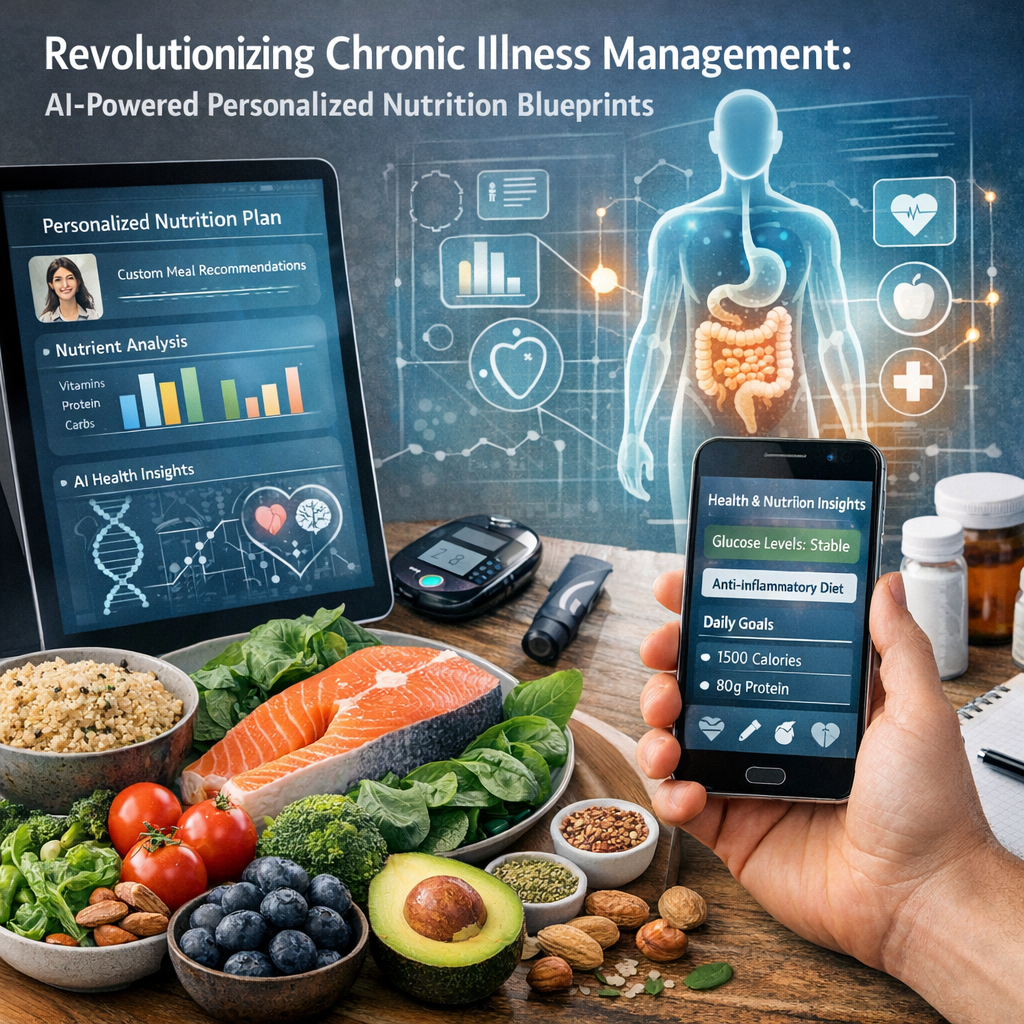
AI in healthcare primarily functions by analyzing vast datasets to extract meaningful patterns and predictions. With personalized nutrition, AI utilizes data from genomics, microbiome composition, and metabolic responses to food, which helps in mapping out dietary recommendations tailored specifically to an individual’s health needs. This technology considers various aspects such as genetic predispositions, current health conditions, and even lifestyle choices to optimize a person’s diet to manage or potentially alleviate symptoms associated with chronic illnesses.
AI-powered nutrition blueprints are especially beneficial in chronic illness management because they can continually learn and adapt as an individual’s health data changes over time. This dynamic interaction ensures that the nutritional advice remains relevant and effective, addressing the complex and often fluctuating nature of chronic conditions. Moreover, AI-driven systems can monitor compliance to dietary recommendations, suggest simple and practical alternatives, and alert healthcare providers in case of any significant deviations.
The emergence of AI in nutrition is a beacon of hope for patients and healthcare practitioners alike. This technology’s potential to streamline and personalize dietary plans could drastically improve the overall quality of life for those burdened with chronic diseases. It’s a transformative step forward in supporting patients’ journeys towards better health outcomes with more precision, clarity, and personal relevance than ever before.
Features
Recent studies have shown how AI can play a pivotal role in crafting efficient dietary interventions tailored to chronic illness management. According to a [study published in *Nature Medicine*](https://www.nature.com/articles/nm.3934), researchers were able to demonstrate the effectiveness of a machine learning algorithm that helped in predicting individual glycemic responses to different foods in people with diabetes. This study highlights the ability of AI to analyze complex interactions between food intake and blood glucose levels, helping to customize meal plans that stabilize blood sugar more effectively than standard approaches.
Moreover, research by the American College of Cardiology highlights how AI can assist in creating personalized nutrition strategies that reduce the risk factors associated with cardiovascular disease ([American College of Cardiology](https://www.jacc.org/doi/abs/10.1016/j.jacc.2018.06.056)). This work emphasizes AI’s potential in interpreting extensive heart health data and providing tailored dietary advice that better aligns with an individual’s cardiovascular health profile, reducing hypertension, cholesterol levels, and ultimately, cardiovascular events.
AI’s use is not just limited to providing personalized recommendations but also in monitoring adherence and outcomes. A study in [*The Journal of Nutrition*](https://academic.oup.com/jn/article/150/10/2692/5899045) illustrated how AI models can track patient adherence to dietary plans and analyze the impact on conditions like irritable bowel syndrome (IBS) through continuous pattern recognition. These applications underline AI’s capacity to dynamically assess the success of ongoing dietary interventions and refine them for future effectiveness.
Furthermore, the [*Lancet*](https://www.thelancet.com/journals/landig/article/PIIS2589-7500(19)30121-8/fulltext) has reported on how artificial intelligence can integrate data from wearable devices to enhance personalized nutrition plans for managing chronic conditions like obesity. With the ability to continuously monitor physical activity, sleep patterns, and energy expenditure, AI is set to revolutionize how nutritionists and healthcare providers approach chronic disease management.
Conclusion
The integration of AI into the realm of personalized nutrition for chronic illness management holds immense promise for revolutionizing care delivery. By transcending the limitations of traditional dietary guidelines, AI-powered blueprints offer a holistic, tailored approach that resonates with individual health landscapes. This approach not only maximizes the therapeutic potential of nutrition but also empowers patients to take an active role in their health journey by providing insights that are infinitely adaptable to changing health scenarios.
The precision of AI in managing chronic health conditions can significantly enhance quality of life, reduce disease symptoms, and in some cases, reverse disease progression. As we continue to evolve with technological advancements, embracing these AI-driven methodologies will pave the way for a more personalized, proactive, and compassionate healthcare ecosystem. The future of chronic illness management is undeniably bright, with AI at the forefront, transforming the abstract into actionable, personalized solutions that speak to each individual’s unique health story.
Concise Summary
The application of Artificial Intelligence (AI) in chronic illness management is transforming dietary intervention strategies into personalized nutrition blueprints. AI leverages data from genomics, microbiomics, and individual metabolic responses to customize meal plans tailored to specific health needs. This approach addresses individual variances in chronic conditions such as diabetes and cardiovascular diseases. AI-powered solutions provide adaptive and relevant nutritional advice, potentially improving quality of life while reducing symptoms and disease progression. By integrating AI technologies, healthcare ecosystems can become more precise and patient-focused, driving better health outcomes for chronic disease sufferers.

Dominic E. is a passionate filmmaker navigating the exciting intersection of art and science. By day, he delves into the complexities of the human body as a full-time medical writer, meticulously translating intricate medical concepts into accessible and engaging narratives. By night, he explores the boundless realm of cinematic storytelling, crafting narratives that evoke emotion and challenge perspectives.
Film Student and Full-time Medical Writer for ContentVendor.com