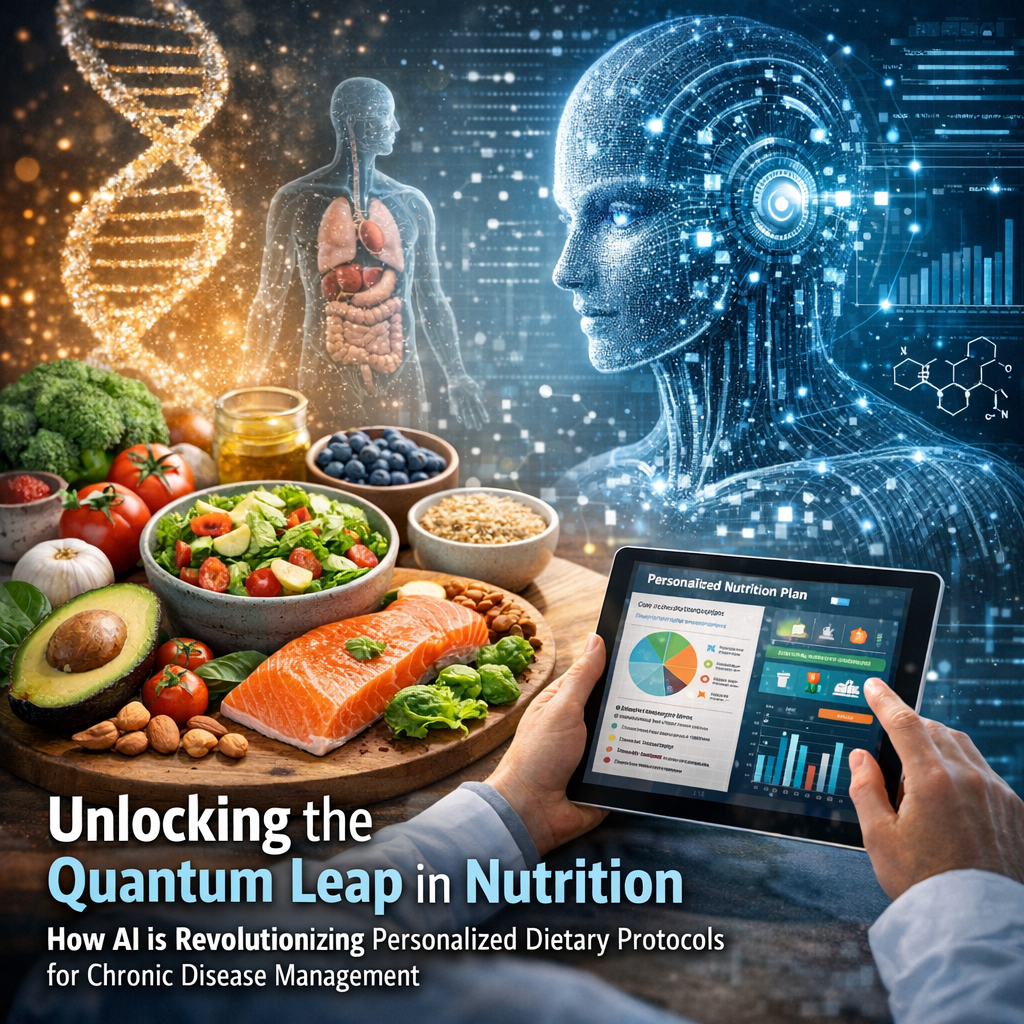
Unlocking the Quantum Leap in Nutrition: How AI is Revolutionizing Personalized Dietary Protocols for Chronic Disease Management
Introduction
In the rapidly evolving landscape of healthcare and nutrition, Artificial Intelligence (AI) is emerging as a transformative force. It offers unprecedented opportunities to enhance dietary interventions for chronic disease management. Chronic diseases, such as diabetes, cardiovascular disease, and obesity, are significant global health challenges due to their extensive economic burdens and widespread impact. Traditional dietary guidelines, though beneficial, often fall short in addressing individual variations related to genetics, lifestyle, and metabolic health. This is where AI becomes a game-changer.
AI’s ability to sift through vast volumes of data with precision and agility is unlocking new dimensions in personalized nutrition. Unlike conventional approaches that offer generalized dietary recommendations, AI leverages machine learning algorithms to develop customized dietary protocols. These protocols take into account an individual’s genetic predispositions, microbiome composition, personal health records, and lifestyle patterns, thereby creating a tailored nutrition plan aimed at improving health outcomes.
The power of AI in nutrition lies in its capacity for data integration and analysis. Wearable devices, mobile health applications, and electronic health records generate immense amounts of personal health data. AI analyzes this data to predict potential health risks, recommend dietary adjustments, and even monitor adherence to prescribed protocols in real-time. This dynamic approach can lead to more precise and effective management of chronic diseases, ensuring that dietary changes yield tangible health improvements.
Moreover, AI is continuously learning and evolving. It not only analyzes current data but also adapts to new findings and individual responses to dietary interventions. This adaptability is crucial in managing chronic diseases where patient needs frequently change and new research insights emerge regularly. As AI technology advances, it promises to democratize personalized nutrition, making it accessible and scalable for a broader population.
Features
In recent years, professional and medical studies have highlighted the formidable potential of AI in transforming dietary protocols for chronic diseases. One notable study published in Nature Medicine demonstrated the effectiveness of AI-driven dietary interventions in managing diabetes. Researchers utilized machine learning models to analyze data from continuous glucose monitors and dietary logs, enabling precise adjustments to individual meal plans. The results indicated significant improvements in glycemic control and a reduction in medication dependency for participants.
Another pivotal study, featured in The Lancet Digital Health, explored AI’s role in cardiovascular disease management. Using AI algorithms, researchers analyzed genetic data alongside lifestyle factors to predict cardiovascular risk and recommend personalized dietary interventions. The study underscored AI’s ability to identify previously unnoticed variables contributing to cardiovascular health, paving the way for targeted dietary strategies.
AI’s application isn’t limited to disease management but extends to preventive care. A comprehensive study from the Journal of Personalized Medicine examined AI’s role in obesity prevention. By collecting data on individuals’ eating behaviors, physical activity, and metabolic rate, AI systems generated personalized nutritional guidelines aimed at maintaining a healthy weight. Participants reported enhanced motivation and adherence to these tailored guidelines compared to traditional methods.
The integration of AI in nutrition also holds promise in understanding the gut microbiome’s role in chronic diseases. Research highlighted in the American Journal of Clinical Nutrition demonstrated how AI could predict dietary-induced changes in microbiota composition, offering insights into the gut-brain axis and its influence on mental health and inflammatory diseases.
These studies illustrate that the synergy between AI and nutrition is not merely theoretical but has practical applications yielding significant health benefits. By customizing dietary interventions, AI enables healthcare providers to move beyond a one-size-fits-all approach, ensuring that patients receive nutrition plans aligned with their unique biological needs. This fusion of technology and nutrition is setting a new standard in chronic disease management.
Conclusion
AI is revolutionizing the realm of personalized nutrition, offering promising solutions for managing chronic diseases more effectively. By harnessing the power of big data and machine learning, AI creates bespoke dietary protocols that cater to individual health profiles. This shift towards precision nutrition not only enhances health outcomes but also empowers individuals to take control of their health journeys. As AI technology becomes more accessible, it promises to bridge the gap between advanced medical research and everyday dietary practices, ultimately contributing to the global endeavor of reducing the impact of chronic diseases. The future of personalized nutrition is here, and AI sits at its helm, steering us towards a healthier world.
Concise Summary
AI is reshaping personalized nutrition by offering tailored dietary protocols for chronic disease management through its ability to analyze vast data. It integrates data from wearables and health records to predict risks and recommend precise interventions. Studies, such as those in Nature Medicine and The Lancet Digital Health, demonstrate AI’s effectiveness in managing conditions like diabetes and cardiovascular diseases, highlighting its ability to adapt and improve outcomes. AI’s growing accessibility and scalability promise a future where personalized nutrition is achievable for all, advancing efforts to combat the global prevalence of chronic diseases.

Dominic E. is a passionate filmmaker navigating the exciting intersection of art and science. By day, he delves into the complexities of the human body as a full-time medical writer, meticulously translating intricate medical concepts into accessible and engaging narratives. By night, he explores the boundless realm of cinematic storytelling, crafting narratives that evoke emotion and challenge perspectives.
Film Student and Full-time Medical Writer for ContentVendor.com