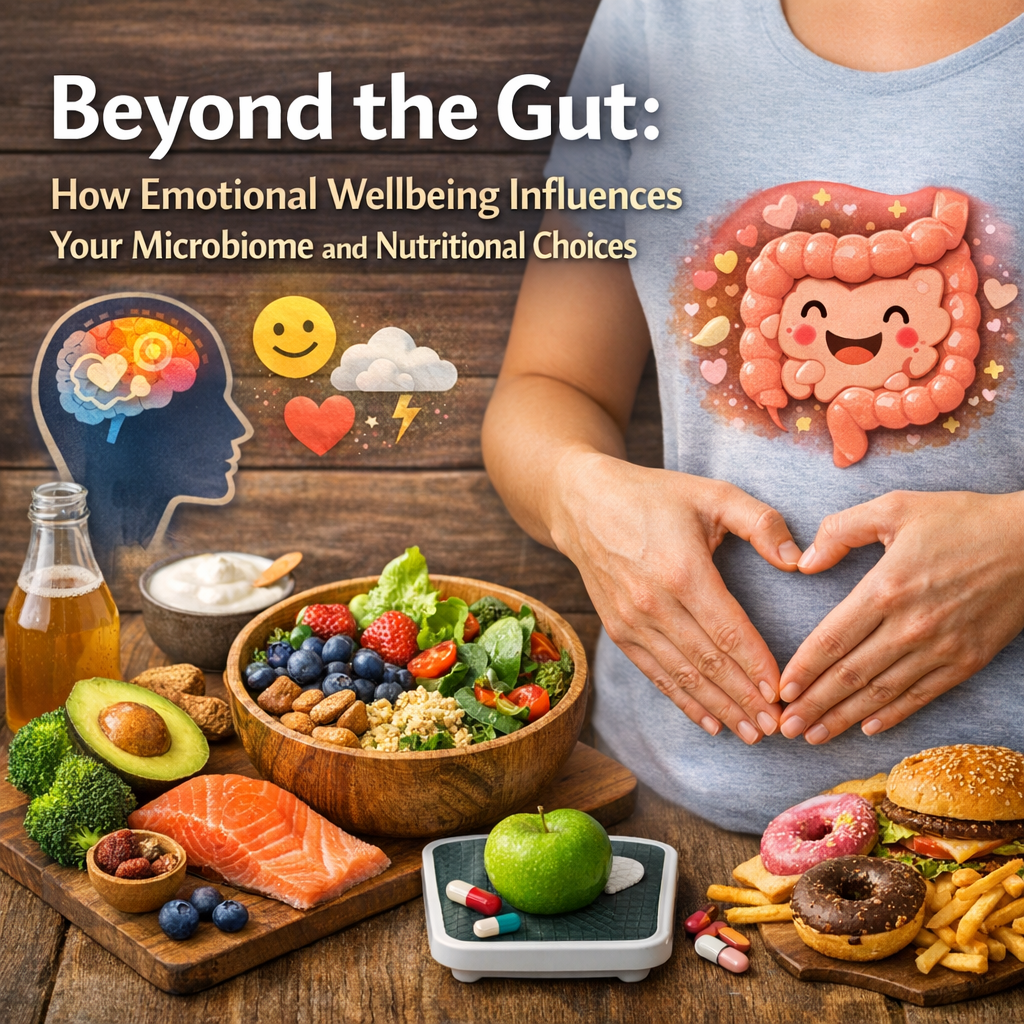
Beyond the Gut: How Emotional Wellbeing Influences Your Microbiome and Nutritional Choices
Introduction
In recent years, the intricate connection between our gut health and overall wellbeing has garnered widespread attention. As research delves deeper into the mysteries of the human microbiome, we’ve begun to uncover the profound influence that emotions and mental health wield over our gut ecosystem. The gut-brain axis, a bidirectional communication pathway between the gastrointestinal tract and the brain, serves as a crucial mediator between our emotional state and gut flora balance.
This interplay is pivotal because our microbiome, consisting of trillions of microorganisms, not only aids digestion but also plays a role in immune function, hormone regulation, and even mood stabilization. Disturbances in the gut microbiome could lead to a plethora of health issues, including digestive disorders, obesity, and mental health challenges like anxiety and depression.
Stress, anxiety, and depression can trigger changes in gut motility, permeability, and secretion levels, thereby altering the gut environment and subsequently the microbiota composition. An imbalanced microbiome can exacerbate stress and mood disorders, potentially creating a vicious cycle. Furthermore, emotional wellbeing influences dietary choices, often driving individuals to seek comfort in high-calorie, low-nutrient “comfort foods” that can further disrupt gut equilibrium.
Understanding the vital connection between our emotional health and microbiome can provide new insights into holistic approaches for achieving physical and psychological balance. Addressing stress through mindfulness, physical activity, and dietary changes could potentially nurture a healthier gut microbiome, leading to improved mood and overall health.
Features
To appreciate the profound relationship between emotional wellbeing and the microbiome, it is essential to consider scientific research illuminating these connections. A landmark study published in Nature explored the impact of stress on gut microbiota and its subsequent influence on stress-related behaviors in mice. Researchers discovered that stress-induced alterations in gut flora could be mitigated by transferring probiotics, which stabilized both gut health and behavioral responses.
Moreover, a 2017 study in Psychosomatic Medicine demonstrated that individuals who practiced regular mindfulness meditation experienced notable improvements in both emotional resilience and microbial diversity, suggesting that mental health interventions can have tangible benefits on gut health.
Harvard Health also highlights the role of the gut-brain axis in shaping our emotional states. Serotonin, a key neurotransmitter often dubbed the “feel-good” hormone, is largely produced in the gut. Disturbances in the gut microbiota may impair serotonin synthesis, contributing to mood disorders. This highlights the critical need to support our gut environment through both diet and emotional health strategies.
Furthermore, researchers from the University of California, Berkeley, conducted a study demonstrating how emotional stress alters gut bacteria, enhancing susceptibility to gastrointestinal diseases and impacting nutrient absorption and metabolism. These findings point toward the potential of therapies targeting emotional wellbeing to regulate gut health and improve dietary habits.
Conclusion
The intricate connection between emotional wellbeing and gut health underscores the importance of integrating mental health strategies into nutritional and lifestyle practices. With the gut-brain axis serving as a crucial link, any disruption in emotions can reverberate through our gut environment, influencing everything from digestion to mood. By fostering emotional resilience through mindfulness, stress management, and healthy dietary choices, we can work towards nurturing a well-balanced microbiome. This holistic approach enables us to break the cycle of gut disorder and emotional distress, fostering improved physical health and greater mental clarity. As we continue to unravel the complex relationship between our emotions and microbiome, it becomes increasingly apparent that caring for our gut is not just about dietary choices but also about cultivating emotional balance and wellbeing.
Concise Summary
The connection between our emotional wellbeing and gut microbiome is extensive, as highlighted by the gut-brain axis. Emotional states like stress and anxiety can alter gut microbiota, affecting digestion and overall health. Studies show that stress can disrupt the gut’s environment but can be counteracted with practices like mindfulness and probiotics. By nurturing this connection through emotional resilience, stress management, and dietary choices, we can move towards improved physical and mental health. Understanding this balance is crucial for holistic health strategies that address both nutritional needs and emotional wellbeing.

Dominic E. is a passionate filmmaker navigating the exciting intersection of art and science. By day, he delves into the complexities of the human body as a full-time medical writer, meticulously translating intricate medical concepts into accessible and engaging narratives. By night, he explores the boundless realm of cinematic storytelling, crafting narratives that evoke emotion and challenge perspectives.
Film Student and Full-time Medical Writer for ContentVendor.com