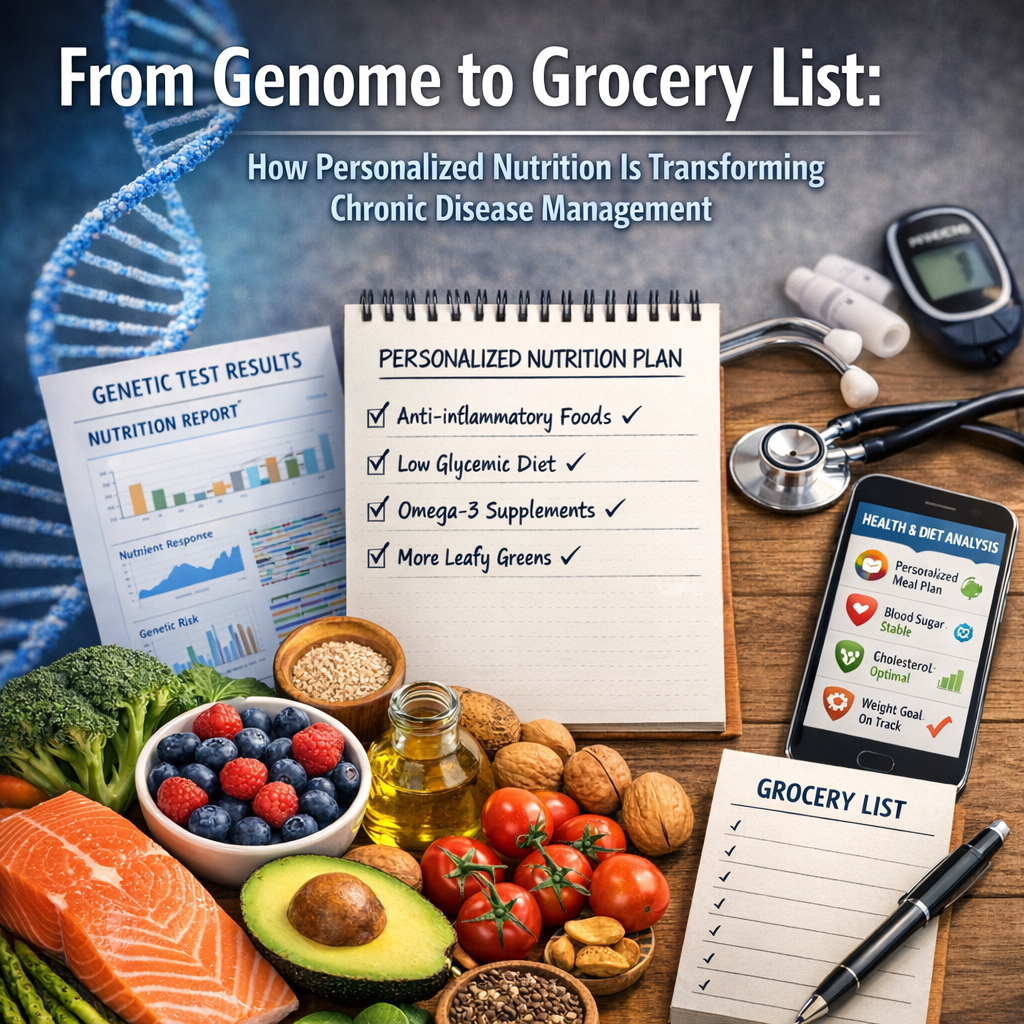
From Genome to Grocery List: How Personalized Nutrition Is Transforming Chronic Disease Management
Introduction
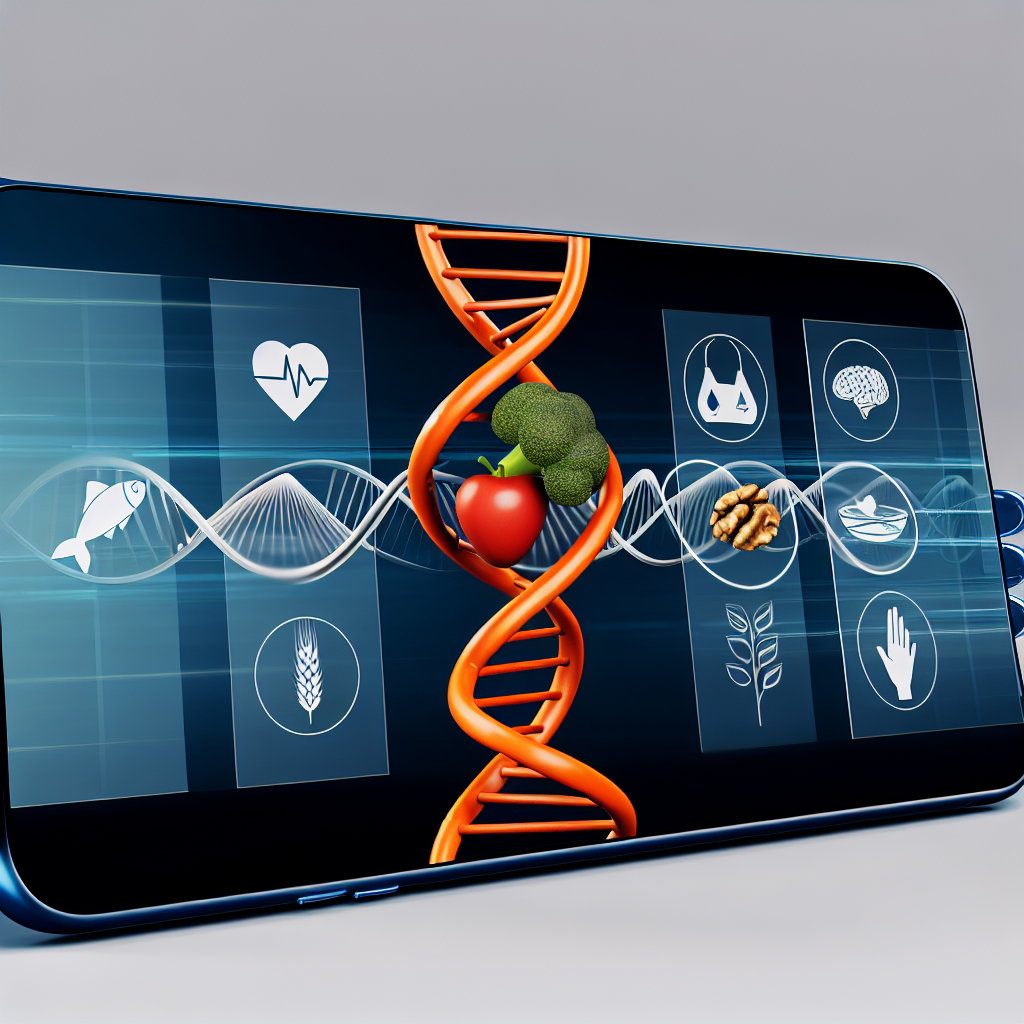
In an era where “one-size-fits-all” is rapidly becoming obsolete across various sectors, the realm of nutrition and healthcare is undergoing a transformative shift. Personalized nutrition, emerging at the confluence of genomics and dietary science, represents a paradigm shift in how we approach chronic disease management. At its core, personalized nutrition acknowledges that each individual’s genetic profile, lifestyle, and environment create a unique nutritional requirement and metabolic response to different foods. This approach contrasts sharply with traditional dietary guidelines which often fail to account for these individual distinctions.
Chronic diseases like diabetes, cardiovascular diseases, and autoimmune disorders pose significant challenges in terms of management and mitigation. These conditions, often exacerbated by dietary factors, account for substantial morbidity and mortality worldwide. Consequently, a generic dietary recommendation has proven to be insufficient, often resulting in suboptimal health outcomes and patient adherence.
Personalized nutrition addresses these challenges by leveraging advancements in genomics and big data analytics to tailor dietary recommendations uniquely suited to an individual’s genetic makeup. This bespoke approach enables individuals and healthcare providers to refine meal planning down to the micronutrient level, facilitating improved disease management and prevention strategies.
For example, through a simple genomic test, individuals can ascertain their predispositions to certain health conditions influenced by dietary factors. By aligning dietary intake with this genomic data, one can effectively prevent the onset or progression of specific diseases. Furthermore, personalized nutrition holds promise in enhancing the efficacy of homeopathic and herbal treatments, providing a robust framework for integrating traditional medicine practices into modern healthcare paradigms.
The implications are vast, revolutionizing not just individual health outcomes but also how society approaches diet-related chronic diseases. By moving away from generic dietary prescriptions and towards personalized, data-driven nutrition strategies, we stand on the brink of a new frontier in healthcare — one where our grocery list is not just a collection of foods, but a strategic tool in chronic disease management.
Features
The burgeoning field of personalized nutrition is underpinned by a wealth of scientific research, highlighting the intricate relationship between our genetic makeup and dietary needs. A pivotal study published in the journal [Nature](https://www.nature.com/articles/nature14238) explores this connection, revealing that individuals metabolize foods differently based on genetic variations. For example, the study demonstrates how some people possess genetic variants that affect lipid metabolism, putting them at risk for hyperlipidemia when consuming saturated fats, while others do not experience the same outcome through identical dietary intake.
Another study conducted by the [American Journal of Clinical Nutrition](https://academic.oup.com/ajcn) used a cohort of individuals with varying dietary histories to investigate insulin sensitivity and glucose metabolism. Findings indicate significant individual differences in glycemic response linked directly to genetic polymorphisms. Such insights are crucial in the context of managing diabetes — a condition where controlling blood sugar levels through diet is imperative.
Apart from genetic factors, personalized nutrition also involves microbiome analysis — another frontier in the field. Research points to the gut microbiome being a critical determinant of how foods are processed and nutrients are extracted. A study in [Cell](https://www.cell.com/cell/) demonstrates that gut microbiota composition affects dietary fiber metabolism, influencing how different individuals report symptoms like bloating or discomfort commonly associated with fiber-rich diets. Understanding this interaction helps tailor dietary recommendations that ease symptoms while promoting gut health.
Personalized nutrition doesn’t just remain in the academic realm; it’s making tangible impacts on patients’ lives. Health institutions are beginning to integrate genomic data into patient records, allowing clinicians to leverage these insights for more personalized dietary and treatment recommendations. Homeopathic and herbal treatments particularly benefit as they can now be more accurately aligned with an individual’s unique biological makeup, optimizing therapeutic outcomes with minimal risk of adverse effects.
By synthesizing genomic data, dietary science, and traditional practices, personalized nutrition is poised to revolutionize chronic disease management, ensuring that dietary interventions are not only preventive but also curative, tailored to the unique biological tapestry of each individual.
Conclusion
The dawn of personalized nutrition is reshaping the landscape of chronic disease management. By tailoring dietary recommendations to individual genetic profiles, we can optimize health outcomes and enhance patient adherence. As we deepen our understanding of the genetic determinants of metabolism and the pivotal role the microbiome plays, we unlock the potential for dietary strategies that are profoundly individualized.
In embracing this new frontier, healthcare providers and patients alike can look forward to more effective and holistic disease management plans. Personalized nutrition empowers individuals to engage in proactive health management, turning dietary choices into potent tools for combating chronic diseases. The trailblazing integration of genomic insights and traditional treatments heralds an era where our grocery list is not just a reflection of our tastes but a testament to our commitment to personal health and longevity.
Concise Summary
Personalized nutrition is transforming chronic disease management by tailoring dietary recommendations to individual genetic profiles, lifestyle, and environmental factors. This approach moves away from generic dietary guidelines, improving health outcomes for conditions such as diabetes and cardiovascular diseases. By utilizing advances in genomics and microbiome analysis, personalized nutrition enables bespoke meal planning that optimizes metabolic responses and enhances the efficacy of homeopathic treatments. This innovative strategy not only facilitates preventive healthcare but also enables proactive disease management, positioning dietary choices as strategic tools in combating chronic diseases.

Dominic E. is a passionate filmmaker navigating the exciting intersection of art and science. By day, he delves into the complexities of the human body as a full-time medical writer, meticulously translating intricate medical concepts into accessible and engaging narratives. By night, he explores the boundless realm of cinematic storytelling, crafting narratives that evoke emotion and challenge perspectives.
Film Student and Full-time Medical Writer for ContentVendor.com