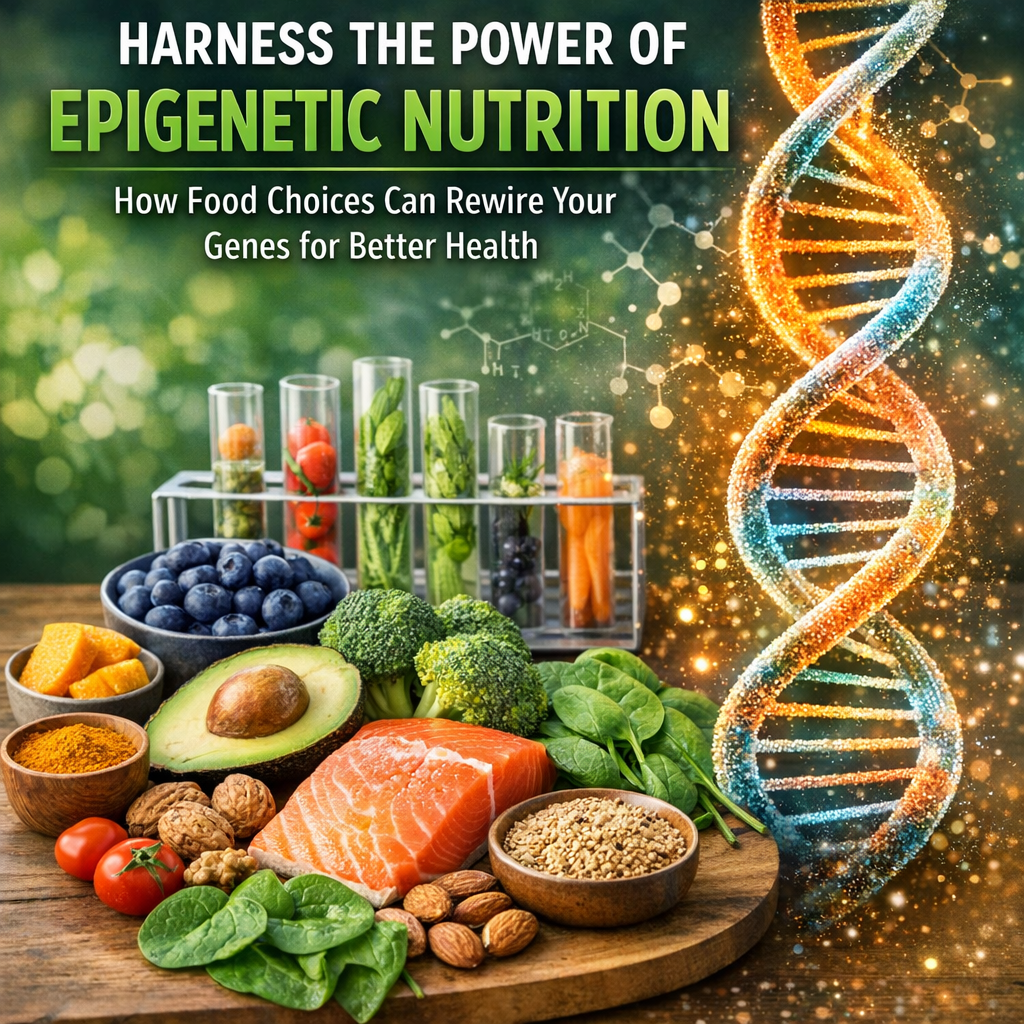
Harness the Power of Epigenetic Nutrition: How Food Choices Can Rewire Your Genes for Better Health
Introduction
In the ever-evolving landscape of health and wellness, a groundbreaking concept has emerged at the forefront: epigenetic nutrition. This paradigm shifts the focus from simply consuming healthy ingredients to understanding how the foods we consume can influence our gene expression and, ultimately, our health. The phrase “you are what you eat” now extends to epigenetics, introducing the idea that “you are what your ancestors ate and what you choose to eat today.”
Epigenetics studies changes in gene function that do not involve alterations to the underlying DNA sequence—a mechanism through which the environment and individual lifestyle choices directly affect gene expression. Nutrients and bioactive compounds found in foods can turn genes on or off, influencing biological pathways that control everything from inflammation to metabolism and disease resistance. This insight has sparked a revolution in dietary research, uncovering that what we consume can have profound, lasting health implications that extend even to future generations.
The notion that dietary components such as folate, polyphenols, and vitamins can modify gene expression underscores the importance of mindful eating. Epigenetic nutrition advocates for a diet rich in whole, fresh, and minimally processed foods. These are not just nutritional powerhouses; they are messengers that communicate with our genes, encouraging expressions linked to health and longevity. Cruciferous vegetables, fatty fish, berries, nuts, and seeds, for instance, are noted for their epigenetic impact, promoting beneficial transformations at the genetic level.
Understanding epigenetics empowers individuals to take charge of their health. By recognizing which foods yield positive alterations in our gene expressions, we can tailor our diets to achieve optimal health outcomes. In this sense, the dinner table becomes a strategic platform where preventive healthcare and nutrition converge to not only support robust health today but safeguard genetic health for future generations.
Features
A growing body of scientific literature supports the concept of epigenetic nutrition, revealing that dietary choices can indeed influence gene behavior. For instance, a study published in the journal *Science* highlighted how maternal diet and lifestyle factors during pregnancy can affect the epigenome of the offspring, illustrating the trans-generational impact of nutrition. [Read more in Science Journal](https://www.science.org/)
Another significant study in *Nature Reviews Genetics* outlined the role of bioactive food compounds in modifying epigenetic markers. Polyphenols found in green tea, for instance, have been shown to inhibit DNA methyltransferases, thereby enhancing the expression of tumor suppressor genes and reducing the risk of cancer. This suggests that incorporating foods rich in polyphenols might serve as a dietary strategy to mitigate cancer risk over the long term. [Explore the study in Nature Reviews Genetics](https://www.nature.com/nrg/)
Additionally, research published in the journal *Cell Metabolism* elaborated on how calorie restriction and timing of food intake can affect the epigenome, potentially altering signals related to aging and longevity. This underscores the influence of not just what we eat, but when and how much we eat on our genetic health. [Find out more in Cell Metabolism](https://www.cell.com/cell-metabolism)
Folate-rich foods like leafy greens have been noted for their capacity to supply methyl groups necessary for accurate DNA methylation, implicating their role as essential components of an epigenetic diet. This well-documented mechanism is key in preventing neural tube defects during fetal development and can have implications for reducing lifetime disease risk.
These studies underline a pivotal concept: epigenetic flexibility. Unlike the fixed nature of genetic mutations, epigenetic marks can be flexible, offering a powerful leverage point for dietary interventions aimed at health optimization. The compelling evidence points towards a future where personalized nutrition—guided by individual epigenetic predispositions—can enhance well-being and thwart the progression of various chronic diseases.
Conclusion
As our knowledge of epigenetics and nutrition becomes more nuanced, it emphasizes the vital role of informed dietary decisions in reshaping health destinies. Beyond merely meeting nutritional needs, embracing an epigenetic nutrition approach could be key to unlocking improved health outcomes. The concept that our food choices have the potential to “rewire” our genetic expression offers hope for achieving a long, healthy life while reducing the risk for chronic illnesses through lifestyle adjustments. Empowered with this awareness, individuals are better positioned to make conscious food choices, thereby actively participating in their health journey. The path of epigenetic nutrition—though still unfolding—potentially heralds a future where our meals are not only sustenance but powerful tools for genetic wellness.
References
1. Science – Maternal Diet and Offspring Epigenome: [Science Journal](https://www.science.org/)
2. Nature Reviews Genetics – Bioactive Food Compounds: [Nature Reviews Genetics](https://www.nature.com/nrg/)
3. Cell Metabolism – Caloric Restriction and Epigenomics: [Cell Metabolism](https://www.cell.com/cell-metabolism)
Concise Summary
Epigenetic nutrition focuses on how food choices impact gene expression without altering DNA sequences. Nutrients and bioactive compounds can turn genes on or off, affecting health outcomes. This approach advocates for a diet rich in whole, fresh foods that communicate with genes for health and longevity. Current research, highlighted in journals like *Science*, *Nature Reviews Genetics*, and *Cell Metabolism*, supports the power of personalized nutrition based on epigenetics, which promotes well-being and prevents chronic diseases. Understanding these insights empowers individuals to make dietary choices that can positively reshape genetic health for current and future generations.

Dominic E. is a passionate filmmaker navigating the exciting intersection of art and science. By day, he delves into the complexities of the human body as a full-time medical writer, meticulously translating intricate medical concepts into accessible and engaging narratives. By night, he explores the boundless realm of cinematic storytelling, crafting narratives that evoke emotion and challenge perspectives.
Film Student and Full-time Medical Writer for ContentVendor.com