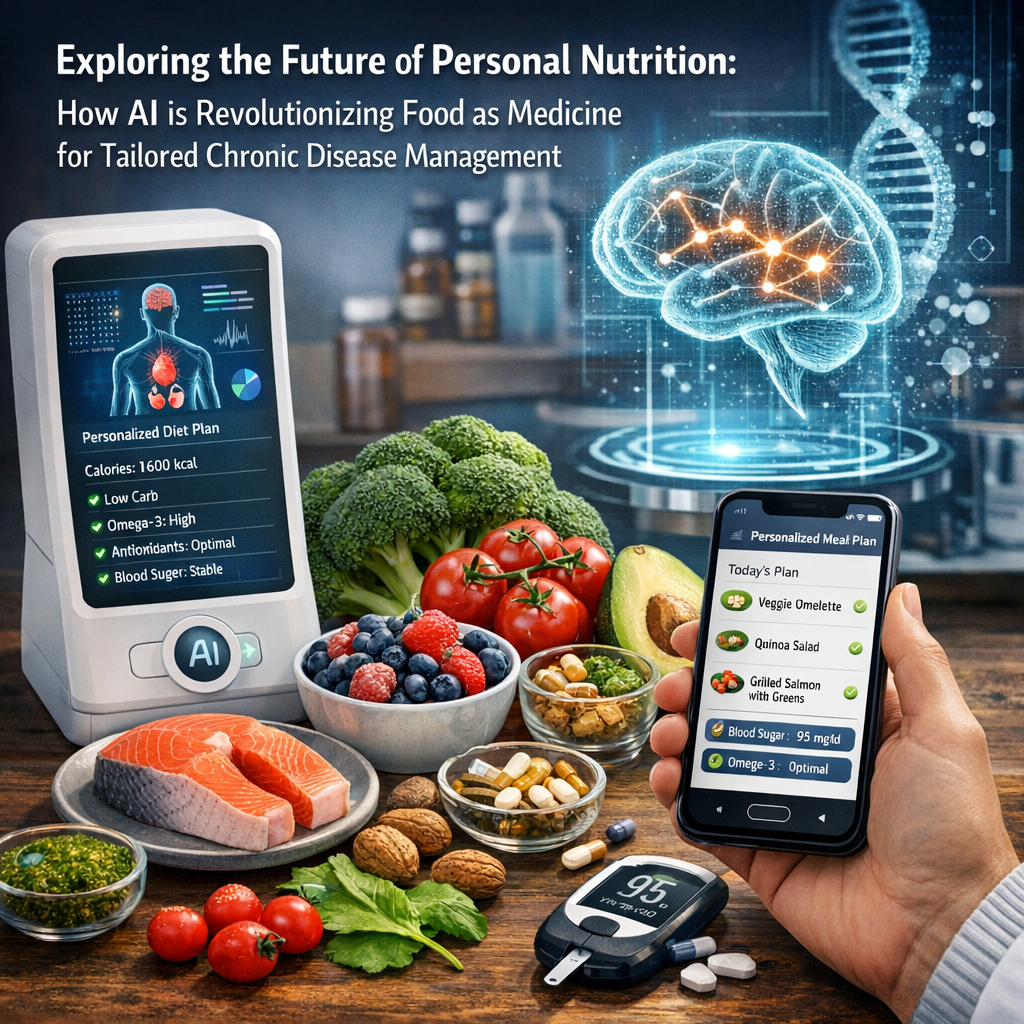
Exploring the Future of Personal Nutrition: How AI is Revolutionizing Food as Medicine for Tailored Chronic Disease Management
In an era where technological advancements are rapidly shaping every aspect of our lives, the intersection of artificial intelligence (AI) and nutrition is poised to revolutionize healthcare and personal well-being. For centuries, cultures around the globe have embraced the concept of food as medicine. From the health-promoting attributes of garlic to the anti-inflammatory benefits of turmeric, natural ingredients have always held a significant place in managing and preventing diseases. However, the contemporary challenge is tailoring this ancient wisdom to fit individual needs, especially for those managing chronic diseases. This is where AI steps into the arena, offering unprecedented personalization in dietary recommendations and therapeutic interventions.
AI is changing the landscape of personal nutrition by offering solutions that go beyond the traditional one-size-fits-all dietary plans. With an intricate understanding of vast datasets, machine learning algorithms can analyze and predict how specific nutrients and foods interact with individual genetic profiles and existing health conditions. This personal approach is particularly impactful for managing chronic diseases like diabetes, heart disease, and autoimmune disorders, where diet plays a crucial role in maintaining health and preventing symptom flare-ups.
AI’s potential in redefining food as medicine is not just limited to data analysis but also extends to practical applications. AI-powered applications can provide insights on the nutritional content of meals, recommend alternatives suited to personal health objectives, and even forecast potential health risks associated with certain dietary patterns. By continuously learning from personal health data, lifestyle factors, and real-time feedback, AI systems can evolve to provide more nuanced and effective dietary guidance.
As we explore the future of personal nutrition, it is crucial to consider the ethical and social implications of using AI in health recommendations. Ensuring data privacy, overcoming bias in AI algorithms, and making technology accessible to all socio-economic groups must be prioritized. Nevertheless, as technology advances, the hope is that AI-assisted personalized nutrition will become an integral part of chronic disease management, empowering individuals to take informed control of their health through their diet.
Features: Recent Studies on AI and Personalized Nutrition
Numerous studies underscore the transformative potential of AI in personalized nutrition and chronic disease management. A study published in Nature highlighted how AI could effectively predict individual glucose responses based on numerous variables, including gut microbiota composition, meal content, and lifestyle factors. This ability to anticipate unique metabolic responses is critical for crafting personalized dietary interventions, particularly for individuals managing diabetes where glucose levels need vigilant oversight.
Another pertinent study conducted by Stanford University explored AI’s capability in analyzing vast datasets derived from genomic, metabolomic, and microbiome data to derive tailored nutritional plans. The research emphasized how integrating AI with omics technologies can uncover new connections between diet and disease, thus paving the way for targeted dietary strategies that address specific health challenges.
Moreover, the Journal of the American Medical Association published findings on the application of AI in clinical nutrition. It discussed how AI algorithms could identify patterns and correlations that escape human expertise, thereby informing more effective and individualized dietary interventions for managing cardiovascular diseases. By assessing patients’ electronic health records and combining them with dietary patterns, AI-driven approaches showed measurable improvements in patients’ health outcomes.
These studies signify a paradigm shift towards precision nutrition, leveraging AI’s analytical power to move from generic guidelines to highly tailored nutritional strategies. The implications are vast, offering hope for those with complex health conditions that require a nuanced approach to dietary management.
Conclusion
The integration of AI into the realm of nutritional science and chronic disease management harbors remarkable promise. At its core, AI offers a personalized pathway to health, addressing the dynamic interplay between diet and disease on an individual level. As technology evolves, it will become increasingly essential to ensure ethical considerations are addressed, securing data privacy and broad access to these advancements.
AI’s role in tailoring nutrition holds the potential not only to enhance the quality of life for millions but also to decrease healthcare costs by preemptively managing chronic diseases through diet. As we navigate this promising landscape, the future of personalized nutrition guided by AI signifies a holistic shift from conventional medicine towards a more integrated, food-forward approach to health and wellness.
References
1. Nature – Personalized nutrition by prediction of glycemic responses
2. Stanford Medicine – Omics and Artificial Intelligence: A Partnership in Healthcare
3. Journal of the American Medical Association – AI and Meal Pattern Mapping in Cardiovascular Disease
—
Concise Summary
The fusion of artificial intelligence (AI) and nutrition is leading to groundbreaking changes in healthcare, especially for chronic disease management. By leveraging personal health data, AI offers tailored dietary recommendations, moving away from generic plans towards individualized nutrition strategies. Recent studies, including those from *Nature* and *Stanford University*, highlight AI’s capability to predict metabolic responses and derive personalized nutritional plans. As this technology becomes more ingrained in health management, it raises ethical concerns, emphasizing the need for responsible application. Nevertheless, AI promises a transformative shift towards personalized, food-based health interventions.

Dominic E. is a passionate filmmaker navigating the exciting intersection of art and science. By day, he delves into the complexities of the human body as a full-time medical writer, meticulously translating intricate medical concepts into accessible and engaging narratives. By night, he explores the boundless realm of cinematic storytelling, crafting narratives that evoke emotion and challenge perspectives.
Film Student and Full-time Medical Writer for ContentVendor.com