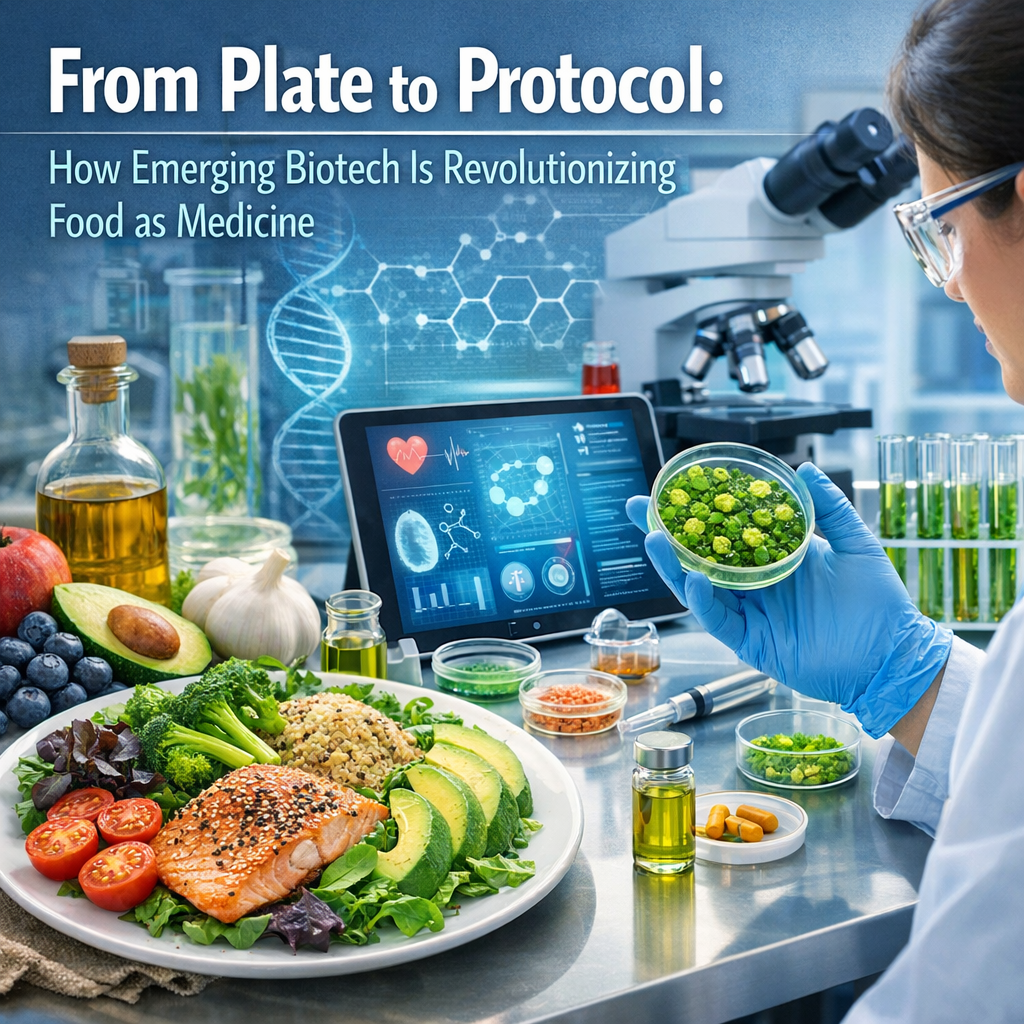
From Plate to Protocol: How Emerging Biotech Is Revolutionizing Food as Medicine
Introduction
In recent years, the phrase “let food be thy medicine” has evolved from a charming aphorism to a burgeoning field of scientific research and innovation. The intersection of biotechnology and nutrition is generating a tidal wave of advancements that promise to redefine the way we approach health and wellness. As more individuals seek natural cures, homeopathic solutions, and herbal treatments, emerging biotechnology provides a groundbreaking perspective on using food as medicine. This concept isn’t entirely new; ancient civilizations have long harnessed the healing power of foods. However, technological advancements are now enabling us to unlock specific health benefits at a molecular level, offering personalized nutrition solutions tailored to individual needs and genetic makeup.
The transformation hinges on the realization that diet impacts far more than just physical health. A growing body of research highlights the profound effect of nutrition on mental well-being, disease prevention, and even genetic expression. Biotechnological advancements, including genomics and microbiomics, are pivotal in this shift. They enable a deeper understanding of how our bodies interact with different foods, revealing new pathways to naturally prevent and cure ailments.
For instance, personalized nutrition, bolstered by genetic testing, allows individuals to identify specific foods best suited for their unique genetic makeup, thereby promoting optimal health and preventing disease. Additionally, the study of the gut microbiome—the complex community of microorganisms residing in our digestive tract—has gained significant attention. Innovations reveal how certain probiotics and prebiotic-rich foods can balance gut bacteria, influencing everything from immune health to mental clarity.
The application of these biotechnological tools extends into the realm of herbal and homeopathic treatments as well. Bioengineering is enabling the extraction and enhancement of active compounds from plants, optimizing their potency and efficiency as natural remedies. Consequently, a revolution in how we perceive and utilize food as medicine is underway, poised to integrate dietary advice into the mainstream healthcare dialogue.
Features
At the forefront of this revolution is an increasing number of professional and medical studies illuminating the potential of food as a medicinal protocol. For example, a study published in the journal “Nature Reviews Disease Primers” explores the role of the microbiome in shaping the immune response. Researchers at the University of California, San Francisco, emphasized that manipulating the gut microbiota with precise dietary interventions could help manage autoimmune diseases ([source](https://www.nature.com/nrdp)).
In a separate groundbreaking study, scientists from King’s College London demonstrated how personalized nutrition, tailored to an individual’s genetic, metabolic, and psychosocial background, could improve dietary outcomes significantly. Their research indicated that a one-size-fits-all approach to nutrition is outdated, as individuals respond uniquely to the same foods ([source](https://www.kcl.ac.uk/research)).
Moreover, advancements in gene editing technologies, like CRISPR, are being explored to fortify foods with enhanced nutritional profiles. Researchers are modifying the DNA of crops to increase their vitamin content, reduce allergens, and boost resistance to pests, thereby promoting food security and improving public health ([source](https://www.science.org/journal/CRISPR-research)).
In the realm of herbal medicine, scientists employ synthetic biology to amplify the active constituents of medicinal plants. For example, research at the Massachusetts Institute of Technology focuses on increasing the potency of curcumin—an active compound in turmeric known for its anti-inflammatory properties—through selective breeding and biotechnological intervention ([source](https://www.mit.edu/research)).
The culmination of these efforts is a robust framework through which food can be strategically used to prevent and manage diseases. It positions diet as a cornerstone of health, steering away from pharmaceuticals towards natural and more sustainable options.
Conclusion
The era of food as medicine is no longer a distant marvel but a rapidly advancing reality, thanks to the transformative power of biotechnology. As insights into how our bodies interact with different foods continue to evolve, so too will our ability to combat disease, improve mental and physical well-being, and promote longevity through dietary choices. This approach reimagines food not merely as sustenance but as a crucial element of healthcare, offering innovative avenues for prevention and treatment.
These advancements herald a future where prescriptions come alongside personalized dietary recommendations, supplementing or even replacing traditional medicinal protocols with food-based solutions. As we stand on the brink of this exciting transformation, it becomes imperative for consumers, healthcare providers, and policymakers to embrace and facilitate the integration of biotechnology in nutrition, ensuring a healthier, more sustainable future for all.
Concise Summary
Biotechnology intertwining with nutrition is transforming food from mere sustenance into powerful therapeutic agents. Personalized nutrition, aided by genetic insights, tailors dietary choices for individual health benefits, while gut microbiome studies highlight food’s impact on immune and mental health. Gene editing and synthetic biology enhance the nutritional and medicinal potency of foods and plants. These advancements are reshaping healthcare, making food a primary tool in disease prevention and management, signaling a shift towards sustainable, natural health solutions. The integration of biotechnology in daily nutrition is set to redefine personalized healthcare and overall well-being.

Dominic E. is a passionate filmmaker navigating the exciting intersection of art and science. By day, he delves into the complexities of the human body as a full-time medical writer, meticulously translating intricate medical concepts into accessible and engaging narratives. By night, he explores the boundless realm of cinematic storytelling, crafting narratives that evoke emotion and challenge perspectives.
Film Student and Full-time Medical Writer for ContentVendor.com