Decoding Nutrigenomics: Personalized Nutrition Protocols for Tackling Chronic Inflammation and Autoimmunity
Introduction
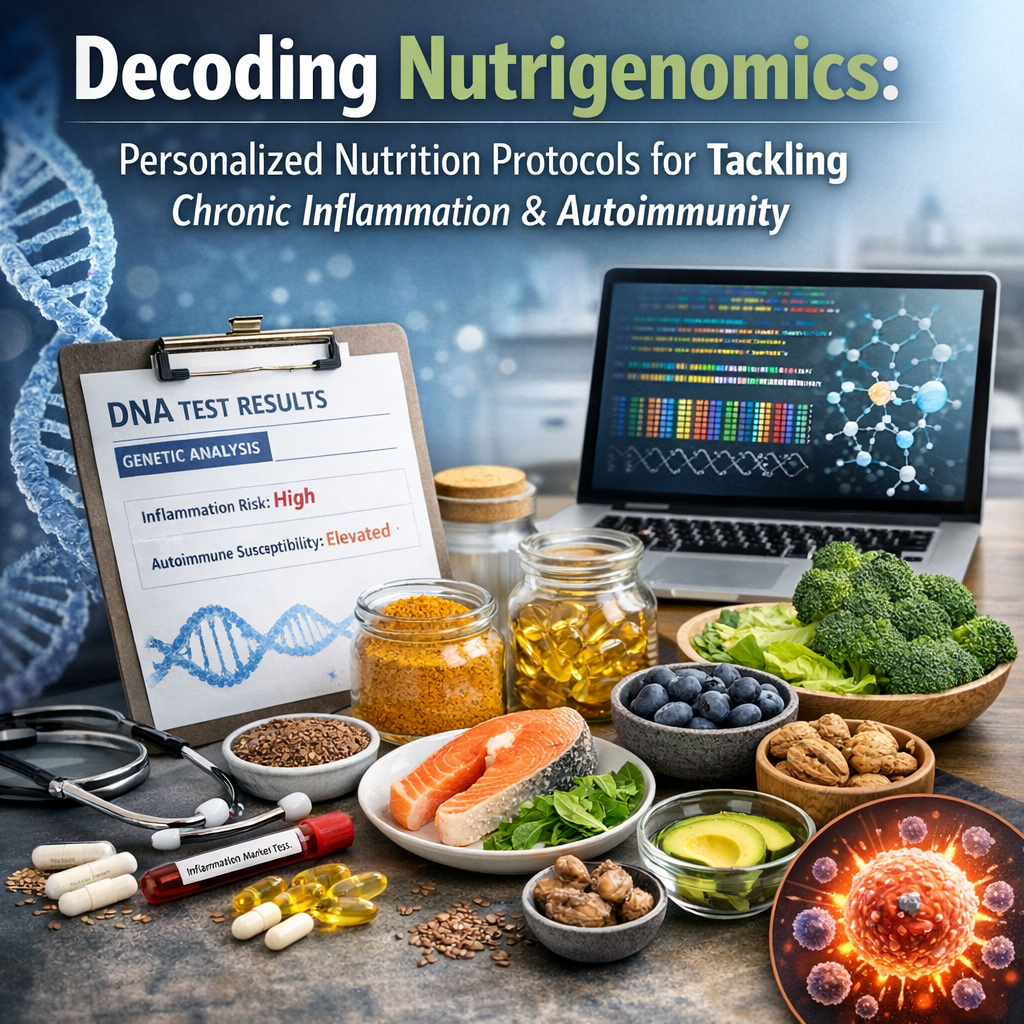
Nutrigenomics is an emerging field at the intersection of nutrition, genomics, and molecular biology, offering promising insights into how diet can influence health at the genetic level. By understanding how individual genetic variations affect nutrient metabolism, nutrigenomics provides the groundwork for developing personalized nutrition protocols. This personalized approach can be particularly beneficial for managing chronic inflammation and autoimmune disorders, complex conditions that are sensitive to dietary influences.
These conditions arise when the immune system operates in overdrive, triggering persistent inflammation that can damage healthy tissues and organs. Traditional treatments like medication and lifestyle changes offer some relief, but many seek complementary methods to address these conditions holistically. Nutrigenomics plays a critical role here, owing to recent advancements in genetic testing which now identify specific gene variants responsible for inflammatory responses and immune system behaviors. By tailoring dietary recommendations based on this genetic information, such approaches have potential in reducing inflammation and symptoms associated with autoimmunity.
Current scientific research points towards promising applications of nutrigenomics in treating hard-to-manage conditions. Personalized nutrition plans based on genetic insights can offer strategic advantages in preventing and managing health conditions. This personalized method in dietary choices represents a revolutionary step towards achieving optimal health. It enables individuals to possibly alleviate chronic inflammatory or autoimmune conditions by adopting a diet that fits their unique genetic makeup.
Features
The connection between genes and nutrition in mitigating chronic inflammation and autoimmunity has been the subject of several studies. Research published in the *Journal of Nutritional Biochemistry* [link](#) demonstrates how certain genetic variations in genes encoding inflammatory cytokines can be modulated through dietary intervention. For example, individuals carrying specific polymorphisms in the TNF-alpha gene might experience a reduction in inflammatory markers by incorporating omega-3 fatty acids found in fish oil.
Moreover, a study in *The American Journal of Clinical Nutrition* [link](#) delved into the role of vitamin D, acknowledging its capability to influence gene expression linked to immune responses. This research illustrated that individuals predisposed to Vitamin D deficiency could adjust their levels through supplementation, potentially diminishing risks of autoimmunity, such as multiple sclerosis or rheumatoid arthritis.
In *Genes & Nutrition* [link](#), a systematic review delved into how personalized nutrition, based on gene-diet interaction evidence, can manage autoimmune diseases. The authors suggested that epigenetic mechanisms, including DNA methylation influenced by nutrient intake, can alter gene expression without changing the genetic structure. This represents a substantive opportunity for dietary interventions to ameliorate expressions of genes tied to immune dysfunctions.
Furthermore, research examining the impact of the Mediterranean diet on inflammation highlighted its benefits across various genotypes. This diet, rich in antioxidants, omega-3 fats, and phytochemicals, has been linked to decreased expression of pro-inflammatory genes, offering a dietary template adaptable to an individual’s genetic profile.
Although in its infancy, nutrigenomics showcases promising potential for detailed dietary guidance. Recognizing the genetic diversity of humans explains why a one-size-fits-all approach often fails. Ongoing clinical trials and genotypic research continue to bolster nutrigenomics’ practical applications in combating chronic inflammation and autoimmunity.
Conclusion
Nutrigenomics represents a groundbreaking paradigm in personalized medicine and nutrition, offering new hope for those battling chronic inflammation and autoimmune disorders. By tailoring diets based on genetic predispositions, individuals can transform how they manage health, reducing reliance on traditional treatments and enhancing quality of life.
Advancing research and accessible genetic testing make personalized nutrition an integral part of holistic health strategies. Nutrigenomics empowers individuals to make informed dietary decisions and enables healthcare providers to offer proactive, rather than reactive, interventions. This precision-based approach underscores the significance of personalized care in achieving sustainable health outcomes.
By embracing nutrigenomics, alleviating chronic inflammation and autoimmunity becomes a testament to integrating genomic insights with nutrition science, paving the way for healthier futures.
References
1. [Journal of Nutritional Biochemistry: Study on inflammatory cytokines and omega-3s](#)
2. [The American Journal of Clinical Nutrition: Study on vitamin D and immune response](#)
3. [Genes & Nutrition: Systematic review on gene-diet interaction](#)
4. [Mediterranean diet and inflammation: Related research](#)
Concise Summary
Nutrigenomics bridges the fields of nutrition and genetics to develop personalized dietary protocols aimed at mitigating chronic inflammation and autoimmune disorders. By identifying genetic predispositions and tailoring diets accordingly, individuals can potentially enhance their health outcomes and reduce dependence on traditional treatments. This personalized approach uses genetic insights to create strategic advantages in managing health conditions, underscoring the importance of precision-based nutrition in achieving sustainable healthy living.

Dominic E. is a passionate filmmaker navigating the exciting intersection of art and science. By day, he delves into the complexities of the human body as a full-time medical writer, meticulously translating intricate medical concepts into accessible and engaging narratives. By night, he explores the boundless realm of cinematic storytelling, crafting narratives that evoke emotion and challenge perspectives.
Film Student and Full-time Medical Writer for ContentVendor.com