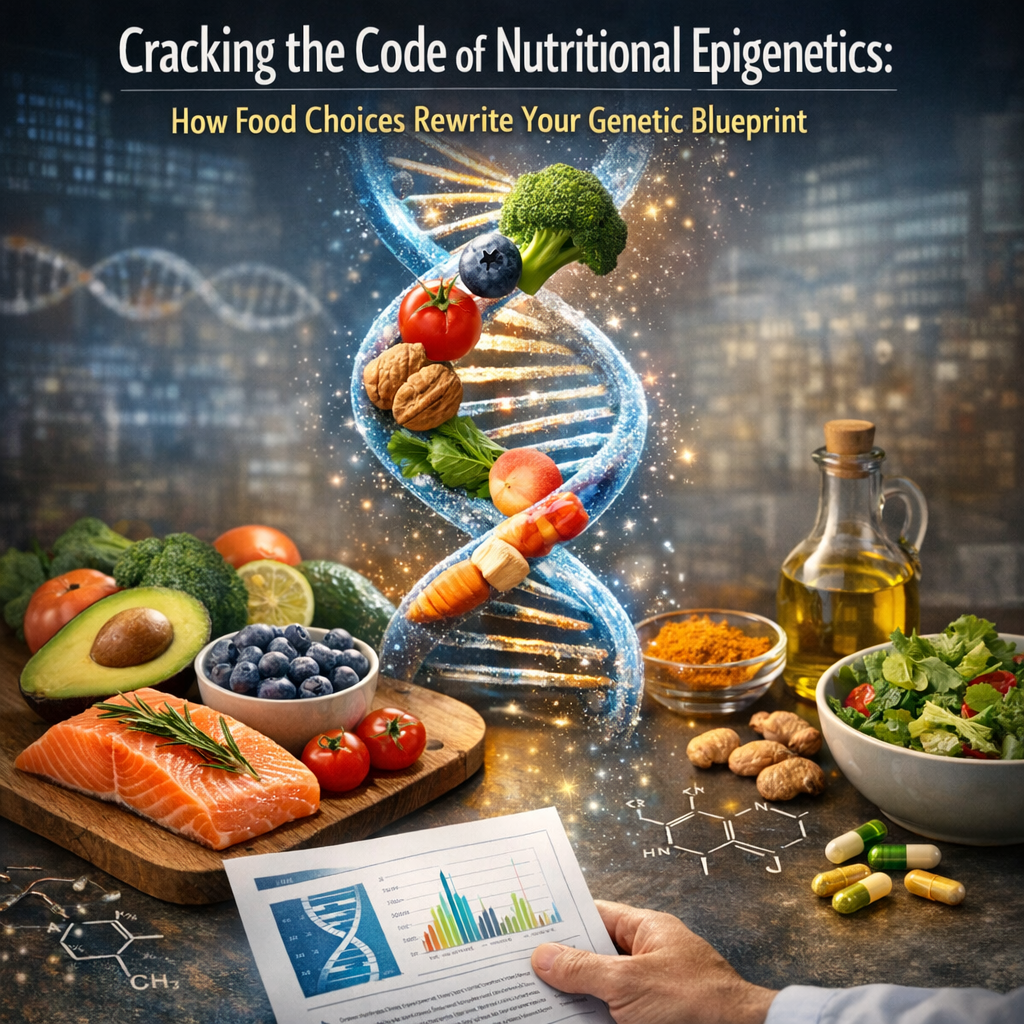
Cracking the Code of Nutritional Epigenetics: How Food Choices Rewrite Your Genetic Blueprint
Introduction
In the age of personalized healthcare, nutritional epigenetics has emerged as a revolutionary field bridging the gap between dietary choices and genetic expression. While our genetic code is the foundation of our biology, the environment and choices, notably nutrition, play a crucial role in shaping our genetic destiny. Nutritional epigenetics examines how various nutrients, vitamins, and foods can influence gene expression.
Epigenetics involves changes in gene expression without altering the DNA sequence itself. Such changes are often driven by chemical modifications and influenced by environmental factors including diet. This dynamic indicates that although we inherit a genetic framework, lifestyle choices, especially dietary habits, can significantly influence genetic expression.
Dr. Randy Jirtle, a pioneering epigenetics researcher, showcased the profound impact of diet on genetic expression in mice with agouti genes. By altering the diet of pregnant mice, Jirtle achieved significant changes in the offspring’s health, demonstrating increased resistance to obesity and diabetes despite genetic predispositions. This highlights the potential of nutritional interventions in modulating genetic expression, suggesting how dietary choices could influence health, longevity, and disease susceptibility.
Deeper exploration into the science of nutritional epigenetics reveals how the adage “you are what you eat” holds more truth today. The implications for preventative healthcare are vast, suggesting that the right nutritional strategies could enhance health in ways previously thought possible only through genetic interventions. Join us as we explore cutting-edge science behind using food choices to rewrite your genetic blueprint, impacting everything from physical health to mental wellbeing.
Features
The science of nutritional epigenetics has piqued the interest of both the scientific and medical communities, exploring how food and nutrients actively modulate gene expression. Compelling evidence highlights the powerful role of diet in shaping epigenetic patterns.
One well-studied example involves methyl donors, nutrients found in leafy greens, nuts, and seeds, which aid in DNA methylation—an epigenetic mechanism controlling gene expression. A study published in [Nature Reviews Genetics](https://www.nature.com/articles/nrg.2017.43) underscores how DNA methylation influences critical biological processes including development, cellular stress response, and disease prevention.
Further research from [Duke University](https://www.sciencedaily.com/releases/2007/08/070831130643.htm) examined diets rich in folate (a B-vitamin in leafy greens) involved in DNA methylation. It showed significant gene expression alterations in human cells, potentially reducing risks of neural tube defects and improving cognitive function. This indicates that dietary adaptations could have far-reaching implications for maternal and child health.
The field of nutrigenomics catalogs how genes respond to foods. A study in [The American Journal of Clinical Nutrition](https://academic.oup.com/ajcn/article/109/5/1304/5450998) explored polyphenols, powerful antioxidants in berries and tea, influencing gene expression related to inflammation and metabolism.
A Stanford University study examined omega-3 fatty acids’ role in gene expression regarding inflammation and cardiovascular health. Researchers found omega-3 supplementation led to favorable epigenetic marker changes, aiding inflammatory disease prevention and supporting heart health.
These studies barely scratch the surface of nutritional epigenetics. Ongoing research aims to develop personalized dietary recommendations optimizing genetic expression for better health outcomes.
Conclusion
Exploring nutritional epigenetics reaffirms the significance of dietary choices, offering hope for preventive healthcare. Understanding how specific nutrients and dietary patterns influence genetic expression allows informed choices to optimize health and well-being.
As research advances, personalized nutrition based on genetic profiles becomes feasible, heralding revolutionary advancements in disease prevention and management, potentially improving life quality and longevity. While the nature vs. nurture debate continues, nutritional epigenetics highlights diet’s profound influence over genetic narratives. Choosing nutritious options empowers us to rewrite our genetic destiny, envisioning a future where the kitchen serves as a platform for preventive medicine.
Concise Summary
Nutritional epigenetics is an emerging field exploring how diet influences gene expression. It examines how environmental factors like diet can alter genetic behavior without changing DNA sequences. Studies demonstrate how nutrients such as methyl donors in leafy greens, folate, polyphenols, and omega-3 fatty acids can modify gene expression, impacting health outcomes. This dynamic field underscores the adage “you are what you eat,” offering insights into preventive healthcare. As research progresses, personalized dietary strategies based on genetic profiles could revolutionize disease prevention and management, empowering individuals to influence their genetic narrative through informed dietary choices.

Dominic E. is a passionate filmmaker navigating the exciting intersection of art and science. By day, he delves into the complexities of the human body as a full-time medical writer, meticulously translating intricate medical concepts into accessible and engaging narratives. By night, he explores the boundless realm of cinematic storytelling, crafting narratives that evoke emotion and challenge perspectives.
Film Student and Full-time Medical Writer for ContentVendor.com