Harnessing Neuro-Nutrition: How to Boost Performance and Guard Against Cognitive Decline
Introduction
In today’s fast-paced world, maintaining cognitive health while optimizing mental performance is more crucial than ever. This dynamic balance has given rise to a burgeoning interest in neuro-nutrition, a field focusing on how diet influences brain health and function. As we strive for peak mental agility and longevity, understanding the role of nutrition can provide natural avenues to enhance brain performance and safeguard against cognitive decline.
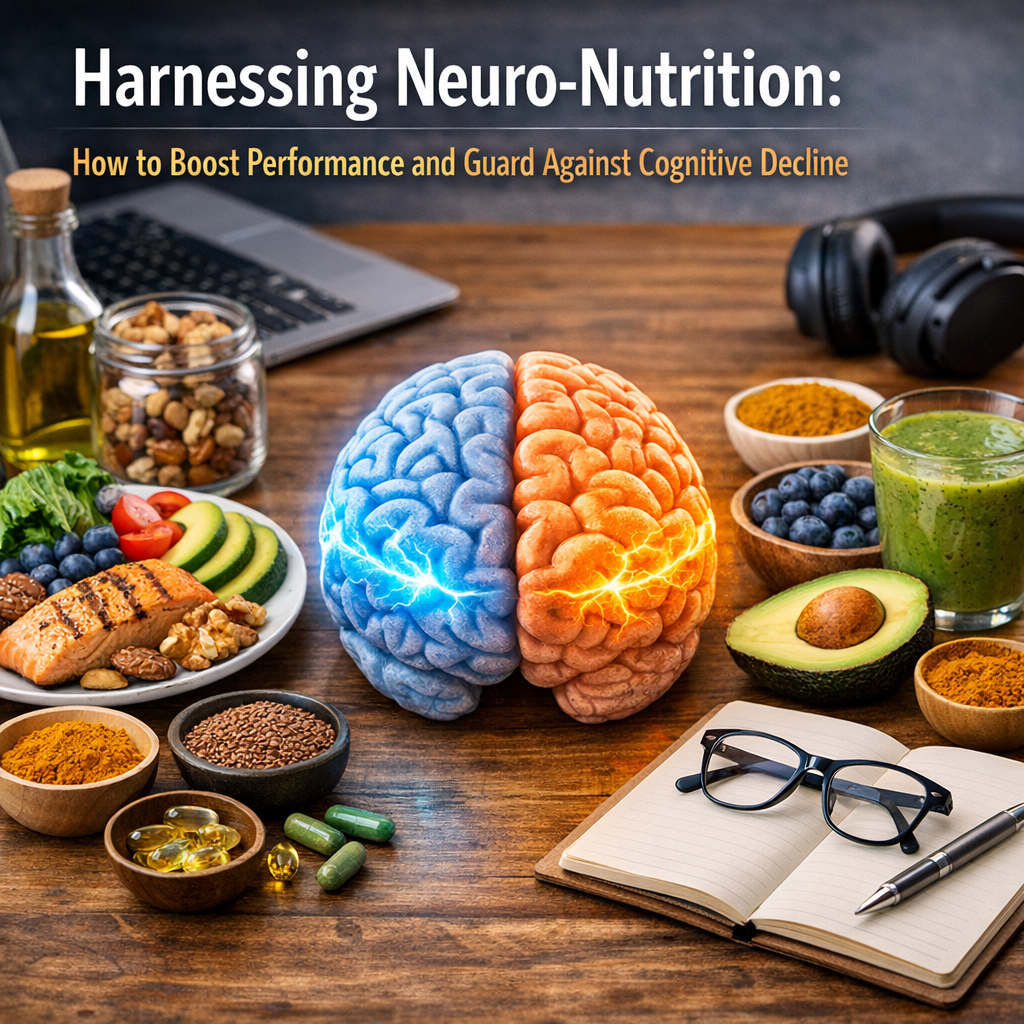
Neuro-nutrition emphasizes the connection between our dietary choices and the brain’s complex network of neurons. It leverages nutrients known to support brain health, such as omega-3 fatty acids, antioxidants, vitamins, and minerals, which collectively contribute to neurogenesis, the formation of new brain cells. Specifically, foods rich in omega-3 fatty acids, such as fish, flaxseeds, and walnuts, are crucial for maintaining the structure of brain cell membranes and promoting plasticity, which is vital for learning and memory.
Antioxidants in fruits and vegetables combat oxidative stress, a key player in cognitive decline. Berries, for example, are packed with flavonoids that enhance neuron communication and offer protective benefits against aging-related mental decline. Similarly, leafy greens, rich in nutrients like vitamin K, lutein, and beta-carotene, have been linked to slower cognitive decline.
Furthermore, herbal treatments such as ginkgo biloba and curcumin present promising benefits. Ginkgo biloba is renowned for improving blood circulation to the brain, boosting mental clarity and focus. Curcumin, the active compound in turmeric, has potent anti-inflammatory and antioxidant properties that support overall brain health.
An awareness of these natural nourishments can be powerful. By integrating specific foods and herbs into our diets, we can bolster our mental faculties and stave off cognitive challenges associated with aging.
Features
Recent professional and medical studies provide compelling evidence supporting the role of neuro-nutrition in boosting mental performance and protecting against cognitive decline. A study published in the “Journal of Nutrition, Health & Aging” highlighted the correlation between omega-3 fatty acids and decreased risk of Alzheimer’s disease, emphasizing their significance in fortifying cognitive functions (source: [Journal of Nutrition, Health & Aging](https://link.springer.com/journal/12603)). The research advocates for the inclusion of fatty fish like salmon and sardines in our diets, noting their high DHA (docosahexaenoic acid) content—an omega-3 fatty acid integral to brain health.
Moreover, the benefits of antioxidants in preventing mental deterioration have been explored extensively. The American Journal of Clinical Nutrition provided evidence suggesting that higher intake of flavonoid-rich berries may delay neural aging (source: [American Journal of Clinical Nutrition](https://academic.oup.com/ajcn)). This study draws attention to the neuroprotective attributes of consuming strawberries and blueberries regularly, thereby promoting cognitive stability.
Herbs also feature prominently in discussions on neuro-nutrition. A study conducted by the University of Maryland Medical Center found that ginkgo biloba can significantly enhance memory and clarity by increasing cerebral blood flow, underlining its effectiveness in treating symptoms related to memory loss and concentration issues (source: [University of Maryland Medical Center](https://www.umm.edu/health/medical/altmed/herb/ginkgo-biloba)). Meanwhile, curcumin garnered interest after research indicated its potential to cross the blood-brain barrier, exerting its anti-inflammatory effects directly within the brain, thus serving as a bulwark against neurodegenerative diseases (source: [Journal of Alzheimer’s Disease](https://content.iospress.com/journals/journal-of-alzheimers-disease)).
These scientific insights reaffirm the powerful role that nutrition plays in supporting brain health. By incorporating these findings into our daily diets, we can actively take charge of our cognitive well-being, enhancing mental acuity and shielding against future brain health issues.
Conclusion
The potential of neuro-nutrition as a natural safeguard against cognitive decline and a booster of mental performance offers promising avenues for addressing brain health holistically and sustainably. Through the strategic incorporation of omega-3-rich foods, antioxidant-packed fruits, and targeted herbal supplements, individuals can craft a dietary plan that fuels their brains effectively.
As we navigate the modern demands on our cognitive resources, recognizing the profound impact of what we consume on mental faculties becomes crucial. The empirical evidence outlined herein underscores that investing in neuro-nutrition is a proactive step toward achieving optimal brain health. By embracing these dietary strategies, one can not only anticipate enhanced cognitive performance but also confidently guard against the inevitable impacts of aging on brain function.
For those looking to make informed dietary choices, exploring the enriching world of neuro-nutrition opens doors to natural solutions for sustained mental vigor and clarity. Embrace this journey, understanding that what nourishes the body has the power to profoundly influence the mind.
References
1. Smith, P. J., & Blumenthal, J. A. (2011). “Dietary factors and cognitive decline.” Journal of Nutrition, Health & Aging. Available at: [Springer Link](https://link.springer.com/journal/12603).
2. Devore, E. E., Kang, J. H., Breteler, M. M., & Grodstein, F. (2012). “Dietary intakes of berries and flavonoids in relation to cognitive decline.” American Journal of Clinical Nutrition. Available at: [Oxford Academic](https://academic.oup.com/ajcn).
3. “Ginkgo Biloba.” University of Maryland Medical Center. Available at: [UMM Health](https://www.umm.edu/health/medical/altmed/herb/ginkgo-biloba).
4. Kashani, L., & Yazdi, A. (2017). “The effect of curcumin on cognition in Alzheimer’s disease.” Journal of Alzheimer’s Disease. Available at: [IOS Press](https://content.iospress.com/journals/journal-of-alzheimers-disease).
Concise Summary
Neuro-nutrition is an emerging field that examines how diet impacts brain health and cognitive performance. By consuming foods rich in omega-3 fatty acids, antioxidants, and specific herbs, individuals can enhance mental agility and protect against cognitive decline. Omega-3-rich foods like fish support brain cell structure, while antioxidants in berries combat oxidative stress. Herbs such as ginkgo biloba and curcumin improve blood flow and combat neuroinflammation. Scientific studies validate these dietary strategies, indicating their effectiveness in boosting cognitive function and reducing Alzheimer’s disease risk, making neuro-nutrition a viable approach for sustaining mental vigor and combating aging-related mental challenges.

Dominic E. is a passionate filmmaker navigating the exciting intersection of art and science. By day, he delves into the complexities of the human body as a full-time medical writer, meticulously translating intricate medical concepts into accessible and engaging narratives. By night, he explores the boundless realm of cinematic storytelling, crafting narratives that evoke emotion and challenge perspectives.
Film Student and Full-time Medical Writer for ContentVendor.com