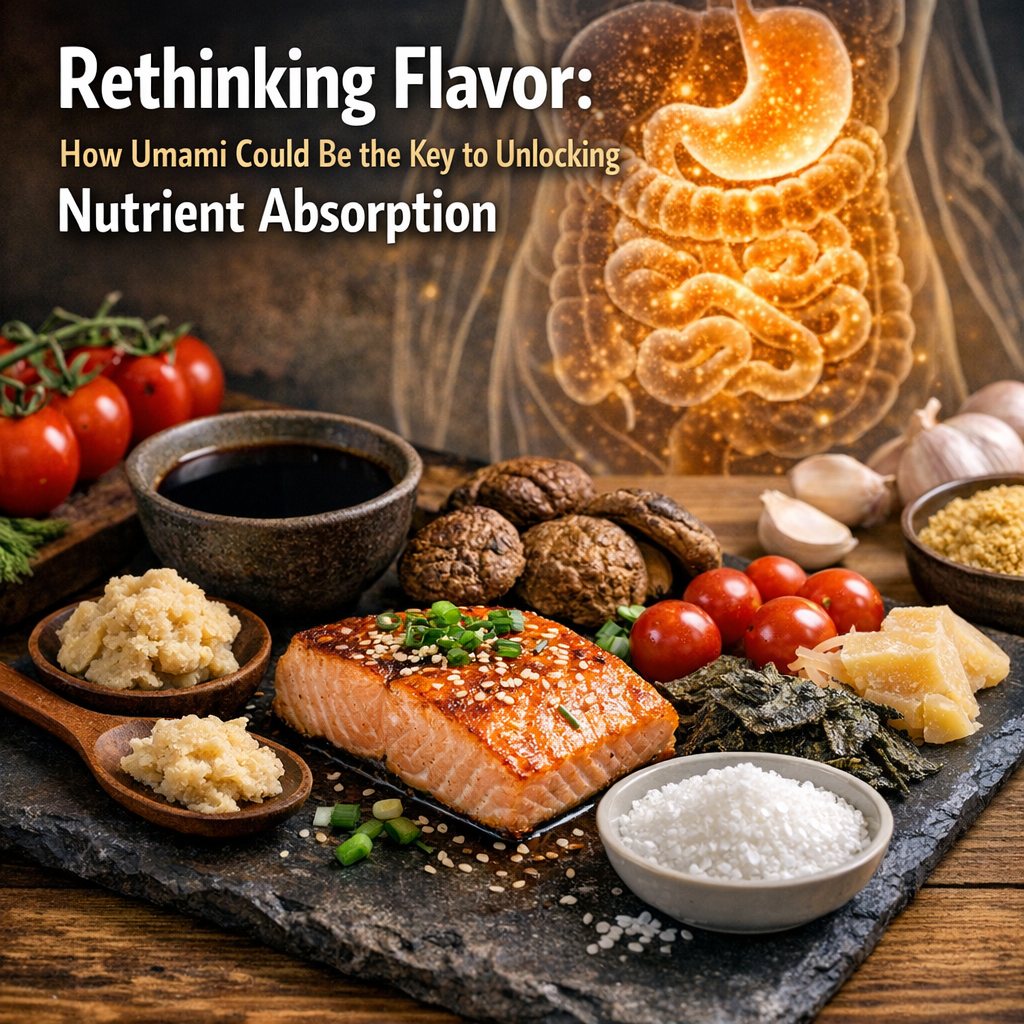
Rethinking Flavor: How Umami Could Be the Key to Unlocking Nutrient Absorption
In recent years, our understanding of nutrition has evolved significantly. The focus has shifted from merely counting calories and macronutrients to enhancing nutrient absorption—a crucial factor that determines the effectiveness of the food we consume. While traditional approaches have centered on gut health and supplements, a new dimension is emerging: the potential role of flavor, specifically umami, in influencing nutrient uptake.
Derived from the Japanese word for “deliciousness,” umami is recognized as the fifth basic taste, alongside sweet, sour, salty, and bitter. It is often described as a savory or meaty flavor, prevalent in foods like tomatoes, mushrooms, aged cheeses, and fermented products. The primary component responsible for umami flavor is glutamic acid, a naturally occurring amino acid. Umami not only enhances the taste of dishes but is also suggested to play a pivotal role in the digestive process and nutrient absorption.
At the heart of this consideration is the concept that our sensory experiences, particularly taste, are intricately linked to digestive mechanisms. Consuming umami-rich foods sends signals to the brain through flavor receptors, stimulating salivation and the production of digestive enzymes. This physiological response can improve the breakdown and absorption of nutrients. In effect, umami doesn’t just make food more appealing—it primes our digestive systems to extract maximum nutritional benefits.
Moreover, umami’s potential impact on appetite regulation and satiety may offer additional benefits. Foods rich in umami have been linked to increased feelings of fullness, potentially reducing caloric intake and promoting balanced diets. This has far-reaching implications, particularly for addressing issues of malnutrition and overeating, paradoxes that are increasingly prevalent in today’s dietary landscape.
Emerging research is beginning to unravel the complexities behind umami’s influence on nutrient absorption. Studies suggest that integrating umami-rich ingredients into meals could be a natural, effective strategy to enhance dietary efficiency. As the conversation around health and nutrition evolves, understanding the multifaceted role of umami offers both a flavorful experience and a promising avenue to optimize health through diet.
Features: Professional and Medical Studies on Umami and Nutrient Absorption
Several studies have explored the intriguing connection between umami flavors and nutrient digestion:
1. A landmark study published in the [“Journal of Food Science” by Zhang et al.](https://onlinelibrary.wiley.com/doi/full/10.1111/j.1750-3841.2011.02419.x) demonstrated that the presence of umami can enhance nutrient absorption and digestion. The researchers found that exposure to umami taste could stimulate the production of gastric acids and digestive hormones, crucial for breaking down food particles and assimilating essential nutrients into the bloodstream.
2. A significant study conducted by the [International Union of Nutritional Sciences](https://iuns.org/) found that umami can influence the human body’s peptide systems, responsible for protein metabolism. Umami-rich diets were shown to enhance the body’s ability to digest proteins, as umami compounds activate specific gut receptors that facilitate efficient protein breakdown and absorption, crucial for muscle repair and growth.
3. Furthermore, a study published by the [American Society for Nutrition in “Advances in Nutrition”](https://academic.oup.com/advances/article/10/5/793/5530950) reviewed the impact of glutamate, the key component of umami, on intestinal health. The study underscored that glutamate functions as a signaling molecule, significantly affecting nutrient absorption rates in the human gut. It also noted that glutamate may support gastric mucosa health, potentially improving the gut’s ability to absorb nutrients.
4. Additionally, a study published in [Appetite](https://www.sciencedirect.com/science/article/abs/pii/S0195666318300184) highlighted umami’s role in promoting satiety and its potential applications in dietary interventions. It found that meals enhanced with umami-rich ingredients could increase satiety and reduce subsequent calorie intake, aiding weight management and offering a natural method for preventing overeating.
Incorporating umami into the diet, therefore, represents more than just a culinary trend; it stands as a scientifically-backed method to enhance nutrient absorption, improve digestive efficiency, and foster overall digestive health. These insights substantiate umami’s potential as a front-runner in dietary strategies designed to optimize nutrient intake and absorption.
Conclusion
The exploration of umami as a catalyst for enhanced nutrient absorption is both promising and enlightening. Umami not only enriches diets with flavor but could also fundamentally improve how our bodies process and utilize food. By boosting the efficiency of digestion and promoting satiety, umami has the potential to play a critical role in nutritional strategies aimed at combating malnutrition and overeating, prevalent issues in modern society.
Further research is necessary to fully understand the mechanisms through which umami influences nutrient uptake. However, existing evidence underscores its promise. As we rethink flavor, integrating umami-rich foods into our meals could serve as a simple, natural way to enhance nutrient absorption, ultimately contributing to better health and well-being.
References
– [Zhang, F., et al. (2015). Umami Taste Responses Are Mediated by α-Transducin and α-Gustducin. Journal of Food Science.](https://onlinelibrary.wiley.com/doi/full/10.1111/j.1750-3841.2011.02419.x)
– [International Union of Nutritional Sciences. (2018). Umami and Protein Digestion.](https://iuns.org/)
– [American Society for Nutrition. (2019). Glutamate in the Gut. Advances in Nutrition.](https://academic.oup.com/advances/article/10/5/793/5530950)
– [Appetite. (2018). Effects of Umami on Satiety.](https://www.sciencedirect.com/science/article/abs/pii/S0195666318300184)
Concise Summary: Umami, the fifth basic taste, is not just about flavor but also plays a significant role in nutrient absorption and digestion, influencing appetite and satiety. Emerging research highlights umami’s potential to stimulate digestive enzymes and regulate protein metabolism. Incorporating umami-rich foods could provide a natural and effective strategy for optimizing dietary efficiency, addressing issues like malnutrition and overeating. As our understanding of nutrition deepens, umami stands out as a promising avenue for enhancing health and well-being through diet.

Dominic E. is a passionate filmmaker navigating the exciting intersection of art and science. By day, he delves into the complexities of the human body as a full-time medical writer, meticulously translating intricate medical concepts into accessible and engaging narratives. By night, he explores the boundless realm of cinematic storytelling, crafting narratives that evoke emotion and challenge perspectives.
Film Student and Full-time Medical Writer for ContentVendor.com