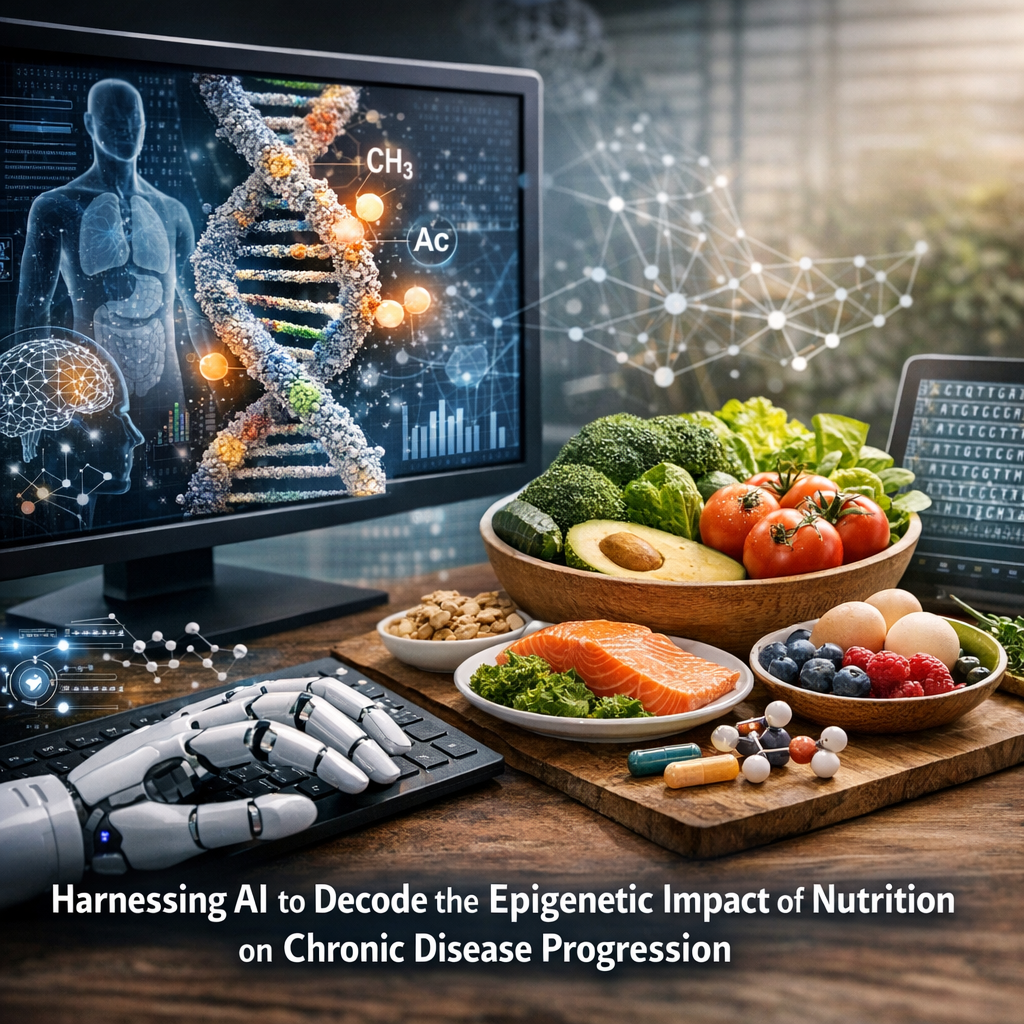
Harnessing AI to Decode the Epigenetic Impact of Nutrition on Chronic Disease Progression
Introduction:
In an era where chronic diseases like diabetes, heart disease, and cancer are prevalent, understanding their underlying causes and potential reversals is crucial. Nutrition plays a critical role in influencing the course of these diseases, not just through traditional biochemical pathways but also via epigenetic modifications. Epigenetics—the study of heritable changes in gene expression that do not involve changes to the DNA sequence itself—offers promising insights into how environmental factors, particularly diet, can alter health outcomes.
Over the past decade, research has illuminated the connection between nutrition, epigenetic changes, and disease progression. These findings suggest that certain foods and natural compounds can lead to beneficial epigenetic modifications that influence chronic disease progression or even prevent it. However, decoding this complex relationship is another challenge altogether.
Enter Artificial Intelligence (AI). The use of AI in nutrition and epigenetics is a burgeoning field, allowing scientists to analyze vast amounts of data quickly and accurately to unearth patterns and insights that might remain invisible to the human eye. AI can process huge datasets generated from genomic studies, dietary records, and health outcomes to identify correlations and causal relationships between diet and disease. By employing machine learning algorithms, researchers are beginning to understand which nutrients possess the capacity to regulate gene expression and how they impact chronic diseases.
Moreover, AI facilitates the customization of diets based on an individual’s unique genetic makeup, paving the way for precision nutrition. This means that dietary interventions can be tailored to maximize positive epigenetic influences on an individual’s health. In the following sections, we will explore recent studies that illustrate the interplay between nutrition, epigenetics, and chronic diseases, and how AI is being harnessed to unlock these secrets.
Features:
Recent studies highlight significant advancements in understanding the nutritional epigenetics landscape. One prominent example is a study published in “Nature Communications” that utilized AI to sift through large-scale population nutrition and genomic data. The study identified particular dietary compounds associated with methylation changes in genes linked to inflammation and metabolic health, key factors in chronic disease development [Nature Communications](https://www.nature.com/articles/ncomms10492).
Another groundbreaking study conducted by the National Institutes of Health (NIH) explored the use of AI machine learning models to predict how specific dietary patterns could lead to epigenetic modifications impacting glucose metabolism. The study found certain dietary fibers altered the methylation patterns of genes involved in glucose transport, providing insights into potential nutritional interventions for diabetes [NIH](https://www.nih.gov/news-events/news-releases).
Similarly, research published in “The American Journal of Clinical Nutrition” delved into the epigenetic impact of polyphenols, which are micronutrients with antioxidant properties found in fruits and vegetables. Utilizing AI, the study demonstrated how these compounds can modify histone acetylation in genes related to cardiovascular health, suggesting an epigenetic pathway through which nutrition can help manage heart disease [The American Journal of Clinical Nutrition](https://academic.oup.com/ajcn/article/108/3/544/5248838).
These studies collectively underline the potential of using AI-driven approaches to untangle the complex nexus of diet, gene expression, and chronic disease progression. They offer promising insights into designing precise dietary recommendations that can modulate epigenetic processes beneficially.
Conclusion:
The dawn of AI in nutritional science and epigenetics marks a significant leap forward in chronic disease management. By decoding the epigenetic impact of nutrition, AI provides invaluable insights that could revolutionize how these diseases are approached, not only at a societal level but also on an individual basis through personalized dietary interventions. As our understanding deepens, combining AI-driven data analysis with natural cures, homeopathic, and herbal treatments could offer a sustainable path to mitigating the burden of chronic diseases. As we move forward, empowering consumers with knowledge derived from cutting-edge research can inspire healthier lifelong dietary choices, reinforcing the axiom that food is indeed medicine.
Concise Summary
This article explores the integration of Artificial Intelligence (AI) in understanding the role of nutrition and epigenetics in managing chronic diseases like diabetes, heart disease, and cancer. It highlights recent studies showing AI’s capability to analyze vast datasets to identify how diet influences gene expression and disease progression. The potential for AI in creating personalized, precision nutrition strategies is significant, providing tailored dietary recommendations based on an individual’s genetic makeup. These advancements could revolutionize chronic disease management and promote healthier lifestyles by emphasizing food as medicine.

Dominic E. is a passionate filmmaker navigating the exciting intersection of art and science. By day, he delves into the complexities of the human body as a full-time medical writer, meticulously translating intricate medical concepts into accessible and engaging narratives. By night, he explores the boundless realm of cinematic storytelling, crafting narratives that evoke emotion and challenge perspectives.
Film Student and Full-time Medical Writer for ContentVendor.com