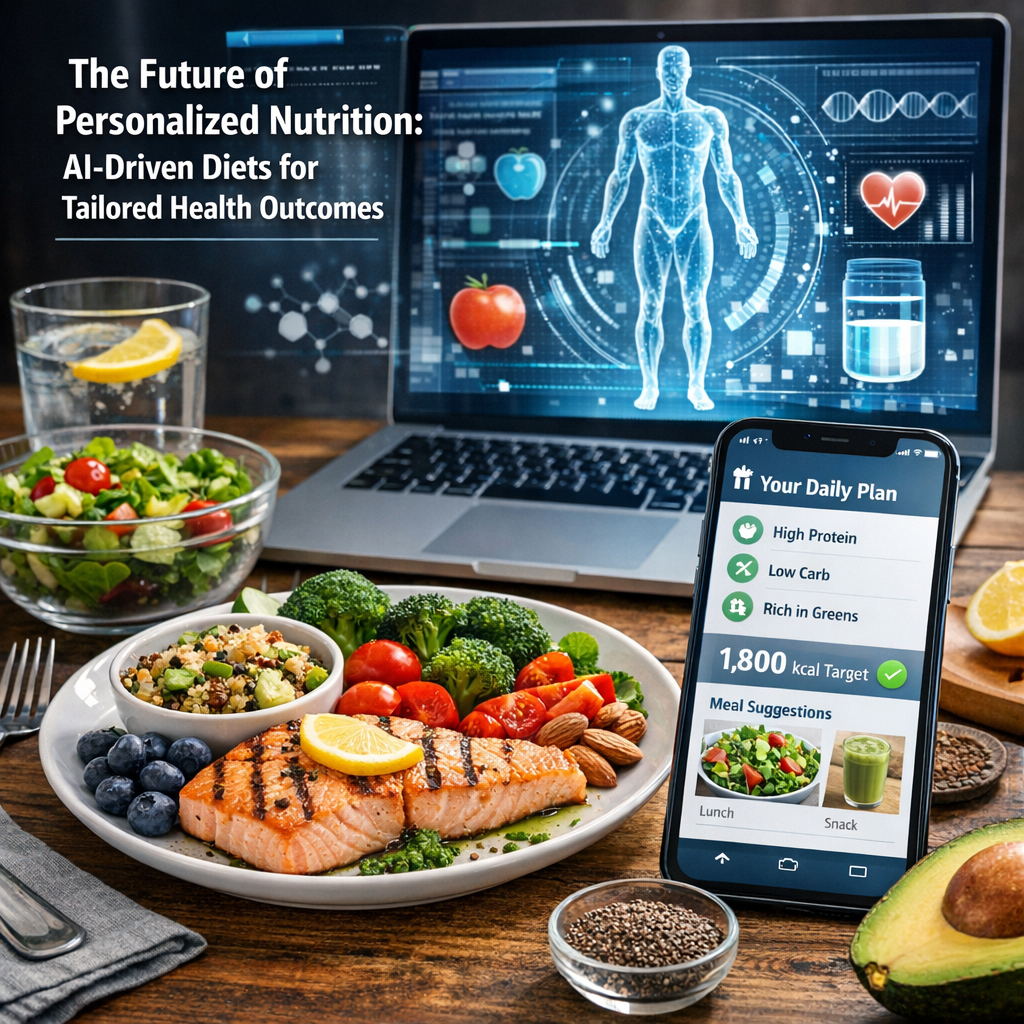
The Future of Personalized Nutrition: AI-Driven Diets for Tailored Health Outcomes
In today’s health-conscious world, understanding the fundamental link between diet and personal well-being has never been more significant. As individuals strive for optimal health, the one-size-fits-all approach to nutrition is rapidly becoming obsolete. Enter the era of personalized nutrition, a groundbreaking concept merging technology and nutrition science to tailor dietary advice specifically to individual needs. With advancements in artificial intelligence (AI) and machine learning, AI-driven diets are emerging as a revolutionary tool for crafting bespoke nutritional plans.
Personalized nutrition involves analyzing an individual’s unique characteristics—such as genetic makeup, lifestyle habits, and health goals—to offer customized dietary guidance. Traditionally, acquiring such precision would require extensive laboratory testing and consultations with professionals, potentially making it inaccessible to the average consumer. However, AI technology is set to democratize this service, making it feasible and affordable for many.
AI algorithms can process vast amounts of data to predict dietary responses. By leveraging information from genome sequencing, gut microbiome interactions, and lifestyle patterns, AI can effectively recommend a diet that optimally aligns with an individual’s specific metabolic profile. This level of personalization promises not only to enhance disease prevention and management but also to optimize physical and mental performance.
One of the key innovations in this domain is the advent of wearable health technology. Devices like smartwatches and continuous glucose monitors can provide real-time health data, which, when integrated with AI systems, paves the way for dynamic dietary adjustments. Imagine a future where your morning workout or current stress level is taken into account by an AI to suggest what you should eat for lunch.
Furthermore, AI-driven diets have the potential to address prevalent health issues such as obesity, diabetes, and cardiovascular diseases, offering data-backed insights for sustainable lifestyle changes. They can also cater to specific dietary preferences or restrictions like vegetarianism or gluten intolerance, allowing for highly tailored meal planning.
As AI becomes more ingrained in healthcare, the potential for AI-driven diets to transform nutrition is immense. However, it is essential to navigate this transition with careful consideration of ethical implications, such as data privacy and accuracy. Overall, with the right regulation and development, AI is poised to not only enhance personalized nutrition but also revolutionize how individuals approach their health and wellbeing.
Features
The scientific foundation of AI-driven personalized nutrition is supported by various professional and medical studies. One such study, published in [*Nature Food*](https://www.nature.com/articles/s43016-021-00240-x) in 2021, explores the potential of AI in predicting individual glycemic responses. The research highlights how AI algorithms can analyze data from continuous glucose monitors and dietary logs to anticipate blood sugar levels, enabling personalized dietary interventions that regulate glucose with precision, ultimately aiding in diabetes management.
Another study from the [American Journal of Clinical Nutrition](https://academic.oup.com/ajcn/article/113/6/1462/6170468) outlines the role of AI in integrating genomic and microbiome data to optimize nutritional recommendations. This research demonstrates how AI can decode the intricate relationships between diet, the gut microbiome, and genetic predispositions to improve personalized nutrition. The study emphasizes that understanding these complex interactions is crucial for developing effective dietary strategies that enhance health outcomes.
Further, a comprehensive study by the [*Journal of Personalized Medicine*](https://www.mdpi.com/journal/jpm) delves into the application of AI within nutritional epidemiology. This research underscores how AI algorithms can process vast datasets from diverse populations to identify patterns and associations between dietary habits and health outcomes. By elucidating these connections, AI facilitates the development of targeted dietary interventions to address specific health conditions, ranging from obesity to cardiovascular diseases.
Moreover, the incorporation of AI into nutrition is supported by ongoing trials and experiments examining its practical applicability. The EU-funded project, “Personalised Nutrition: From Science to Implementation” ([PREcisE](https://www.precise-nutrition.eu)), investigates how AI can bridge the gap from research to real-world application. Through meticulous studies, the project aims to understand how personalized diet plans based on AI algorithms can be adopted at a population level, ensuring both efficacy and feasibility.
These studies collectively underscore the burgeoning role of AI in crafting tailor-made nutritional strategies. As research in this field progresses, the evidence consistently supports the vast potential of AI to enhance personalized nutrition and drive improved health outcomes.
Conclusion
As we forge ahead into a more technologically advanced future, AI-driven diets stand at the forefront of personalized nutrition. By integrating cutting-edge technology with in-depth nutritional science, AI empowers individuals to harness the power of tailored dietary advice to enhance their health and well-being. With the support of rigorous scientific research and continuous advancements in AI capabilities, personalized nutrition is undoubtedly poised to become a cornerstone of modern healthcare. However, to fully realize this potential, it will be imperative for stakeholders—ranging from developers to policymakers—to ensure ethical safeguards, prioritize data privacy, and maintain a commitment to accuracy. Through these concerted efforts, AI-driven diets can not only revolutionize personal health strategies but also contribute to a broader understanding of the intricate relationship between diet and health, setting the stage for a healthier, more informed society.
Concise Summary
AI-driven personalized nutrition represents a revolutionary shift in dietary science, leveraging AI and machine learning to create bespoke diets based on individual needs, genetic makeup, and lifestyle behaviors. This approach promises enormous potential for improving health outcomes, including effective management of diseases like diabetes and cardiovascular ailments. As wearable health technology advances, real-time data will allow for dynamic dietary adjustments. However, implementing these AI-driven diets requires careful ethical consideration, with emphasis on data privacy and accuracy. The seamless integration of AI in nutrition could fundamentally transform healthcare and enable more informed and tailored health strategies.

Dominic E. is a passionate filmmaker navigating the exciting intersection of art and science. By day, he delves into the complexities of the human body as a full-time medical writer, meticulously translating intricate medical concepts into accessible and engaging narratives. By night, he explores the boundless realm of cinematic storytelling, crafting narratives that evoke emotion and challenge perspectives.
Film Student and Full-time Medical Writer for ContentVendor.com