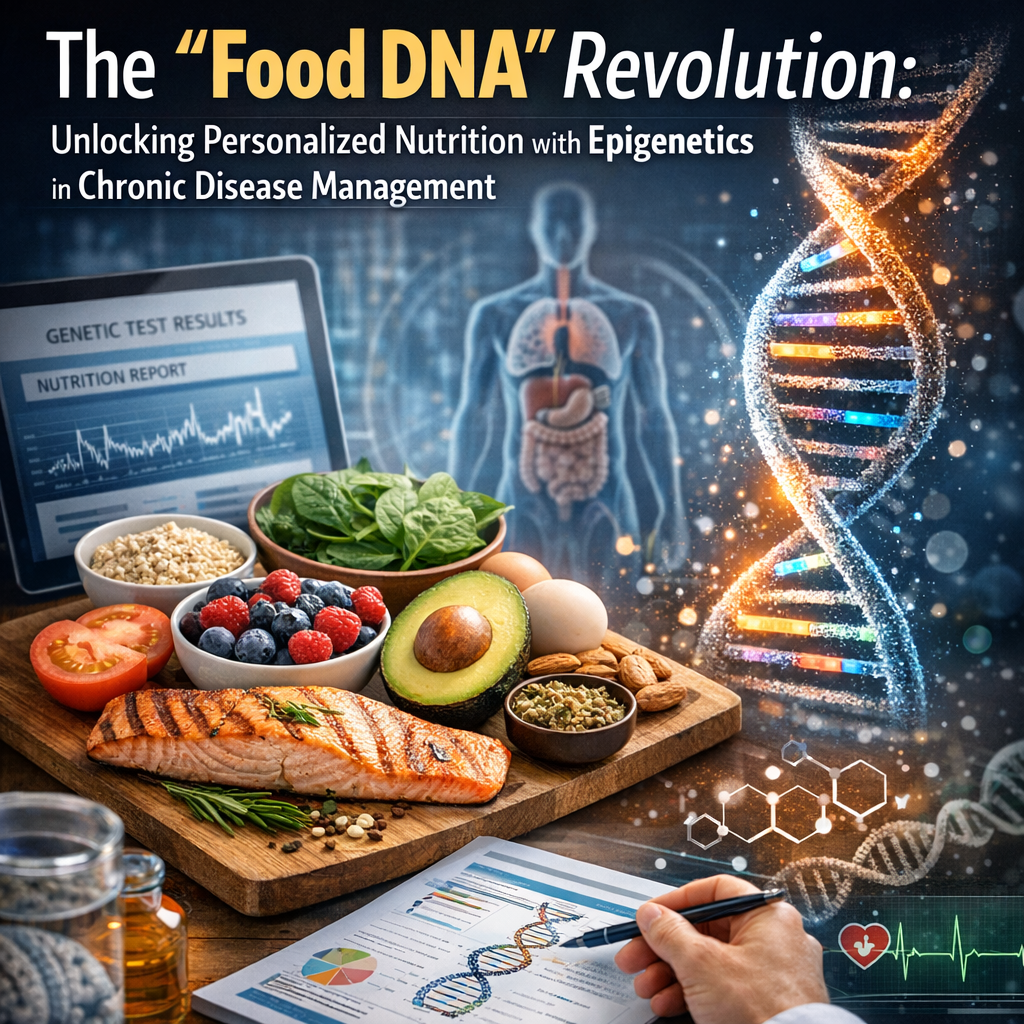
The “Food DNA” Revolution: Unlocking Personalized Nutrition with Epigenetics in Chronic Disease Management
Introduction
In the modern era of health and wellness, the quest for personalized solutions often takes center stage. With the rise of chronic diseases such as diabetes, heart disease, and obesity, there is an urgent need to explore new frontier solutions that can cater to individual needs. Herein lies the potential of the “Food DNA” revolution—a transformative approach that aligns personalized nutrition with epigenetics to manage chronic diseases effectively.
Epigenetics, the study of changes in gene expression that do not involve alterations to the underlying DNA sequence, has significantly shaped our understanding of how lifestyle factors such as diet can influence health. These changes are reversible and modifiable, which makes them an intriguing target for personalized nutrition strategies. Food, loaded with bioactive compounds, can interact with genes, thereby influencing gene expression. In turn, these interactions can play a crucial role in either mitigating or exacerbating chronic diseases.
The concept of “Food DNA” hinges on the notion that understanding our genetic makeup and how it interacts with food can cultivate a more personalized approach to nutrition. By analyzing one’s genetic blueprint, individuals can optimize their dietary choices to influence genetic expression positively. Nutrigenomics, which combines the study of nutrition and genomics, holds the promise of transforming how we manage chronic diseases by leveraging personalized dietary interventions.
Indeed, the marriage between genetics and nutrition is not just about making smarter dietary choices; it’s about understanding an individual’s unique health profile. This cutting-edge approach addresses not only existing dietary habits but also the potential predispositions one might have towards certain chronic conditions. The integration of genetic data with nutritional science represents a powerful tool in the battle against chronic diseases, offering hope for improved health outcomes by leveraging food as a form of preventive medicine.
Features
Emerging research supports the promise of using epigenetics in conjunction with personalized nutrition for managing chronic diseases. For instance, numerous studies have demonstrated how specific dietary components can cause epigenetic modifications that influence gene expression and, consequently, health outcomes.
A notable study published in Nature Communications outlined how flavonoids, compounds found in fruits and vegetables, can modify epigenetic markers. This research reveals how these compounds can modulate metabolic pathways involved in chronic diseases, highlighting their potential in preventive health strategies.
Another pivotal research article in The American Journal of Clinical Nutrition explored the impact of omega-3 fatty acids on gene expression. It was found that these essential fats can influence the expression of genes responsible for inflammatory and metabolic processes. Such insights provide a tangible link between dietary intake and genetic predisposition, reinforcing the potential of personalized nutrition strategies.
Moreover, the personalized nutrition project known as ”Food4Me” investigated the effects of tailored dietary interventions based on genetic information. The study concluded that personalized nutrition advice led to greater improvements in dietary adherence and health outcomes compared to generalized dietary guidelines. Participants receiving personalized nutrition advice exhibited significant improvements in biomarkers for chronic diseases, further validating the approach.
As chronic diseases continue to burden global healthcare systems, the integration of epigenetic insights into personalized nutrition plans offers a beacon of hope. By combining genetic data with tailored dietary interventions, this approach has the potential to reduce the onset and severity of chronic diseases. As the evidence base expands, more health professionals are likely to incorporate genomics and nutrition into routine care practices, ushering in a new era of precision medicine.
Conclusion
The “Food DNA” revolution represents a paradigm shift in chronic disease management, where epigenetics and personalized nutrition converge to offer tailored health solutions. By delving into the complex interplay between diet and gene expression, individuals can harness the power of their genetic information to make informed nutritional choices. Ultimately, this approach empowers individuals to take control of their health, providing a pathway to mitigate the risks of chronic diseases and improve overall well-being.
In conclusion, as we stand on the threshold of this frontier, it is imperative to continue advancing research in this field. Combining cutting-edge technology with ancient wisdom from nutritional science, we have the opportunity to redefine how chronic diseases are managed. Through personalized nutrition informed by genetic insights, we could pave the way for a healthier future—one that recognizes the unique biological blueprint of each individual. As such, the “Food DNA” revolution is more than just a health trend; it’s a comprehensive strategy for sustainable wellness.
References
1. [Nature Communications: Flavonoids and Epigenetic Modifications](https://www.nature.com/articles/ncomms4014)
2. [The American Journal of Clinical Nutrition: Omega-3 Fatty Acids and Gene Expression](https://academic.oup.com/ajcn/article/93/3/454/4597545)
3. [Food4Me Study on Personalized Nutrition](https://food4me.org/)
Concise Summary
The “Food DNA” revolution marks a significant shift in chronic disease management through the integration of epigenetics and personalized nutrition. By understanding individual genetic makeups and their interaction with dietary components, this approach aims to tailor nutrition plans, potentially reducing the onset of diseases like diabetes, heart disease, and obesity. Backed by research linking dietary components such as flavonoids and omega-3 fatty acids to gene expression, this strategy underscores the promise of using genomics in routine healthcare. As this field advances, it hopes to redefine chronic disease prevention, emphasizing the customization of dietary interventions.

Dominic E. is a passionate filmmaker navigating the exciting intersection of art and science. By day, he delves into the complexities of the human body as a full-time medical writer, meticulously translating intricate medical concepts into accessible and engaging narratives. By night, he explores the boundless realm of cinematic storytelling, crafting narratives that evoke emotion and challenge perspectives.
Film Student and Full-time Medical Writer for ContentVendor.com