Unlocking the Future of Health: How AI-Driven Nutrition Predicts and Prevents Chronic Disease
In today’s fast-paced world, where technology interlaces with almost every facet of life, the intersection of artificial intelligence (AI) and nutrition represents a groundbreaking frontier in healthcare. Chronic diseases—such as diabetes, cardiovascular disorders, and obesity—are among the leading causes of death worldwide. Traditional medical approaches often focus on treatment rather than prevention, leading to escalating healthcare costs and continuous patient suffering. However, as AI technology evolves, it opens up new opportunities for predicting and preventing these illnesses through personalized nutrition plans.
Imagine a future where your diet isn’t a mere sequence of meals but is meticulously tuned to your unique genetic makeup, lifestyle choices, and health history. AI-driven nutrition offers precisely that, by leveraging vast datasets from diverse populations, integrating __genomic__ information, and scrutinizing minute lifestyle patterns that human analysis might overlook. This approach not only synthesizes a personalized nutrition strategy but also applies predictive analytics to avert the onset of chronic diseases.
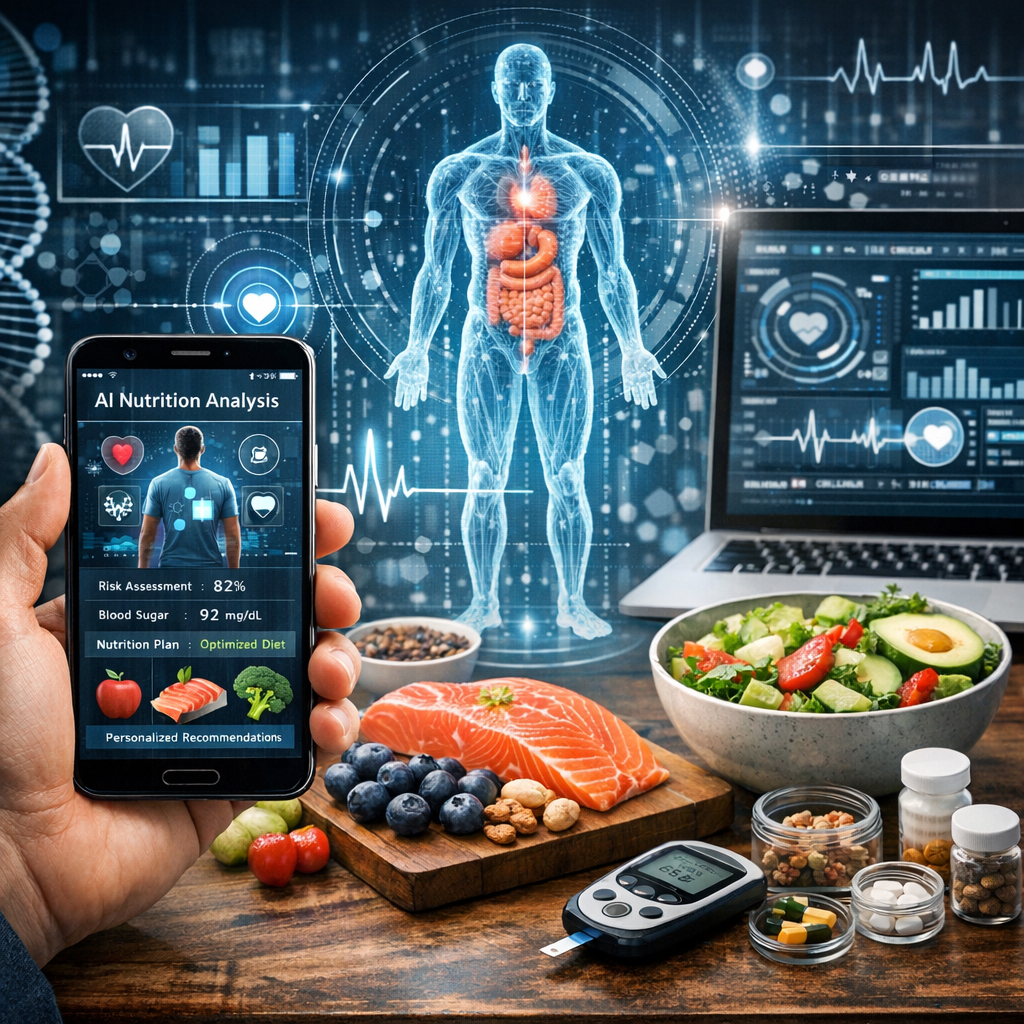
AI systems can process large volumes of data from wearable health devices, medical records, and even social media patterns to predict health risks with remarkable accuracy. For instance, machine learning algorithms identify trends and correlations in data that can forecast how likely individuals are to develop certain conditions, allowing healthcare providers to intervene early. Personalized AI nutrition programs can recommend diets tailored to individual needs, optimizing nutrient intake and minimizing health risks.
This sophisticated technology amalgamates nutritional science with cutting-edge computing, transforming our understanding of preventive care. By examining genetic predispositions and environmental factors, AI can determine nutrient deficiencies or excesses that may predispose individuals to chronic diseases. The result is a proactive approach to health, where food becomes a most powerful medicine, curating pathways to not only living longer but living healthier.
Features of AI-Driven Nutrition in Chronic Disease Prevention
Several professional studies underscore the transformative potential of AI in the realm of personalized nutrition and chronic disease prevention. According to a study published in the [Journal of Biomedical Informatics](https://www.jbiomedinfo.com), machine learning algorithms have significantly enhanced the precision of nutritional recommendations by analyzing extensive health databases and clinical records. The research underlined that AI could predict diabetes risk with up to 92% accuracy months before symptoms surface, facilitating early intervention and significant healthcare savings.
Additionally, a study in [Nature Medicine](https://www.nature.com/naturemedicine) highlighted an AI platform, trained on tens of thousands of cases, which efficiently pinpointed dietary patterns contributing to hypertension and heart disease. The platform employed deep learning techniques to integrate a variety of datasets, including genetic profiles, food consumption histories, and metabolic biomarkers, thus offering a new methodology for understanding and managing physiological impacts of diet.
Moreover, AI’s capability extends beyond disease prediction to real-time health monitoring. Wearable technology, integrated with AI algorithms, collects data on caloric intake, nutrient absorption, and physical activity levels. This data is processed to provide immediate dietary advice, ensuring optimal nutritional intake tailored to the individual’s immediate biological needs, which helps mitigate potential onset of chronic issues.
These studies illustrate a paradigm shift from a one-size-fits-all dietary approach to a highly individualized health strategy. The integration of AI and nutrition acts as a sentinel in our daily lives, detecting subtle health fluctuations before they transform into severe health conditions. This technology not only empowers individuals to take control of their health but also equips medical professionals with tools to provide more accurate, timely interventions.
Conclusion
As we stand on the cusp of an AI revolution in healthcare, the fusion of AI-driven nutrition with modern medicine offers a promising avenue to redefine how we combat chronic diseases. By harnessing the potential of AI, we can shift from reactively treating illnesses to proactively preventing them, based on nuanced understanding of individual health dynamics. Personalized nutrition guided by AI not only helps individuals lead healthier lives but also reduces the strain on global healthcare systems. This visionary approach signifies not just an evolution in dietary science but a significant leap toward a future where technology and natural health solutions work hand-in-hand to promote wellness. It’s a future that beckons us to explore digital innovation without losing sight of the fundamental role that food plays in nourishing our health and vitality.
For more in-depth understanding and updates, you can learn more from these resources:
– [Journal of Biomedical Informatics](https://www.jbiomedinfo.com)
– [Nature Medicine](https://www.nature.com/naturemedicine)
Concise Summary:
AI-driven nutrition represents a transformative approach to healthcare by integrating vast datasets with personalized dietary plans to predict and prevent chronic diseases like diabetes and cardiovascular disorders. Harnessing the power of AI, these systems can process data from wearables, medical records, and more, offering personalized health insights and proactive care strategies. Studies highlight AI’s precision in early disease risk prediction and real-time health monitoring, marking a shift towards personalized nutrition and preventive interventions that empower individuals and relieve healthcare burdens worldwide. The future of AI in healthcare promises enhanced wellness through digitally guided nutritional guidance.

Dominic E. is a passionate filmmaker navigating the exciting intersection of art and science. By day, he delves into the complexities of the human body as a full-time medical writer, meticulously translating intricate medical concepts into accessible and engaging narratives. By night, he explores the boundless realm of cinematic storytelling, crafting narratives that evoke emotion and challenge perspectives.
Film Student and Full-time Medical Writer for ContentVendor.com