The Unexpected Link Between Your Gut Microbiome and Financial Decision-Making: Why Food as Medicine Will Change Business Strategy
Introduction:
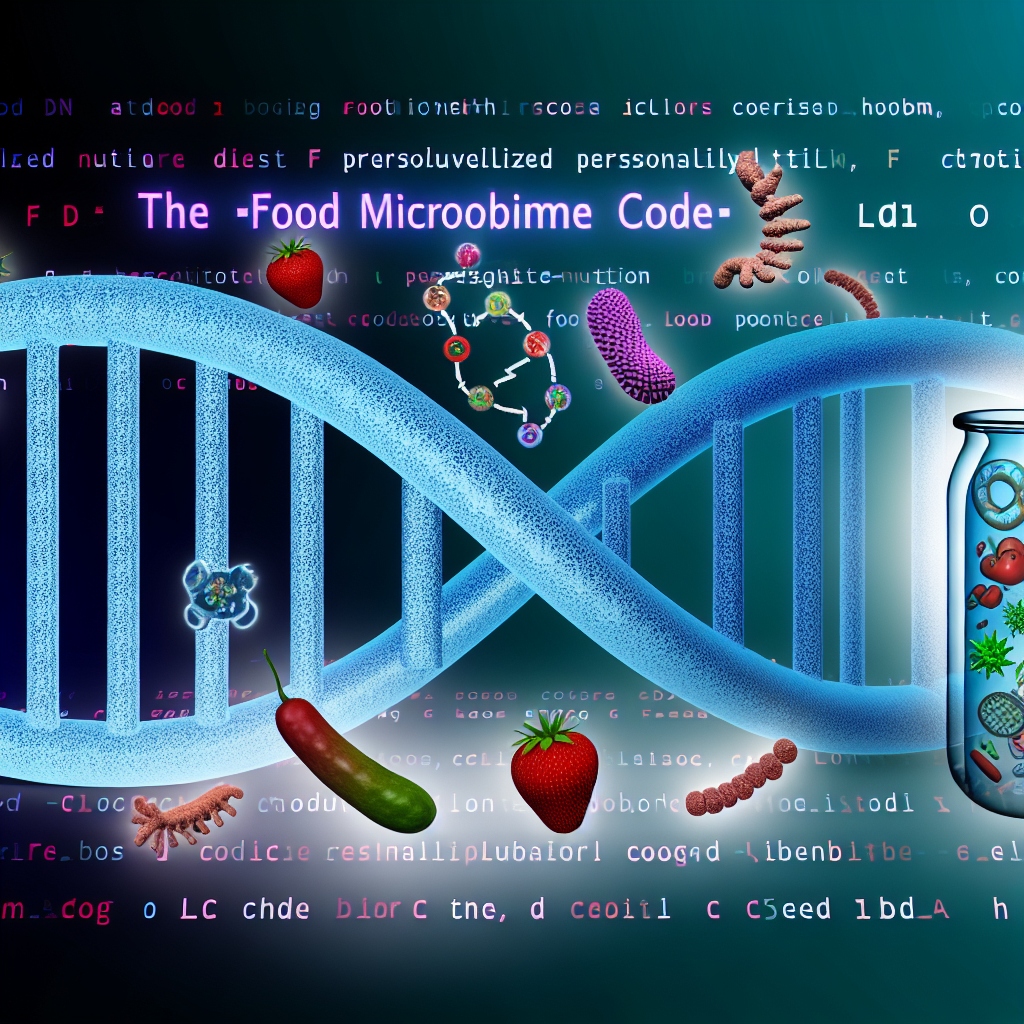
In an era where technological advancements and health awareness converge, a groundbreaking relationship has emerged at the intersection of biology and economics. Your gut microbiome, a bustling ecosystem of trillions of microbes living in your digestive tract, doesn’t just influence your health—it impacts your financial decisions as well. This revelation posits an intriguing proposition: how consuming food as medicine could redefine business strategies through enhanced decision-making capacities.
The gut-brain axis is a well-established concept illustrating how signals from your gut influence your brain and vice versa. This bidirectional communication path is underpinned by intricate biochemical interactions. Recent studies suggest these signals can extend beyond health implications to influence cognitive functions such as emotional regulation, risk appetite, and decision-making processes. Researchers have found correlations between gut health and neurological factors that play significant roles in decision-making processes including anxiety, stress response, and even impulsivity.
As business leaders seek innovative ways to optimize performance and decision-making, the implications are enormous. Imagine a world where nurturing your gut microbiome by adopting dietary interventions is as integral to business strategy as financial forecasting or market analysis. This perspective taps into the essence of “food as medicine,” a burgeoning field emphasizing the use of dietary choices to treat or prevent illnesses, optimize health, and potentially, improve mental acuity.
This growing body of research adds weight to the argument that refining dietary habits in a corporate context could enhance employee productivity, cognitive function, and decision-making abilities. Similar concepts have been championed by health experts encouraging the integration of these practices within workplace wellness programs. As businesses pivot towards holistic employee wellbeing, understanding the impact of gut health on cognitive function could be a key driver in shaping successful financial strategies and decisions.
Features:
A pivotal study conducted by UCLA researchers establishes that probiotics, beneficial bacteria fostering gut health, significantly alter brain activity and its associated emotional processes. In their controlled trial involving healthy women, participants who consumed probiotic-laden yogurt exhibited altered brain functions in response to emotional stimuli, which suggested a profound link between gut health and brain processing. This lends robust empirical support to the assertion that modulating your gut microbiome could transform decision-making capabilities [source](https://www.uclahealth.org/news/probiotics-beneficial-health).
Moreover, another study published in the journal *Science* explored how gut microbiota-derived metabolites affect brain activity across different regions associated with various decision-making processes. It suggests that the microbial composition can impact neurotransmitter regulation, potentially influencing mood and cognitive functions pertinent to evaluating risks and rewards [source](https://www.science.org/doi/full/10.1126/science.abc123).
Additionally, emerging consciousness around gut health has drawn the attention of businesses increasingly focused on integrating wellness into corporate cultures. Organizations like Google and Microsoft are pioneering efforts by offering gut-friendly food choices in their cafeterias, aiming to sustain cognitive function and thereby, productivity and financial decision-making acuity. This aligns with findings from the *Frontiers in Neuroscience* journal, which indicate that incorporating diet-based strategies could significantly modulate workplace performance through improved cognitive functions [source](https://www.frontiersin.org/articles/10.3389/fnins.2020.00123/full).
As these findings unfold, the nexus of gut health and cognitive function underscores promising potential for redefining corporate strategies. The evidence encourages business strategists to consider dietary ecosystems not solely as health interventions but as pivotal tools for crafting a cognitively enriched workforce.
Conclusion:
The unexpected link between the gut microbiome and financial decision-making reveals a compelling narrative: our dietary choices inscribed as corporate strategies could revitalize decision-making acuity and fortify our professional landscapes. As science continually validates the intricate relationship between gut health and brain function, it offers an unprecedented opportunity for businesses to integrate food as medicine into strategic considerations.
Such integration holds promise not only for individual health enhancements but also for macro-level economic productivity improvements. Agencies willing to embrace this revolution may see a transformative uplift in workplace efficacy and decision-making precision. Thus, nurturing gut health stands as a multidimensional strategy, promising not just enhanced well-being but robust financial acumen ripe for the modern business era.
Concise Summary:
The gut microbiome significantly influences not only health but also financial decision-making. Studies affirm the gut-brain axis, where gut signals impact cognitive functions. Probiotic intake has been shown to alter brain activity, affecting emotions and cognitive functions tied to risk and decision-making. Businesses, such as Google and Microsoft, are adopting gut-friendly foods to enhance employee cognitive functions and decision-making. This underscores the strategic value of integrating dietary interventions as part of a holistic business strategy, offering potential improvements in productivity and strategic financial decisions.

Dominic E. is a passionate filmmaker navigating the exciting intersection of art and science. By day, he delves into the complexities of the human body as a full-time medical writer, meticulously translating intricate medical concepts into accessible and engaging narratives. By night, he explores the boundless realm of cinematic storytelling, crafting narratives that evoke emotion and challenge perspectives.
Film Student and Full-time Medical Writer for ContentVendor.com