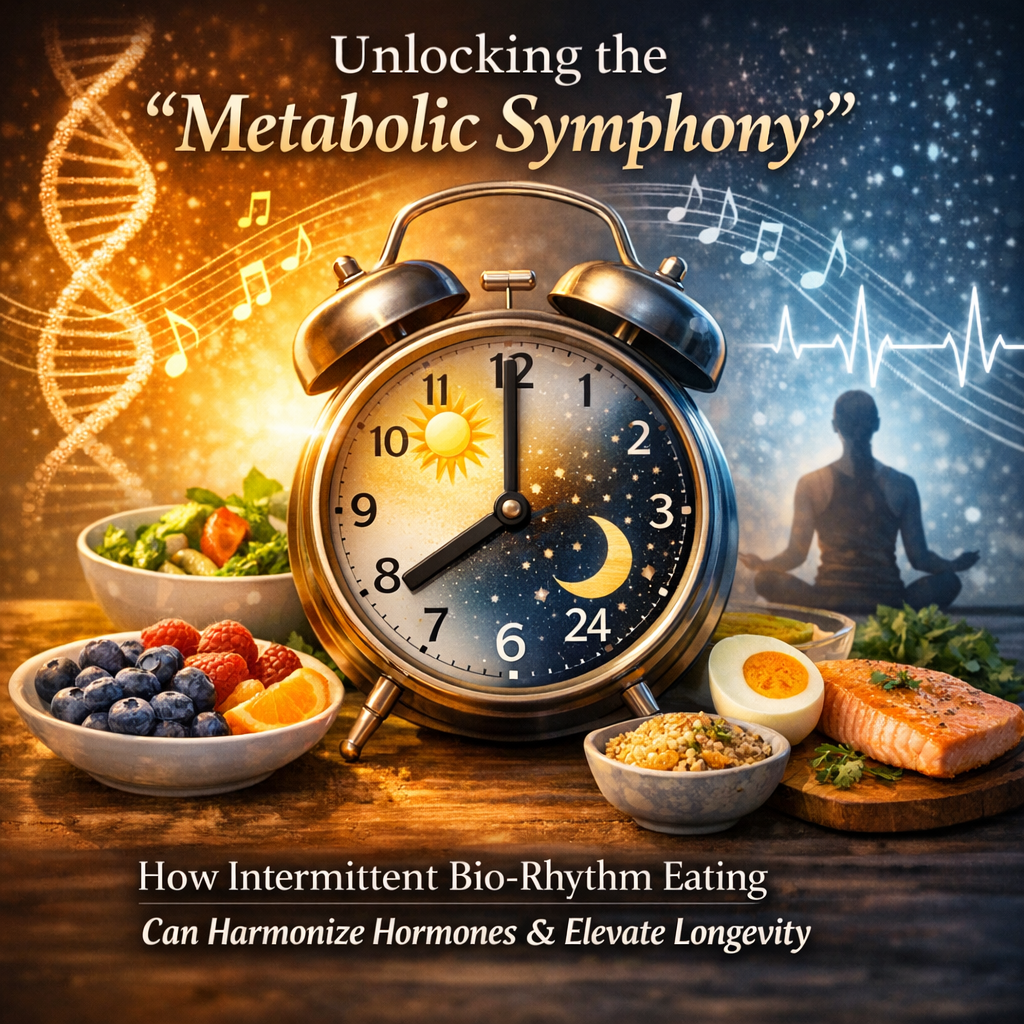
Unlocking the “Metabolic Symphony”: How Intermittent Bio-Rhythm Eating Can Harmonize Hormones and Elevate Longevity
Introduction
In today’s fast-paced world, achieving a balanced lifestyle can feel elusive, especially when it comes to diet and nutrition. Many individuals are searching for ways to harmonize their internal systems in order to live longer, more vibrant lives. This scrutiny often falls on our diet—an area where natural solutions can provide promising alternatives to mainstream practices. Enter ”Intermittent Bio-Rhythm Eating” (IBRE), a cutting-edge approach that aligns eating patterns with the body’s natural hormonal cycles. Coupling principles from intermittent fasting with bio-rhythm science, this method holds transformative potential in managing weight, enhancing metabolic health, and promoting longevity.
The concept of bio-rhythms isn’t new. These intrinsic cycles regulate various physiological processes such as sleep, hormone release, and digestion. By optimizing our eating schedule to follow these innate rhythms, we stand a chance to amplify our body’s natural functions. Far from the standard diet trends, IBRE is not about caloric restriction or food prohibitions. Instead, it’s about timeliness—eating specific nutrients when our bodies are most receptively aligned, a key distinction that separates it from other dietary regimes.
Central to IBRE is the synchronization with the body’s hormonal fluctuations. Hormones like insulin, ghrelin, and leptin are crucial in determining hunger, energy storage, and metabolic rate. By adopting a dietary pattern that respects these cycles, individuals can support optimal hormone function. Research suggests that mistimed eating can lead to insulin resistance, weight gain, and inflammation, highlighting the need for dietary rhythms that match our biological clocks. Emphasizing the “when” over the “what,” IBRE offers a promising avenue to harness our physiology for better health outcomes.
As health-conscious individuals become more aware of the intersections between diet and circadian rhythms, they begin to appreciate how IBRE can be elegantly integrated into daily life, paving the way for a harmonious metabolic symphony that supports both vitality and longevity.
Features
Scientific inquiry into the benefits of intermittent eating patterns and bio-rhythms has provided intriguing insights. An essential study published in the journal *Cell Metabolism* illustrated that time-restricted feeding, aligning food intake with natural circadian rhythms, results in improved metabolic health and reduced risks of chronic diseases like obesity and diabetes. Participants in the study who restricted their eating to an 8-12 hour window aligned with their biological clock demonstrated healthier blood lipid profiles and insulin sensitivity compared to those who ate without time constraints.
Further investigation in the *Journal of Clinical Endocrinology & Metabolism* explored the relationship between meal timing, hormone secretion, and weight management. The study found that participants eating their meals aligned with the body’s peak insulin sensitivity periods experienced decreased hunger levels and improved energy expenditure, emphasizing the importance of synchronizing meal timing with hormone activity.
Another crucial study from the *Proceedings of the Nutrition Society* elaborates on the concept of chrono-nutrition, which integrates circadian science with nutritional practices. This research underscores the adverse impact of dietary misalignment, such as eating late at night, which can disrupt the natural hormone cycles and lead to weight gain and metabolic disturbances.
Collectively, these studies form a compelling case for IBRE. They spotlight the efficacy of eating in harmony with our bio-rhythms—not just for weight control but as a holistic approach to nurturing our complex biological machinery. This has promising implications for the field of nutritional science and natural health, as the journey toward longevity increasingly points to the harmony between our diet and internal biological clocks.
Conclusion
In a world where health trends often come and go, Intermittent Bio-Rhythm Eating emerges as a sustainable practice rooted in science and nature. By eating in tune with our body’s intrinsic cycles, we respect our biology while promoting health and well-being. Aligning meal timing with hormonal rhythms can mitigate the risk of metabolic disorders, enhance energy balance, and potentially extend our lifespan. As more research sheds light on the profound connection between bio-rhythms and nutrition, individuals seeking natural, effective health strategies may find empowering possibilities in the rhythmic symphony of their metabolism.
References
– Cell Metabolism
– Journal of Clinical Endocrinology & Metabolism
– Proceedings of the Nutrition Society
Concise Summary
Intermittent Bio-Rhythm Eating (IBRE) is a revolutionary approach that aligns eating habits with the body’s hormonal cycles, enhancing metabolic health and promoting longevity. Diverging from standard diets, IBRE emphasizes meal timing over calorie counting or nutrient restriction, mirroring the body’s natural rhythms. Studies highlight its benefits in improving insulin sensitivity and reducing the risks of chronic diseases like obesity. By integrating circadian rhythms with dietary practices, IBRE offers a holistic path to harmonize health, showcasing a powerful connection between diet and biology for a vibrant, extended life.

Dominic E. is a passionate filmmaker navigating the exciting intersection of art and science. By day, he delves into the complexities of the human body as a full-time medical writer, meticulously translating intricate medical concepts into accessible and engaging narratives. By night, he explores the boundless realm of cinematic storytelling, crafting narratives that evoke emotion and challenge perspectives.
Film Student and Full-time Medical Writer for ContentVendor.com