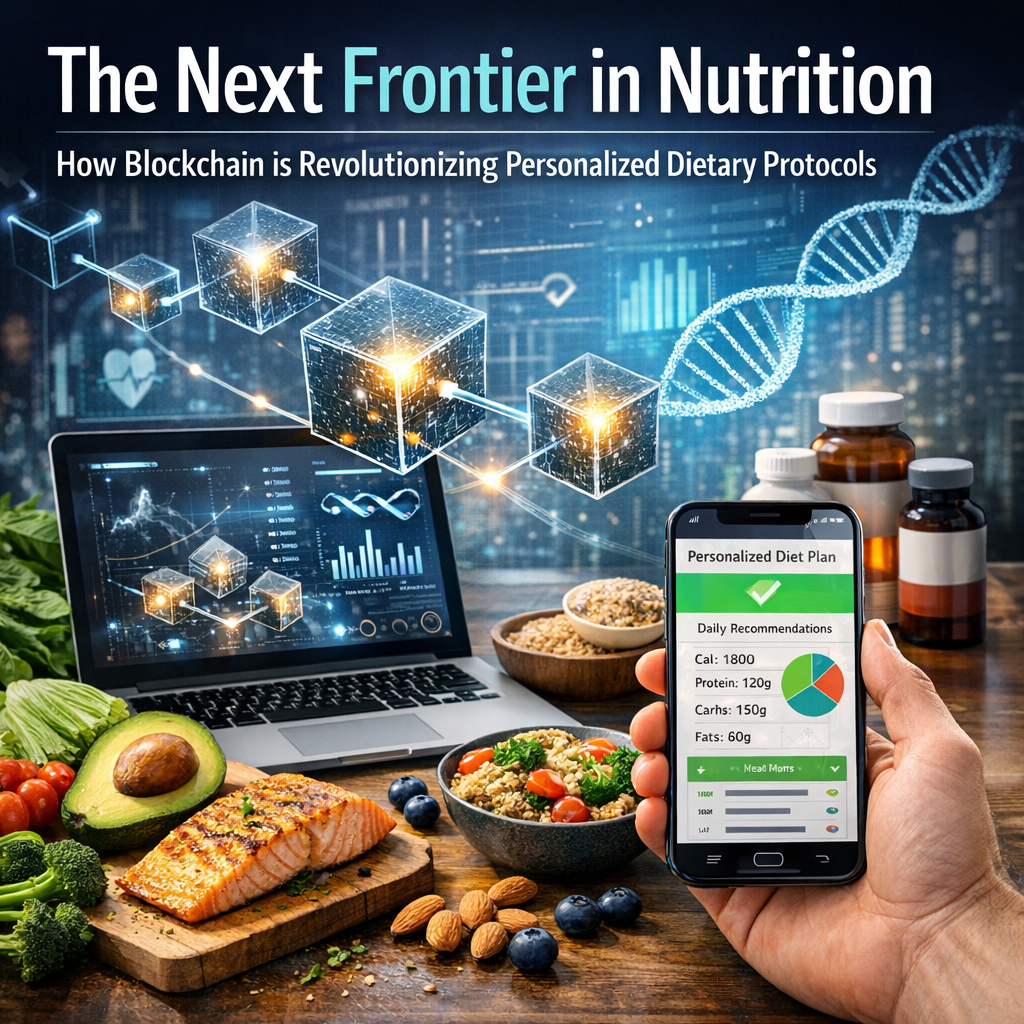
The Next Frontier in Nutrition: How Blockchain is Revolutionizing Personalized Dietary Protocols
In recent years, nutrition and dietary practices have become central to discussions about health and wellness. As people become more informed about their food choices, there’s a growing demand for personalized dietary protocols that cater to individual needs. Enter Blockchain—a technology traditionally linked to cryptocurrencies, but now making significant impacts in nutrition. By providing a decentralized, secure, and accessible platform for information sharing, blockchain is poised to transform how personal dietary data is managed and utilized.
At its core, blockchain is a decentralized digital ledger that records transactions across multiple computers, ensuring that the record cannot be altered retroactively. This transparency and security make it an excellent candidate for managing sensitive data, such as personalized dietary information. In the nutrition context, blockchain can track the journey of food from farm to table, ensuring the authenticity of nutrient content claims and verifying the quality of organic produce.
For health-conscious consumers, knowing precisely what they are consuming is vital. Personalized nutrition, which tailors dietary recommendations based on individuals’ unique genetic, metabolic, and lifestyle factors, now leverages blockchain to deliver transparency and trustworthiness at scale. This means consumers can have enhanced visibility into their nutritional profiles, control over their data, and assurance that they are following dietary protocols that genuinely benefit their health.
Moreover, blockchain enables collaboration and data sharing between nutritionists, medical practitioners, and consumers, making it easier to access cutting-edge nutritional science and integrate it into daily life. Researchers can continually update dietary recommendations based on a wealth of anonymized health and nutrition data, shared securely via blockchain, to adapt to new findings rapidly and efficiently.
As the field of nutrigenomics continues to evolve, blockchain technology stands out as a valuable ally in providing customized nutritional advice. As technologies like the Internet of Things (IoT) increasingly come into play, their synergy with blockchain could facilitate real-time dietary recommendations using wearable device data to dynamically update individuals’ nutritional protocols.
Features
The potential of blockchain in nutrition is supported by emerging research and studies that highlight its strengths in data security, transparency, and decentralized control. One such study, “Blockchain Technology in Food Supply Chains: Review and Implementation Frameworks (Industry Research, 2021),” explores how blockchain enhances the traceability of food products. This study emphasizes blockchain’s ability to ensure that information about the nutritional value of food remains accurate and tamper-proof throughout the supply chain.
Furthermore, the “Potential Applications of Blockchain Technology in Livestock Industry (Agriculture and Food Security, 2021)” discusses the broader implications of blockchain in ensuring transparency and trust in the food industry. The study highlights how blockchain can prevent fraud and improve food safety, key aspects of sustaining personalized nutrition practices.
Another pertinent study, published in “Journal of Medical Internet Research (2022),” titled “Blockchain Technology for Data Safety in Personalized Medicine and Genomics,” explores blockchain’s potential in protecting patient data and facilitating personalized healthcare services. This aligns closely with nutrition, where individualized dietary protocols hinge on comprehensive, secure personal data management.
Blockchain’s role in revolutionizing dietary protocols is also evident in recent developments by companies like IBM Food Trust, which enhances food safety by creating a reliable digital record of product information. This ensures that health-improving products reach consumers uncompromised, maintaining the integrity of personalized dietary protocols.
The unique structure of blockchain also facilitates broader research by allowing controlled access to anonymized nutrition data, thus boosting collaboration among researchers worldwide. As food and nutrition science progress, blockchain will continue to play a crucial role in harnessing these advancements to deliver optimized dietary recommendations.
Conclusion
As interest in personalized nutrition grows alongside digital transformation, blockchain technology is proving invaluable for delivering secure, transparent, and reliable dietary data. By addressing the challenges of trust and data integrity, blockchain empowers consumers with individualized nutritional insights backed by scientific research and verified at every stage of the food supply chain. Personalized nutrition protocols, supported by blockchain, go beyond generic dietary advice, offering customized solutions that can potentially transform health outcomes on an individual scale.
As we move toward an era where personalized nutrition becomes the norm, collaboration between blockchain and the broader tech ecosystem will shape future nutrition models. This shift will likely promote not just individual health but also societal well-being by inspiring greater trust in nutritional science and its applications. As the potential of blockchain unfolds, it will undoubtedly set new standards for how we approach and implement personalized dietary protocols, revolutionizing the field of nutrition as we know it.
Concise Summary
Blockchain technology, known for its role in cryptocurrencies, is now set to revolutionize personalized nutrition by providing a secure, transparent platform for managing dietary data. The technology can enhance food traceability, verify nutrient content claims, and promote collaboration among nutritionists, researchers, and consumers. Through studies and implementations by initiatives like IBM Food Trust, blockchain’s role in ensuring data security, authenticity, and collaboration is highlighted. This integration promises transformative impacts on individual health outcomes by supporting personalized dietary protocols, making blockchain an invaluable ally in the digital age of nutrition.

Dominic E. is a passionate filmmaker navigating the exciting intersection of art and science. By day, he delves into the complexities of the human body as a full-time medical writer, meticulously translating intricate medical concepts into accessible and engaging narratives. By night, he explores the boundless realm of cinematic storytelling, crafting narratives that evoke emotion and challenge perspectives.
Film Student and Full-time Medical Writer for ContentVendor.com