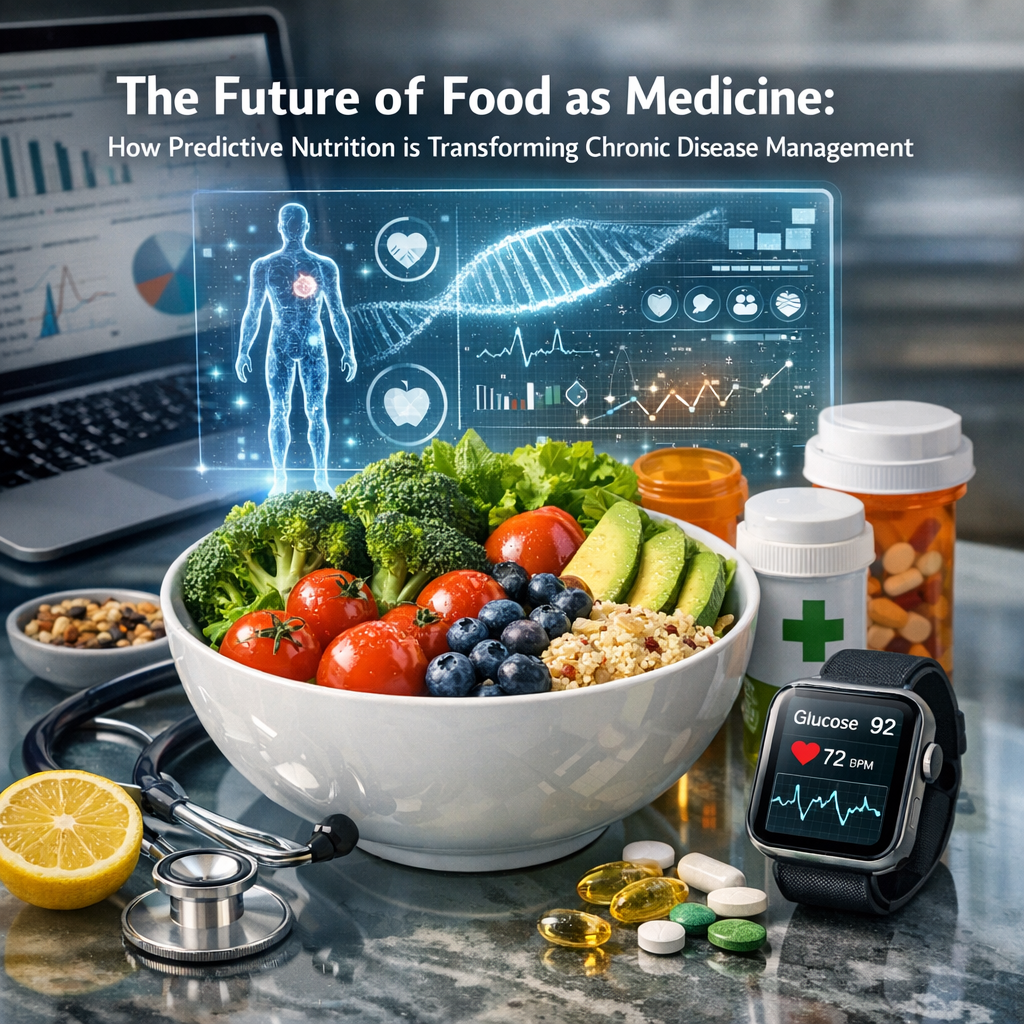
The Future of Food as Medicine: How Predictive Nutrition is Transforming Chronic Disease Management
Introduction:
The concept of food as medicine has deep historical roots, celebrated in various cultures and healing traditions. In recent years, science and technology have provided insights into the potential of nutrition in managing chronic diseases. Predictive nutrition, an emerging field, offers personalized dietary guidance, potentially revolutionizing healthcare. With increasing global rates of chronic diseases like diabetes, obesity, and cardiovascular issues, innovative solutions are in high demand.
Predictive nutrition uses data-driven insights and technologies (e.g., genomics, microbiome analysis, and artificial intelligence) to tailor dietary recommendations to individual genetic, biochemical, and lifestyle profiles. By understanding genetic makeup and food interactions, predictive nutrition aims to optimize health outcomes and reduce chronic disease risk factors.
The growth of predictive nutrition is aided by genetic testing accessibility and health-tracking devices, which collect data for personalized nutrition plans, surpassing generic dietary guidelines. This approach empowers individuals to control their health and allows healthcare providers to offer precise interventions.
Heightened awareness of the gut microbiome’s role in health has further propelled predictive nutrition. Understanding food’s impact on gut health has led to diets combatting inflammation, enhancing immunity, and promoting metabolic health. Coupled with genetic predispositions, these insights enable personalized diets that optimize individuals’ health potential.
Integrating predictive nutrition into healthcare could lessen system burdens, improve patient outcomes, and significantly lower chronic disease management costs. As research expands, predictive nutrition is poised to become the future of personalized healthcare.
Features:
Scientific research supports predictive nutrition development and chronic disease management application. For example, a 2015 *[Cell](https://www.cell.com/)* study by Weizmann Institute scientists showcased personalized nutrition’s potential. It found individualized dietary advice based on genetic and microbiome data more effective at controlling postprandial glucose levels than traditional strategies—a key aspect of diabetes management.
A pivotal 2020 *[Nature Medicine](https://www.nature.com/nm/)* study highlighted personalized nutrition’s impact on gut microbiota composition and function, showing correlations between tailored dietary changes and improved metabolic markers. This suggests modulating the gut environment with targeted nutrition may prevent or mitigate chronic diseases.
Artificial intelligence advancements have significantly contributed to predictive nutrition. At Tufts University, a bioinformatics team’s machine learning algorithm predicts individual responses to foods based on metabolic and microbiome profiles, offering precise dietary recommendations to enhance metabolic health and potentially curb obesity and heart disease.
Collaboration between nutritional science and genomics has led to the Nutrigenomics approach, exploring nutrients’ connection to genetic expressions related to chronic diseases. Research in the *[Journal of Nutrigenetics and Nutrigenomics](https://www.karger.com/Journal/Home/224038)* illustrates how specific dietary components and gene variants interact, influencing health outcomes based on genetic makeup.
These scientific advances highlight predictive nutrition’s feasibility and promise in transforming chronic disease management. As more data accumulates, health practitioners can shift from a one-size-fits-all approach to targeted strategies, promising patient care and quality of life improvements.
Conclusion:
The future of ‘food as medicine’ through predictive nutrition offers a transformative approach to managing and preventing chronic diseases. By leveraging cutting-edge technologies and cross-disciplinary research, predictive nutrition provides a personalized health roadmap aligned with each individual’s unique biological blueprint. This tailored approach has the potential to alleviate chronic disease burdens and empower individuals to make informed dietary choices in line with their genetic and metabolic profiles.
The healthcare implications are significant. Predictive nutrition promises reduced costs by minimizing chronic condition incidence and severity. As we approach this nutritional revolution, integrating predictive nutrition into medical practice could mark a paradigm shift in dietary health strategy perception and implementation.
Concise Summary:
The article explores predictive nutrition as a burgeoning field aimed at revolutionizing chronic disease management through personalized dietary guidance. By leveraging data-driven insights and technologies like genomics, microbiome analysis, and AI, the field tailors dietary recommendations to individual genetic and lifestyle profiles. Studies reveal predictive nutrition’s potential in managing chronic conditions such as diabetes and heart disease. Integration into healthcare could lower costs and improve patient outcomes, marking a paradigm shift from generic to personalized health strategies grounded in cutting-edge science and ancient wisdom.

Dominic E. is a passionate filmmaker navigating the exciting intersection of art and science. By day, he delves into the complexities of the human body as a full-time medical writer, meticulously translating intricate medical concepts into accessible and engaging narratives. By night, he explores the boundless realm of cinematic storytelling, crafting narratives that evoke emotion and challenge perspectives.
Film Student and Full-time Medical Writer for ContentVendor.com