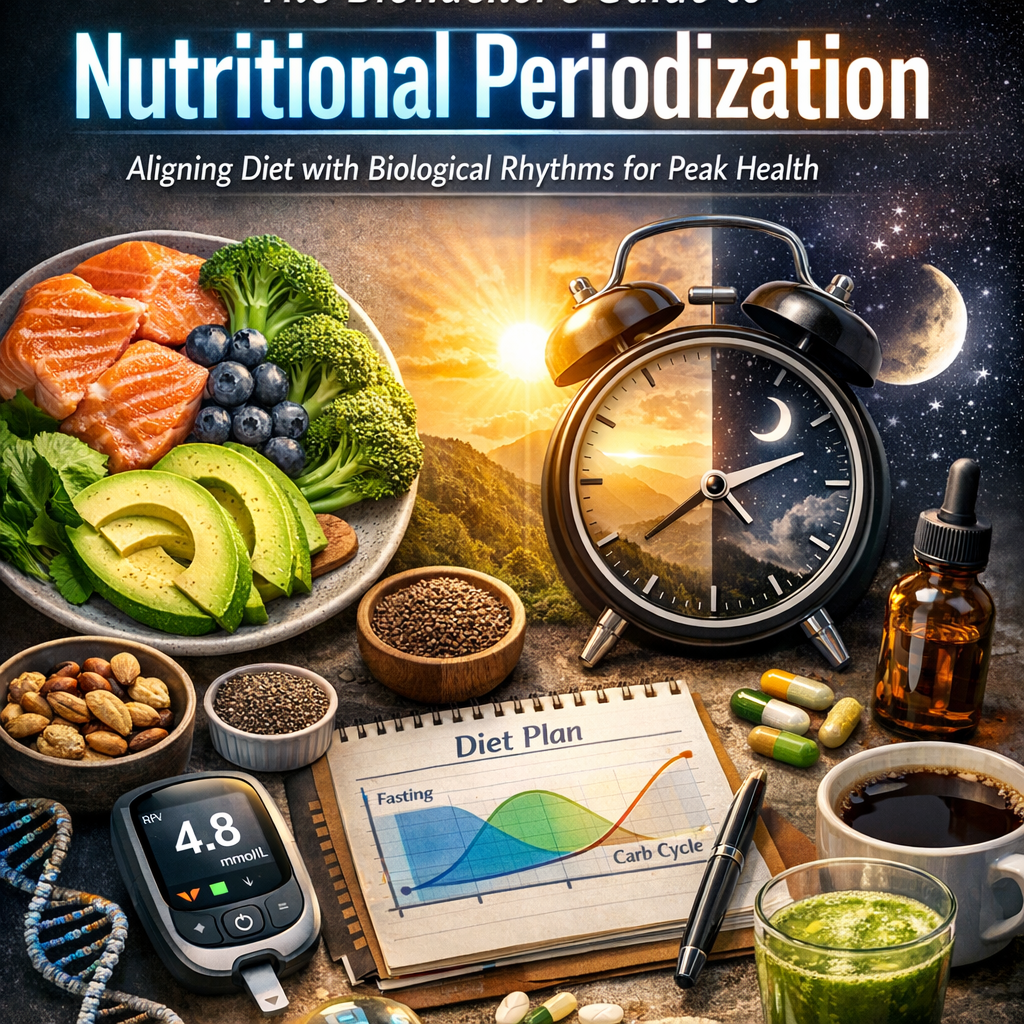
The Biohacker’s Guide to Nutritional Periodization: Aligning Diet with Biological Rhythms for Peak Health
Introduction
In an era where health optimization often resembles a high-tech quest, biohacking is at the forefront, promoting self-empowerment through meticulous alteration of diet, lifestyle, and environment. One intriguing aspect gaining traction is nutritional periodization—a strategic approach aligning diet with the body’s biological rhythms, or circadian rhythms, for enhanced performance and well-being.
The concept of nutritional periodization hinges on understanding that human biology is fundamentally cyclical. Our ancestors, without artificial light and consistent food supplies, thrived by tuning into natural ebbs and flows of daylight, seasonal changes, and resource availability. Today, our lifestyles are far removed from these natural cycles, with often unpredictable work hours and 24/7 access to food leading to chronic misalignment with our body’s inherent rhythms.
At its core, nutritional periodization is about eating in harmony with the body’s internal clock. Throughout the day, our bodies experience fluctuations in hormone levels, metabolism, and energy needs. These variations are driven by the suprachiasmatic nucleus (SCN), a brain region controlling circadian rhythms. Research suggests that timing food consumption to align with these natural cycles can alleviate stress on metabolic processes, enhance digestion, support weight management, and improve overall cognitive function.
Furthermore, nutritional periodization isn’t confined to daily cycles. It also considers longer, seasonal rhythms, advising dietary adjustments in response to changes in sunlight, temperature, and physical activity levels. For instance, consuming a lighter, more plant-based diet during warmer months and a heartier, calorically dense diet during colder months can mimic historical eating patterns and promote balance within our bodies.
This approach aligns with the growing interest in personalized nutrition—finding a diet that resonates with an individual’s unique genetic, metabolic, and lifestyle characteristics. By attuning to our evolutionary biology and individual rhythms, nutritional periodization offers a promising roadmap for anyone aiming to optimize health in a holistic and sustainable manner.
Features
The science underpinning nutritional periodization is robust, intersecting disciplines from chronobiology to nutrition science. Research has increasingly demonstrated the profound effects of circadian rhythms on digestive processes and metabolic functions. A study published in [Cell](https://www.cell.com) revealed that irregular eating patterns, particularly eating late at night, disrupt circadian rhythms and lead to weight gain and metabolic disorders, such as diabetes and obesity.
Further evidence from a study in [The Lancet Diabetes & Endocrinology](https://www.thelancet.com) highlighted the benefits of time-restricted feeding—a form of nutritional periodization limiting eating to specific windows of time. The study concluded participants who ate within a 10-hour window had improvements in weight regulation, blood pressure, and cholesterol levels compared to those who ate over longer periods.
Moreover, research included in the [Annual Review of Nutrition](https://www.annualreviews.org) supports the idea that aligning meal times with daily energy cycles can improve insulin sensitivity, reduce hunger, and promote lean body mass. This reinforces the concept that eating intervals should focus on both nutrient content and meal timing to maximize metabolic health.
As we delve further into seasonal impacts on biological rhythms, [Nature Communications](https://www.nature.com) presents findings that suggest human immune function can display seasonal variation. This indicates that dynamic dietary modifications in response to seasons might bolster immune health, further supporting nutritional periodization principles.
These studies collectively affirm that our bodies are equipped to respond to rhythmic biological changes. The strategic planning of dietary intake to complement these rhythms can serve as a powerful tool in achieving and maintaining optimal health.
Conclusion
The biohacker’s quest to harness peak health within the framework of nutritional periodization offers a fascinating glimpse into the future of personalized wellness strategies. By harmonizing our eating habits with innate biological rhythms, we honor our evolutionary blueprint and create an environment for enhanced metabolic function, mental clarity, and physical vitality.
In an age where dietary trends often gravitate towards extremes, nutritional periodization provides a balanced, intuitive approach to nourishment. It encourages a deeper understanding of intrinsic cycles and aligns food intake with the natural ebb and flow of life. As we continue uncovering connections between biology and nutrition, embracing principles like these remains a cornerstone in pursuing a healthier, sustainable lifestyle. By leveraging wisdom encoded in our DNA, we stand to not enhance personal wellness but also contribute to a broader understanding of eating in harmony with nature.
Concise Summary
Nutritional periodization aligns diet with biological rhythms for optimum health. Like our ancestors, syncing eating patterns with circadian rhythms and seasonal changes optimizes metabolism and cognitive function. Studies in journals such as [Cell](https://www.cell.com) and [The Lancet](https://www.thelancet.com) back aligning meals with the body clock, enhancing weight management, digestion, and immune responses. This personalized biohacking technique integrates holistic nutrition, proving effective for anyone striving to boost well-being and align with natural cycles for sustained vitality.

Dominic E. is a passionate filmmaker navigating the exciting intersection of art and science. By day, he delves into the complexities of the human body as a full-time medical writer, meticulously translating intricate medical concepts into accessible and engaging narratives. By night, he explores the boundless realm of cinematic storytelling, crafting narratives that evoke emotion and challenge perspectives.
Film Student and Full-time Medical Writer for ContentVendor.com