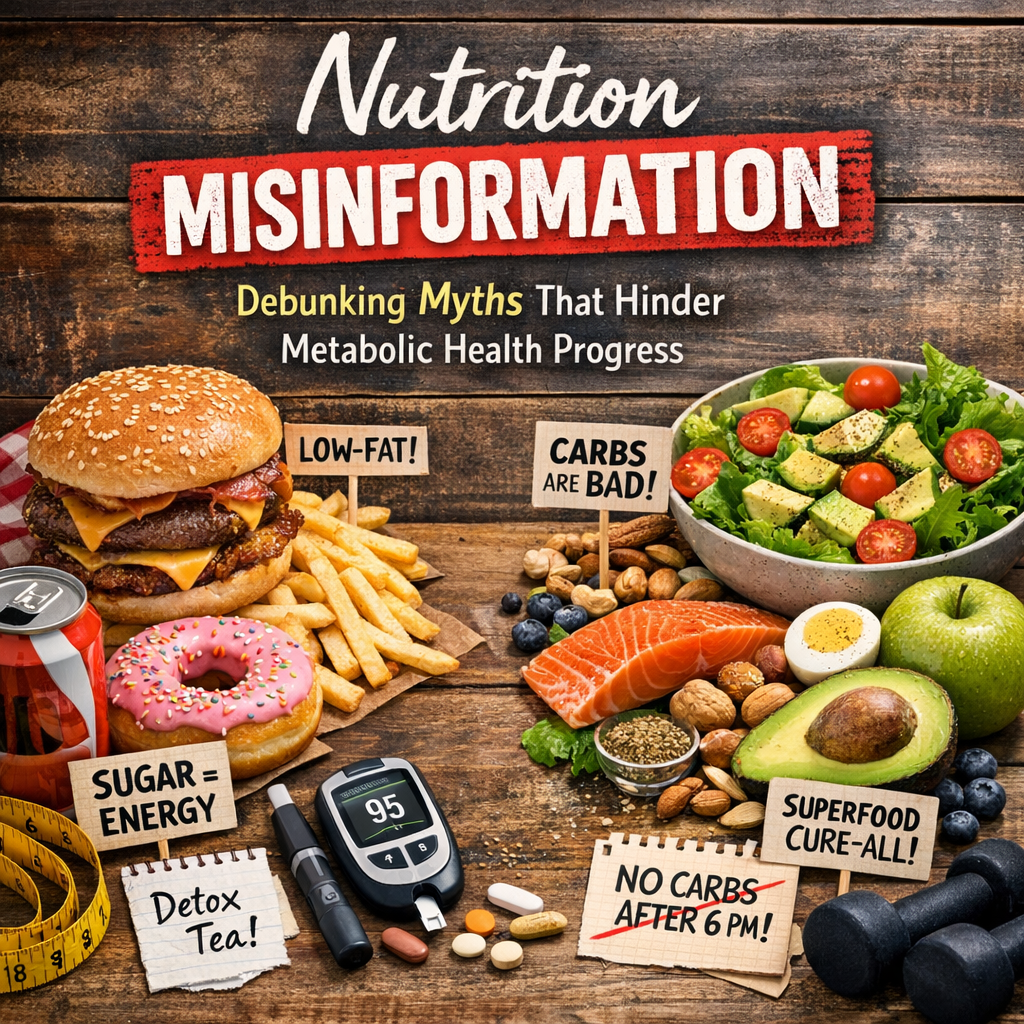
Nutrition Misinformation: Debunking Myths That Hinder Metabolic Health Progress
In the age of information overload, finding genuine truth in nutrition is more challenging than ever. With new health trends, celebrity endorsements, and “quick-fix” diets cropping up almost daily, consumers are bombarded with a multitude of often conflicting messages. This clutter of misleading information not only confuses the general public but can also impede genuine efforts to improve metabolic health, which is crucial for glucose metabolism, fat storage, and energy balance.
Features: Professional and Medical Studies on Nutrition Myths
Numerous studies have been conducted to evaluate the veracity of common nutritional myths and to understand their impacts on metabolic health. For instance, research published in the [Journal of the American Medical Association](https://jamanetwork.com/journals/jama/fullarticle/2673150) examined the effects of low-fat versus low-carbohydrate diets, concluding that the quality, rather than macronutrient composition, truly influences health outcomes. This emphasizes that reducing processed carbohydrates and unhealthy fats is more beneficial than broad classifications of foods as “good” or “bad”.
Further, a comprehensive review in the [Journal of Nutrition](https://academic.oup.com/jn/article/150/10/2502/5891101) highlighted the detrimental impacts of detox diets, critiquing their lack of scientific grounding and emphasizing the body’s natural detoxification mechanisms. By promoting drastic calorie reductions, these diets can inadvertently slow metabolic rates and lead to nutrient deficiencies.
Conclusion
In debunking nutritional myths, we pave the way for enhanced metabolic health. Misconceptions about carbohydrates, fats, and detox diets create confusion and hinder health progress. However, with scientific inquiry and evidence-based approaches, we can correct these misconceptions and foster informed public dialogue around nutrition.
Education and empowerment are central to debunking myths. By encouraging nuanced understanding supported by scientific research and expert advice, individuals can make informed dietary choices supporting their metabolic health. As we address misinformation, it is critical to provide accurate, clear, and reliable information, ensuring our health paths are paved with knowledge, not misinformation.
References
1. [Journal of the American Medical Association](https://jamanetwork.com/journals/jama/fullarticle/2673150): Effects of Low-Fat vs Low-Carbohydrate Diets on Metabolic Health
2. [Journal of Nutrition](https://academic.oup.com/jn/article/150/10/2502/5891101): Detox Diets: Debunking the Myths
3. [American Journal of Clinical Nutrition](https://academic.oup.com/ajcn/article/106/2/306/4624366): The Role of Misinformation in Public Health: Nutrition Myths and Social Media
Concise Summary: In a world flooded with nutritional myths, distinguishing fact from fiction is vital for supporting metabolic health. Common misconceptions about carbs, fats, and detox diets are debunked by recent research, which indicates that dietary quality supersedes macronutrient focus. A comprehensive education based on scientific evidence is necessary to empower individuals to make informed dietary decisions, ultimately fostering a society less influenced by sensationalized myths and more aligned with evidence-based wellness practices.

Dominic E. is a passionate filmmaker navigating the exciting intersection of art and science. By day, he delves into the complexities of the human body as a full-time medical writer, meticulously translating intricate medical concepts into accessible and engaging narratives. By night, he explores the boundless realm of cinematic storytelling, crafting narratives that evoke emotion and challenge perspectives.
Film Student and Full-time Medical Writer for ContentVendor.com