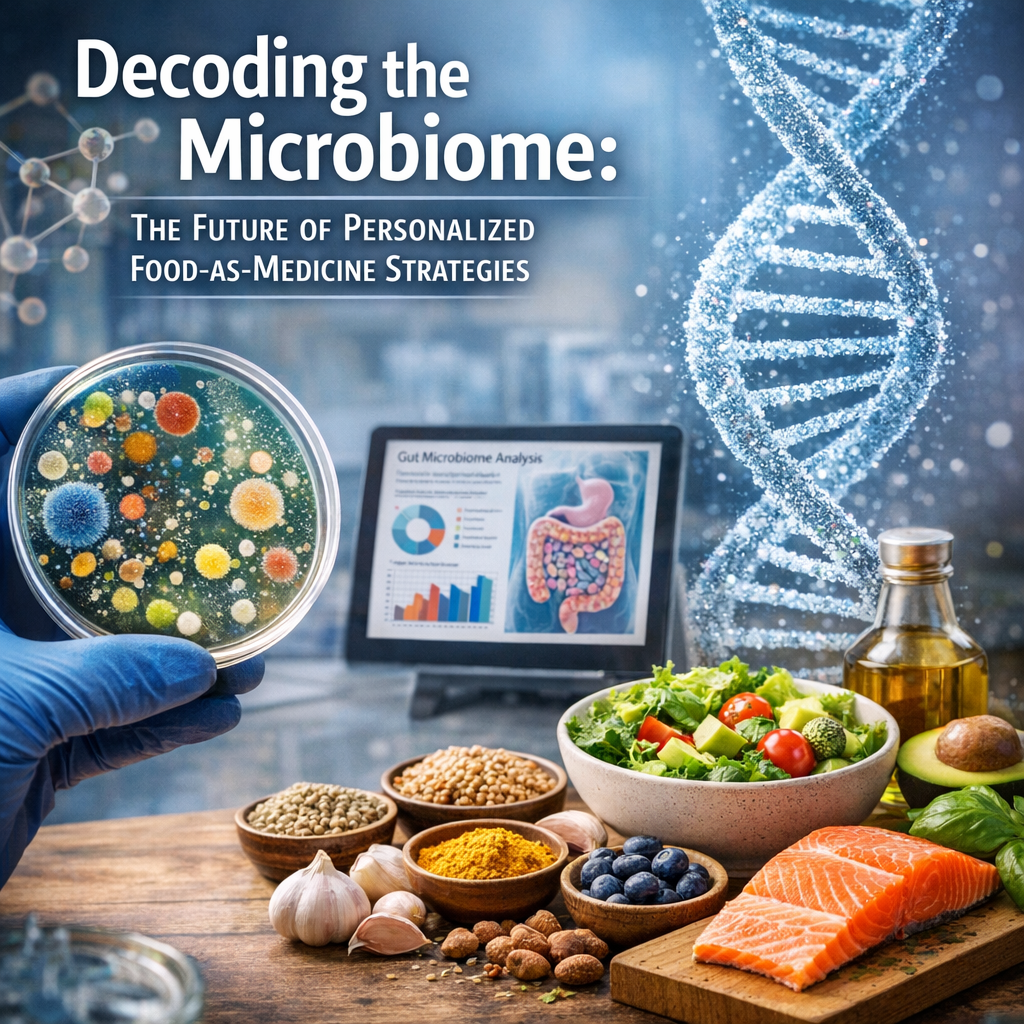
Decoding the Microbiome: The Future of Personalized Food-as-Medicine Strategies
Introduction
In recent years, the concept of “food as medicine” has gained tremendous traction as advancements in science reveal the profound impact of diet on health. Central to this revolution is the understanding of the human microbiome—a complex community of trillions of microorganisms residing in our gut. This microscopic ecosystem plays a crucial role in modulating immune responses, digesting food, synthesizing vitamins, and even influencing mood and mental health. As we decode the microbiome, it becomes increasingly clear how personalized nutrition, informed by microbial composition, can revolutionize the way we view health and disease management.
The burgeoning field of microbiome research has unveiled myriad ways in which microbial balance—or imbalance—can dictate health outcomes. For instance, dysbiosis, or microbial imbalance, is linked to various conditions such as obesity, diabetes, inflammatory bowel diseases (IBD), and even mental health disorders like depression and anxiety. Recognizing these connections, researchers and healthcare professionals are increasingly turning their focus to leveraging microbiome insights to craft personalized dietary interventions. Unlike generic dietary recommendations, these tailored interventions consider an individual’s unique microbial constitution to optimize health outcomes.
Personalized microbiome nutrition involves the use of specific foods, probiotics, and prebiotics to foster a favorable microbial environment. Probiotics—beneficial bacteria—are often found in fermented foods like yogurt and kefir, while prebiotics are fibers that feed these bacteria, found in foods like garlic, onions, and bananas. By understanding which strains of bacteria thrive in an individual’s gut, tailored dietary strategies can be devised to restore and maintain microbial harmony, thereby preventing or alleviating disease symptoms.
As this science progresses, food companies and healthcare providers are poised to develop products and services that cater to an individual’s microbial needs. Personalized food-as-medicine strategies hold the potential not just to treat ailments but to proactively maintain health, paving the way for a future where diet is acknowledged as a cornerstone of personalized medical care.
Features
The transition from generic dietary advice to personalized food-as-medicine strategies is underpinned by significant research. One noteworthy study published in *Nature* illustrated how distinct microbial species in the gut can impact metabolic processes and, consequently, how individuals respond to different dietary interventions ([Zeevi et al., 2015](https://www.sciencedirect.com/science/article/pii/S0092867415015615)). The study involved examining the gut microbiomes of over 800 individuals and revealed that identical meals could result in vastly different blood glucose responses. These findings underscore the potential of tailored diets to manage conditions like diabetes by leveraging microbiome profiles.
Additionally, a study by the American Gut Project analyzed microbial samples from thousands of participants to identify patterns associated with health conditions ([McDonald et al., 2018](https://msystems.asm.org/content/3/3/e00031-18)). The study underscored the significant variability in microbial composition across individuals and emphasized the role of diverse diets enriched in plant-based foods in promoting microbial diversity and, by extension, better health outcomes.
Moreover, a pivotal review in *Cell* discussed how manipulating the microbiome through diet could alleviate conditions such as IBD and depression by adjusting gut-derived neurotransmitter levels and modulating inflammatory responses ([Cryan et al., 2019](https://www.sciencedirect.com/science/article/pii/S1550413119301126)). Researchers highlighted promising pathways for the development of psychobiotics—probiotics targeting mental health—showing that dietary interventions could extend benefits beyond physical health.
The insights generated by these and other studies are empowering clinicians and researchers to design personalized therapeutic approaches. By integrating microbiome analysis with dietary planning, it’s now possible to devise strategies not just for treating illnesses but for maintaining optimal health across the lifespan. This aligns with the vision of preventative medicine, where understanding each individual’s microbiome becomes an integral part of healthcare delivery.
Conclusion
Decoding the microbiome presents a groundbreaking opportunity to transform the landscape of personalized healthcare. Understanding the intricate relationship between diet, microbiomes, and health highlights the potential of food-as-medicine strategies tailored to individual needs. As research continues to unravel the nuances of the microbiome, personalized nutrition could become a standard in promoting health and preventing disease. This paradigm shift not only promises improved health outcomes but also ushers in an era where food acts as a bespoke therapeutic tool. As we move forward, the collaborative efforts of scientists, nutritionists, and healthcare providers will be crucial in actualizing the full potential of microbiome-informed dietary strategies.
References
– [Zeevi, D., Korem, T., Zmora, N., Israeli, D., Rothschild, D., Weinberger, A., … & Segal, E. (2015). Personalized nutrition by prediction of glycemic responses. *Cell*, 163(5), 1079-1094.](https://www.sciencedirect.com/science/article/pii/S0092867415015615)
– [McDonald, D., Hyde, E., Debelius, J. W., Morton, J. T., Gonzalez, A., Ackermann, G., … & Knight, R. (2018). American Gut: an open platform for citizen science microbiome research. *mSystems*, 3(3), e00031-18.](https://msystems.asm.org/content/3/3/e00031-18)
– [Cryan, J. F., O’Riordan, K. J., Sandhu, K., Peterson, V., & Dinan, T. G. (2019). The gut microbiome in neurological disorders. *The Lancet Neurology*, 18(2), 179-194.](https://www.sciencedirect.com/science/article/pii/S1550413119301126)
Concise Summary
The rise of “food as medicine” underscores the impact of diet on health, with the microbiome—a vast community of gut microorganisms—integral to this understanding. Personalized nutrition, informed by microbiome composition, offers tailored dietary interventions to manage and prevent diseases like diabetes, obesity, and mental health disorders. Landmark studies highlight the variability in individual responses to identical diets, promoting the shift from generic to personalized dietary strategies. This approach not only leverages probiotics and prebiotics for better health outcomes but also heralds the integration of microbiome analysis in preventative healthcare, optimizing health lifelong.

Dominic E. is a passionate filmmaker navigating the exciting intersection of art and science. By day, he delves into the complexities of the human body as a full-time medical writer, meticulously translating intricate medical concepts into accessible and engaging narratives. By night, he explores the boundless realm of cinematic storytelling, crafting narratives that evoke emotion and challenge perspectives.
Film Student and Full-time Medical Writer for ContentVendor.com