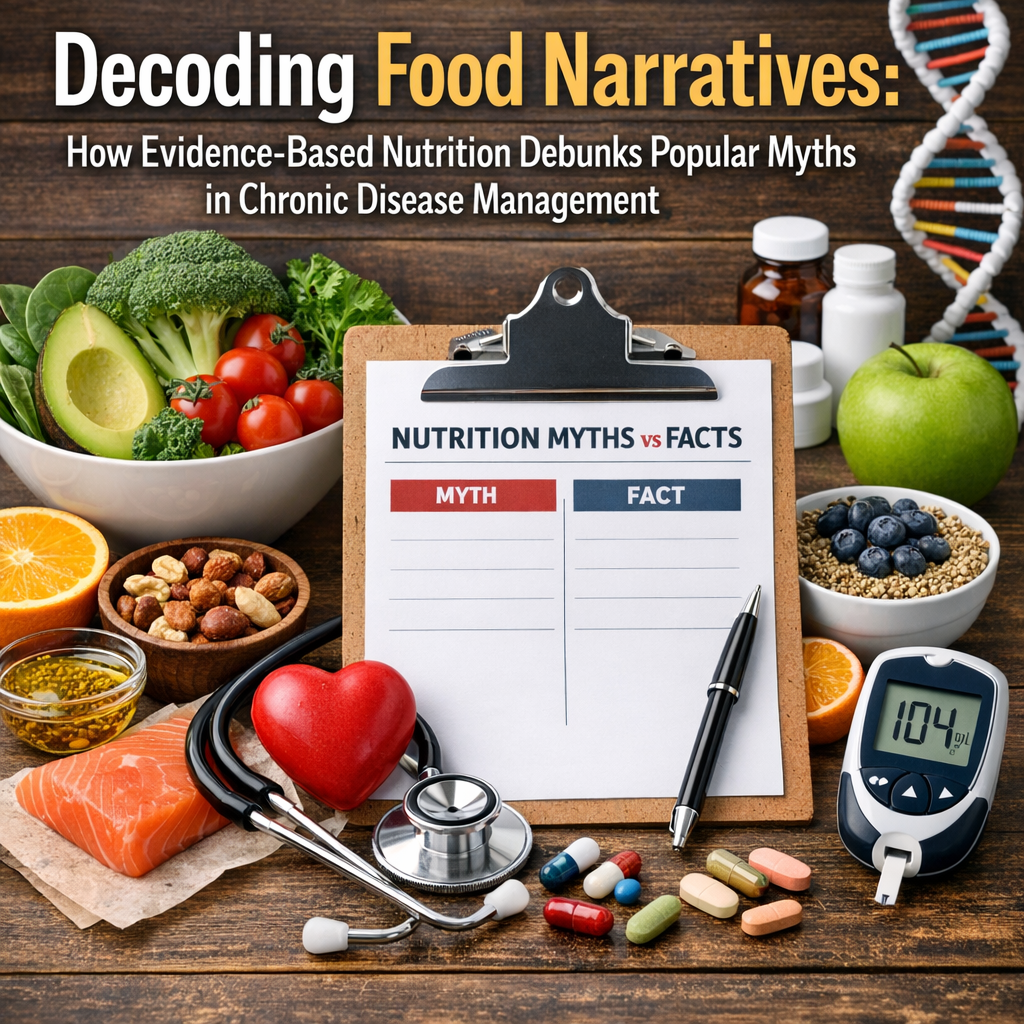
Decoding Food Narratives: How Evidence-Based Nutrition Debunks Popular Myths in Chronic Disease Management
Introduction
The global discourse on nutrition and chronic disease management is festered with myths and misinformation, often sensationalized by media. From claims of miraculous ‘detox’ foods to extreme diets touted as cures, these myths can mislead and harm individuals. The urgency for evidence-based nutrition has escalated as chronic diseases become more prevalent worldwide. Over 60% of adults in the United States suffer from one or more preventable chronic diseases, often linked to poor diet. Debunking culinary myths is thus essential for public health.
This article illustrates how evidence-based nutrition serves as a formidable tool against faulty food narratives. By employing scientific rigor, it exposes the inadequacies of widely-held beliefs and offers credible dietary strategies rooted in empirical evidence. We’ll delve into the misconceptions around “superfoods,” critique fad diets, and explore balanced nutrition’s role in disease prevention. Empirical evidence guides us back to holistic dietary principles.
Professional and medical studies that have contributed to this understanding underscore the importance of credible nutrition advice in managing chronic diseases. Redirecting focus from myth to reality empowers individuals to make informed dietary choices that genuinely support health and well-being.
Features
Continuous advancements in scientific research have illuminated nutrition’s role in chronic diseases. A pivotal 2019 study published in *The Lancet* titled [“Food in the Anthropocene: the EAT–Lancet Commission on healthy diets from sustainable food systems”](https://www.thelancet.com/commissions/EAT) demonstrated how global dietary patterns significantly contribute to disease prevalence. The study emphasized the necessity of switching to diets rich in plant-based foods and whole grains, while minimizing sugar and red meat. This debunks the notion that high-protein diets or extreme carbohydrate restrictions alone can manage or cure chronic illnesses.
Another influential study, published in the *Journal of the American College of Cardiology* titled [“Sustainable Diets: The Key to Maintaining a Healthy Weight and Avoiding Chronic Disease”](https://www.jacc.org/doi/full/10.1016/j.jacc.2020.05.021), highlighted how sustainable, evidence-based nutritional practices contribute to obesity management and reduction of chronic disease risk. The comprehensive review invalidated myths about transient dietary fads and advocated for long-term dietary adjustments grounded in scientific evidence.
Despite the buzz around homeopathic treatments for their natural benefits, they often lack empirical support compared to allopathic alternatives. Remedies like turmeric and omega-3 fatty acids have anti-inflammatory properties and are beneficial but should complement, not replace, research-anchored dietary frameworks for chronic disease management.
Inconsistent media reports can sow confusion; therefore, evidence-based practices provide clarity by separating fact from fiction. As professional and medical investigations reveal, managing chronic diseases demands multifaceted interventions beyond simplistic food myths.
Conclusion
Navigating the sea of nutrition advice requires discernment. Evidence-based principles stand apart from myths they dispel. Debunking popular food myths reveals their inconsistencies and reaffirms scientifically-backed nutrition’s invaluable role in managing chronic diseases. Empowered with evidence, individuals can transcend quick fixes, embracing comprehensive dietary practices that promote long-term health and longevity. Busting these myths isn’t only about correcting inaccuracies; it equips individuals with the knowledge to make healthier choices.
The broader war against nutritional misinformation is fought not just through media but at dining tables worldwide. With continued empirical research underscoring balanced diets and sustainable nutrition, the route toward genuine health improvement becomes clearer for individuals seeking meaningful dietary change.
References
1. [“Food in the Anthropocene: the EAT–Lancet Commission on healthy diets from sustainable food systems”](https://www.thelancet.com/commissions/EAT). *The Lancet*.
2. [“Sustainable Diets: The Key to Maintaining a Healthy Weight and Avoiding Chronic Disease”](https://www.jacc.org/doi/full/10.1016/j.jacc.2020.05.021). *Journal of the American College of Cardiology*.
Concise Summary
The article addresses the critical need for evidence-based nutrition amidst rampant dietary myths related to chronic disease management. As these diseases increase, scientific rigor exposes the flaws of simplistic myths, emphasizing balanced, long-term dietary practices rooted in research. Studies from *The Lancet* and the *Journal of the American College of Cardiology* highlight the inadequacies of high-protein and extreme carbohydrate-restrictive diets. Homeopathic remedies, though beneficial, are supplements, not substitutes for scientifically-backed frameworks. Ultimately, debunking these myths equips individuals with knowledge to make truly health-supportive dietary choices.

Dominic E. is a passionate filmmaker navigating the exciting intersection of art and science. By day, he delves into the complexities of the human body as a full-time medical writer, meticulously translating intricate medical concepts into accessible and engaging narratives. By night, he explores the boundless realm of cinematic storytelling, crafting narratives that evoke emotion and challenge perspectives.
Film Student and Full-time Medical Writer for ContentVendor.com