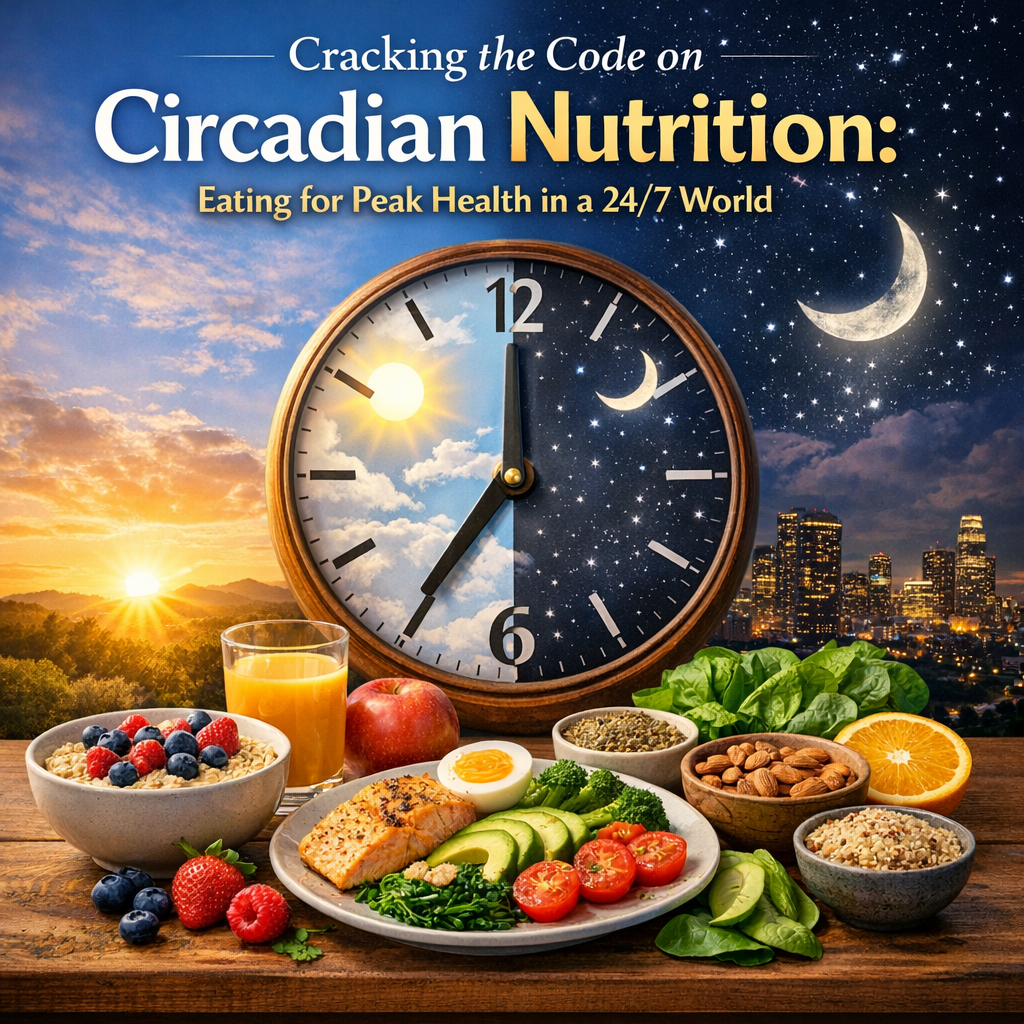
Cracking the Code on Circadian Nutrition: Eating for Peak Health in a 24/7 World
In the hustle and bustle of our modern 24/7 world, the term circadian rhythm often evokes thoughts of sleep patterns and jet lag. However, an intriguing and burgeoning field of research suggests that our internal clocks don’t just influence our sleep-wake cycles but also play a pivotal role in how our bodies process food. This concept is known as circadian nutrition, and it could be the key to unlocking peak health and well-being.
Circadian rhythms are natural, internal processes that regulate the sleep-wake cycle and repeat roughly every 24 hours. They are driven by an internal “master clock” located in the brain, which synchronizes with external environmental cues like light and temperature. While much attention has been given to how these rhythms affect sleep, recent studies suggest that they also impact metabolism, digestion, and energy regulation. Essentially, when we eat may be just as important as what we eat.
In today’s world of late-night shifts, jet-setting across time zones, and around-the-clock access to food, our eating patterns have drifted far from the traditional cycles of fasting and feasting. According to emerging research, this shift could have profound implications for our health. Misalignment between our eating schedules and our circadian rhythms, known as circadian misalignment, has been linked to various metabolic disorders, including obesity, diabetes, and cardiovascular disease.
The principles of circadian nutrition suggest that to optimize health, we should eat in alignment with our body’s natural rhythms. This involves consuming the majority of our calories earlier in the day when our metabolic processes are most active and minimizing calorie intake in the evening. This approach not only supports weight management but may enhance digestion and improve overall metabolic health. Given our modern lifestyle, embracing the principles of circadian nutrition could help mitigate the health risks associated with our 24/7 world, offering a pathway to better health and vitality.
Features: The Latest Research on Circadian Nutrition
Scientific insights into circadian nutrition are backed by numerous professional and medical studies. One influential study, published in the journal [“Cell Metabolism”](https://www.cell.com/cell-metabolism), highlights the body’s sensitivity to insulin and glucose utilization, which peaks in the morning and decreases as the day progresses. This research suggests that consuming a higher proportion of daily calories earlier in the day can lead to improved glycemic control and decreased risk of metabolic disorders.
In another revealing study published in [“The American Journal of Clinical Nutrition”](https://academic.oup.com/ajcn/article/100/5/1237/4576598), participants who consumed their largest meal of the day in the evening showed less weight loss compared to those who consumed the majority of their calories earlier. This study underscores the potential benefits of front-loading calorie intake for effective weight management.
Furthermore, research from [“The FASEB Journal”](https://faseb.onlinelibrary.wiley.com/doi/abs/10.1096/fj.201802084R) indicates that eating in alignment with circadian rhythms can mitigate the harmful effects of night shift work. Night shift workers often experience circadian misalignment, leading to increased risk of chronic conditions. By adjusting their eating patterns to better align with their internal clocks, these individuals can improve metabolic outcomes and enhance overall health.
Experts also highlight the role of circadian nutrition in optimizing digestion. Research indicates that our digestive systems are more efficient earlier in the day when enzyme activity and gut motility are heightened. By eating larger meals earlier and minimizing late-night eating, we can enhance nutrient absorption and improve gut health (Digestive Health Insights [Research](https://www.gastrojournal.org/article/S0016-5085(20)30379-9/fulltext)).
These studies collectively emphasize the importance of eating in harmony with our circadian rhythms. Aligning meal timing with our body’s natural processes not only supports metabolic health but also enhances overall well-being. As more research emerges, the case for embracing circadian nutrition grows stronger, offering a compelling approach for those seeking natural and effective ways to optimize health.
Conclusion: Embracing Circadian Nutrition for a Healthier Tomorrow
In conclusion, circadian nutrition represents a promising frontier in the quest for optimal health in a constantly active world. By aligning our eating patterns with our body’s natural cycles, we can tap into the full potential of our metabolism, improve digestion, and reduce the risk of chronic diseases. Whether you’re an early riser or a night owl, understanding and adapting to your body’s unique rhythms can have profound health benefits. As research continues to unfold, the principles of circadian nutrition will likely be a cornerstone of personalized health strategies. Adopting this approach not only empowers us to make informed dietary choices but also reinforces the connection between lifestyle and long-term health. In a world that never sleeps, embracing our inner biological clocks might just be the secret to thriving.
By understanding and respecting our circadian rhythms, we’re not only adapting to a healthier lifestyle but also paving the way for a future where well-being is harmonized with the demands of modern living. Let’s embrace this natural rhythm and eat our way to a healthier and more fulfilling life.
References:
1. [“Cell Metabolism”](https://www.cell.com/cell-metabolism)
2. [“The American Journal of Clinical Nutrition”](https://academic.oup.com/ajcn/article/100/5/1237/4576598)
3. [“The FASEB Journal”](https://faseb.onlinelibrary.wiley.com/doi/abs/10.1096/fj.201802084R)
4. [Digestive Health Insights](https://www.gastrojournal.org/article/S0016-5085(20)30379-9/fulltext)
Concise Summary
Circadian nutrition emphasizes eating in alignment with our body’s natural rhythms, suggesting that consuming most calories earlier in the day when metabolism is more active can optimize health. Studies indicate that aligning eating schedules with circadian cycles can improve metabolism, digestion, and reduce chronic disease risk, essential in a 24/7 lifestyle. This approach offers a pathway to better well-being by leveraging natural processes, making informed dietary choices, and adapting to unique biological clocks. As research unfolds, circadian nutrition promises to be vital in personalized health strategies, providing a natural, effective health optimization method.

Dominic E. is a passionate filmmaker navigating the exciting intersection of art and science. By day, he delves into the complexities of the human body as a full-time medical writer, meticulously translating intricate medical concepts into accessible and engaging narratives. By night, he explores the boundless realm of cinematic storytelling, crafting narratives that evoke emotion and challenge perspectives.
Film Student and Full-time Medical Writer for ContentVendor.com