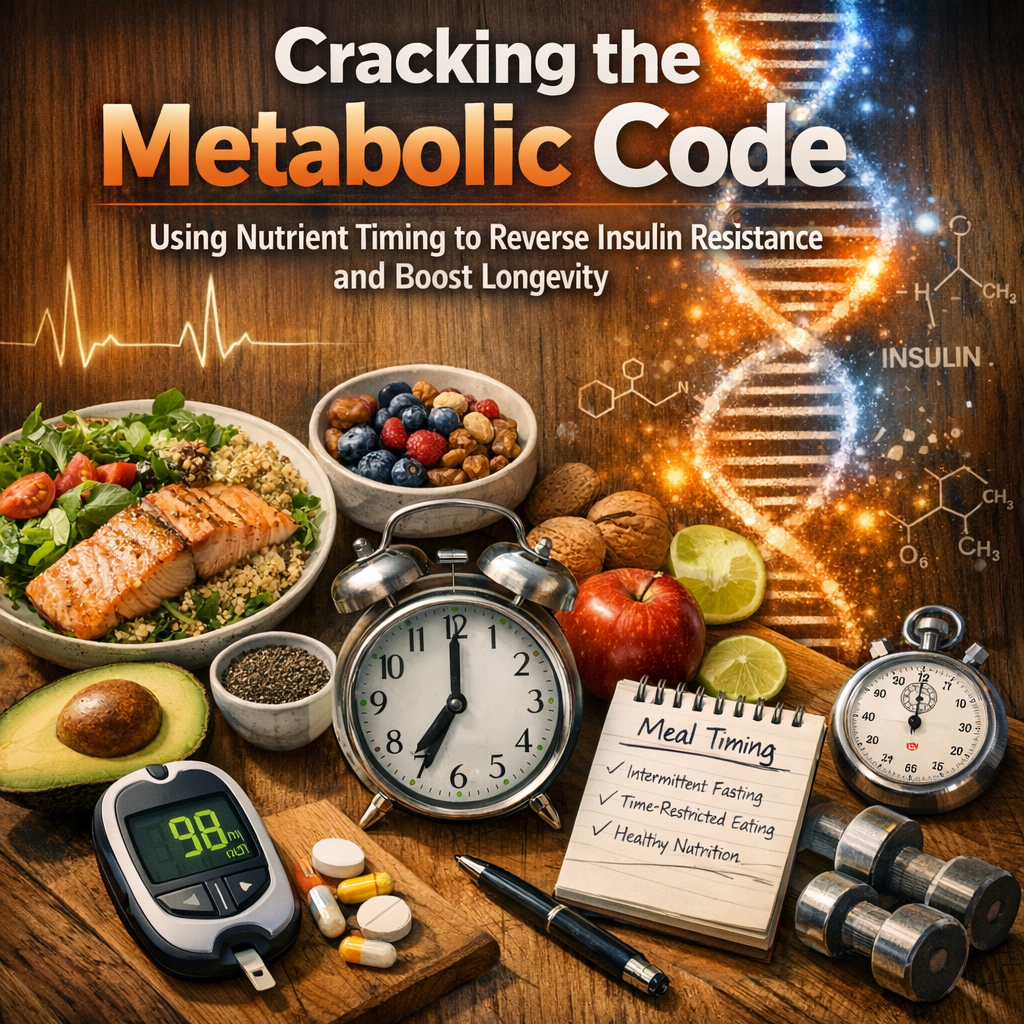
Cracking the Metabolic Code: Using Nutrient Timing to Reverse Insulin Resistance and Boost Longevity
In an era where chronic illnesses and metabolic disorders are increasingly prevalent, understanding our body’s biochemistry becomes vital. One of the significant conditions affecting many is insulin resistance, a precursor to type 2 diabetes, obesity, and numerous diseases associated with aging. But what if there were natural ways to address this issue effectively? Enter the concept of nutrient timing—a strategic eating plan designed to optimize the body’s metabolic responses, balance insulin levels, and ultimately support long-term health and longevity.
Insulin is a hormone that allows cells to absorb glucose from the bloodstream for energy. Insulin resistance occurs when cells become less responsive to this hormone, causing blood sugar levels to rise. Several factors like a poor diet, a sedentary lifestyle, and genetic predisposition can contribute to the onset of insulin resistance. However, altering the timing of when you consume certain nutrients can play a pivotal role in reversing this condition.
Research suggests that targeting specific windows of time for nutrient intake can lead to more efficient metabolism, reduced inflammation, and improved insulin sensitivity. For instance, consuming carbohydrates earlier in the day, when your metabolism is naturally more active, may help the body use glucose more effectively. Intermittent fasting, a popular eating pattern which involves cycling between periods of eating and fasting, has also shown promise in improving insulin sensitivity and encouraging weight loss, both of which are crucial for combating insulin resistance.
But it’s not just about reducing insulin resistance. Nutrient timing also offers the potential to enhance longevity. Caloric restriction has long been associated with increased lifespan in various organisms, and coupling it with nutrient timing could provide an even greater impact. By understanding and applying the principles of nutrient timing, individuals can develop a deeper insight into their bodily needs, regulate their weight, and potentially add years to their lives.
Features
Throughout recent years, numerous studies have explored the benefits of nutrient timing and its effect on insulin resistance and longevity. One pivotal study published in the journal “Cell Metabolism” demonstrated that time-restricted feeding in mice, equating to a similar approach in humans as intermittent fasting, improved glucose tolerance and reduced insulin levels. The study showed that even without a specific diet change, timing alone elicited metabolic improvements [(Cell Metabolism Study on Time-Restricted Feeding)](https://www.cell.com/cell-metabolism/fulltext/S1550-4131(18)30418-2).
Moreover, a study conducted by the University of Surrey highlighted that eating larger meals earlier in the day led to enhanced energy expenditure, greater fat oxidation, and improved insulin sensitivity in humans. This suggests that adjusting the timing of meals can directly affect the body’s metabolic processes [(University of Surrey Research on Meal Timing)](https://www.surrey.ac.uk/news/study-finds-eating-breakfast-and-lunch-early-helps-weight-loss).
Another study published in “The Journal of Nutrition” introduced the concept of chrono-nutrition, noting that the body’s internal clock, or circadian rhythm, significantly influences nutrient metabolism. By aligning food intake with the body’s natural biological rhythms, individuals can optimize metabolic health. Aligning carbohydrate intake with peak metabolic times supports energy distribution and reduces insulin spikes, further enhancing insulin sensitivity [(The Journal of Nutrition on Chrono-Nutrition)](https://academic.oup.com/jn/article/148/3/395/5194867).
Nutrient timing also extends beyond just macro-nutrient consumption. Micronutrient intake, like vitamins and minerals, can be optimized with specific timing for increased absorption and efficacy. For instance, consuming vitamin D and calcium earlier in the day, when the digestive system is most active, can improve absorption rates.
These findings, collectively, underscore the importance of considering not just what we eat, but when we eat. This powerful approach may transform traditional dietary frameworks, providing tools to naturally overcome metabolic disorders and enrich quality of life.
Conclusion
The concept of nutrient timing emerges as a prominent intuitive strategy in the fight against insulin resistance and the pursuit of increased longevity. By understanding the interplay between timing, metabolism, and the body’s natural cycles, we unlock the potential for significant health improvements. Aligning meal intake with our body’s internal signals and rhythms promotes metabolic efficiency, enhances overall well-being, and supports prolonged health.
While the approach offers promising results, it is vital to remember that it functions best within a holistic and individualized health plan. Lifestyle factors such as quality sleep, regular physical activity, and stress management should complement nutrient timing for optimal results. Consulting with a healthcare professional or nutrition expert can also provide personalized guidance tailored to individual needs. As we strive for longevity and quality of life, nutrient timing presents a beacon of potential, helping to crack the metabolic code for a healthier future.
Concise Summary
Nutrient timing is a strategic eating approach that synchronizes food intake with our body’s natural metabolic rhythms to enhance insulin sensitivity, combat insulin resistance, and extend longevity. Research highlights that consuming carbs earlier in the day optimizes glucose metabolism, while intermittent fasting boosts insulin efficiency. Studies affirm nutrient timing’s potential in improving metabolic health and increasing lifespan. Although promising, it should be part of a holistic plan, incorporating sleep, exercise, and stress management. Consulting healthcare professionals ensures personalized guidance, making nutrient timing a vital tool in enhancing quality and longevity of life.

Dominic E. is a passionate filmmaker navigating the exciting intersection of art and science. By day, he delves into the complexities of the human body as a full-time medical writer, meticulously translating intricate medical concepts into accessible and engaging narratives. By night, he explores the boundless realm of cinematic storytelling, crafting narratives that evoke emotion and challenge perspectives.
Film Student and Full-time Medical Writer for ContentVendor.com