Beyond the Classroom: Leveraging AI to Decode Nutrition’s Role in Cognitive Resilience and Academic Performance
In recent years, educational achievement has become an area of significant interest among educators, parents, and policymakers alike. There’s a growing body of evidence that suggests a direct link between what children eat and their performance in school. However, the complexities of human nutrition and its impact on cognitive functions require meticulous analysis, often involving sophisticated tools and methodologies. Enter artificial intelligence (AI), a revolutionary technology that is transforming the way we understand the intricate connections between diet and cognitive resilience.
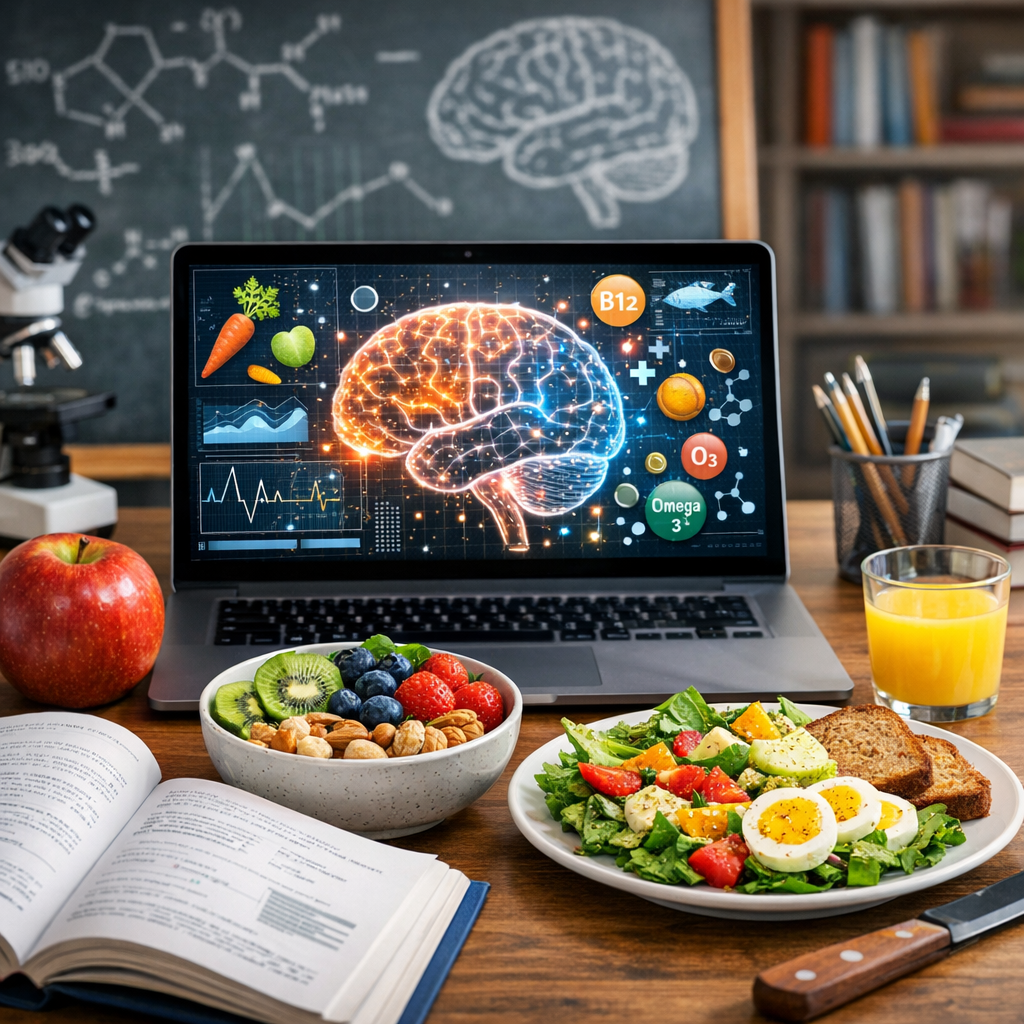
In today’s fast-paced world, students are constantly bombarded with information and expected to perform well under mounting pressures. Cognitive resilience—the ability to maintain high levels of cognitive function while coping with stress—is a crucial attribute for academic success. It is here that nutrition steps into the spotlight. Proper nutritional intake has long been associated with better brain health, improved concentration, and sustained energy levels. However, decoding the precise impact of various nutrients on cognitive capabilities is no small task. This is where AI comes into play, offering novel avenues for research and analysis.
AI’s capabilities extend beyond merely processing data—it can uncover patterns and associations that may not be evident to human researchers. Using AI, scientists can analyze vast amounts of nutritional data from varied demographics to determine how specific diets influence cognitive performance. Such insights aid in devising personalized dietary recommendations that bolster learning and memory retention. Additionally, AI can simulate various scenarios and predict outcomes, assisting schools and educational policymakers in crafting nutrition programs designed to enhance academic outcomes.
Apart from offering a scientific basis for informed dietary choices, AI tools help in monitoring nutritional compliance and effectiveness over time. By tracking how dietary changes affect cognitive performance, researchers can provide actionable insights to educators, parents, and students. This multidimensional approach, combining the prowess of AI with nutritional science, paves the way for more holistic educational strategies and interventions aimed at nurturing academically resilient minds.
Features: The Role of AI in Nutritional Research
AI’s involvement in nutritional research is notable for its ability to handle vast and complex data sets. According to a study published in the [Journal of Medical Internet Research](https://www.jmir.org/), AI techniques such as machine learning and predictive analytics are pivotal in identifying trends and emerging patterns in nutritional data. These methodologies help distinguish between causation and correlation—essential in understanding how specific nutrients influence cognition.
For instance, a study conducted by the [University of Oxford](https://www.ox.ac.uk/) utilized AI to analyze dietary patterns in children and discovered notable associations between omega-3 fatty acid intake and enhanced reading and memory skills. Such findings underscore the importance of incorporating certain nutrients into children’s diets to boost cognitive performance. AI not only aids in extrapolating these findings across wider populations but also helps tailor dietary recommendations based on individual needs, preferences, and genetic predispositions.
Furthermore, AI algorithms are being increasingly employed to analyze long-term dietary data, providing insights into how nutritional inadequacies can accumulate, potentially leading to cognitive deficits. The [World Health Organization](https://www.who.int/) has suggested that malnutrition, in any form, poses significant risks to cognitive development. By leveraging AI to continue researching these effects, scientists can propose effective nutritional interventions aimed at combating potential negative outcomes.
Ultimately, AI serves as a bridge between theoretical research and practical solutions in nutrition science. With its help, researchers can venture into novel domains such as nutrigenomics, which studies how individual genetic variations affect response to nutrients. This realm of personalized nutrition, amplified by AI, holds promising potential in optimizing cognitive performance through tailored dietary strategies.
Conclusion: Charting a New Course for Educational Success
The intersection of AI, nutrition, and education heralds a new era of research and implementation that can dramatically enhance academic outcomes for students worldwide. By decoding the complex relationships between diet and cognition, AI empowers educators, parents, and students themselves to harness the full potential of nutrition in fostering cognitive resilience.
As advances in AI technology and nutritional research continue to unfold, the possibilities seem boundless. However, it is crucial to ensure ethical considerations guide the deployment of AI tools, particularly in settings involving children. Moreover, while AI presents opportunities for significant advancement, human oversight is indispensable to interpret results accurately and apply them thoughtfully.
By embracing a collaborative approach, integrating AI insights with empirical human wisdom, the educational landscape is poised to undergo a transformative shift—one where nutritional support becomes a cornerstone in developing healthy, resilient, and high-achieving students. Thus, embracing this scientific synergy may well be one of the most effective approaches to preparing future generations for the challenges of tomorrow.
References
1. [Journal of Medical Internet Research](https://www.jmir.org/) – “Artificial Intelligence in Diet & Nutrition: Opportunities & Challenges”
2. [University of Oxford study](https://www.ox.ac.uk/) on Omega-3 and cognitive skills
3. [World Health Organization](https://www.who.int/) report on Nutrition and Cognitive Development
Concise Summary: The article explores how AI is revolutionizing the understanding of nutrition’s impact on cognitive resilience and academic performance. By analyzing vast datasets, AI helps identify patterns in dietary influences on cognition, aiding personalized dietary recommendations. It bridges the gap between theory and practical solutions, emphasizing the potential of nutrigenomics in optimizing cognitive outcomes. While AI offers new insights, ethical considerations and human oversight remain crucial in applying these findings effectively. Embracing AI’s capabilities can significantly enhance educational strategies, fostering healthier, resilient, and high-achieving students.

Dominic E. is a passionate filmmaker navigating the exciting intersection of art and science. By day, he delves into the complexities of the human body as a full-time medical writer, meticulously translating intricate medical concepts into accessible and engaging narratives. By night, he explores the boundless realm of cinematic storytelling, crafting narratives that evoke emotion and challenge perspectives.
Film Student and Full-time Medical Writer for ContentVendor.com