Future-Proof Your Health: How AI Is Revolutionizing Personalized Clinical Nutrition
In today’s fast-paced world, where technological advancements touch every aspect of our lives, the healthcare sector is no exception. Among the innovations reshaping this critical industry, Artificial Intelligence (AI) stands out as a game-changer, particularly in the realm of personalized clinical nutrition. With health challenges escalating globally—from chronic diseases to lifestyle-related ailments—AI offers a transformative approach to understanding and addressing individual nutritional needs.
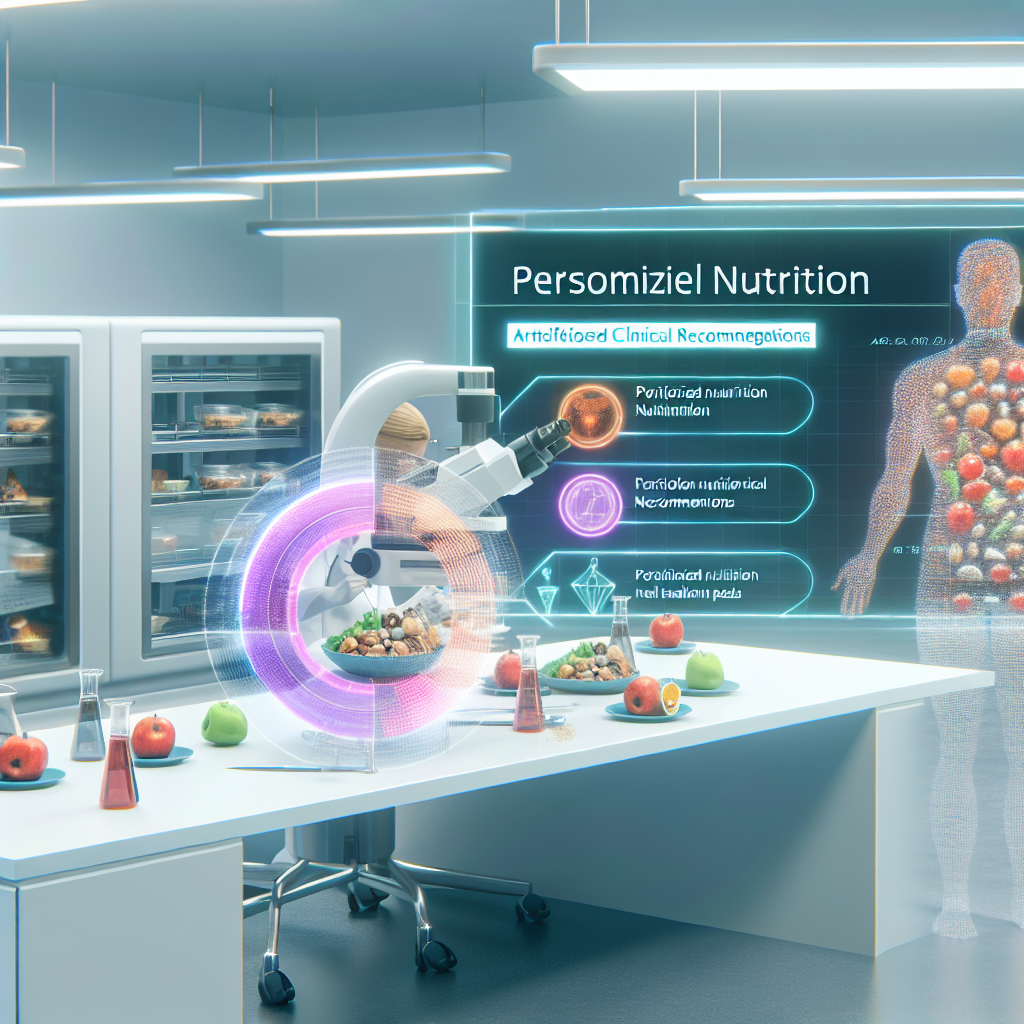
Traditionally, nutrition has been a one-size-fits-all solution, often based on generalized guidelines and food pyramids. However, this approach fails to consider the unique genetic, environmental, and lifestyle factors that affect each individual’s health needs. Enter AI: a powerful tool capable of processing vast amounts of data and learning from it to provide insights tailored specifically to us. Through the use of AI, nutritionists and healthcare professionals can now create finely-tuned dietary programs that cater to individual health requirements, genetic make-up, and even personal food preferences.
What makes AI particularly effective is its ability to leverage big data analytics and predictive modeling. By analyzing data collected from various sources, such as genomics, microbiome profiles, lifestyle habits, and historical health records, AI algorithms can discern patterns and predict health outcomes. For instance, AI can help identify nutrient deficiencies, predict risk factors for certain diseases, and suggest actionable dietary changes that can prevent the onset of such conditions.
Moreover, AI-enhanced nutrition apps and devices are changing the way individuals engage with their health. From tracking nutrient intake to offering real-time recommendations, these tools emphasize patient engagement and empowerment. Users can gain insights into their daily habits, receive personalized diet plans, and even access virtual nutrition coaches, all designed to support long-term well-being.
AI’s role in personalized nutrition represents a proactive approach to health, shifting the focus from treatment to prevention. By understanding the unique interaction between different aspects of our biology and the foods we consume, AI empowers individuals to make informed choices that support optimal health throughout their lives.
Features: Studies on AI in Clinical Nutrition
Scientific research continues to shed light on the efficacy of AI in personalizing nutrition. A prominent study conducted by researchers at Stanford University demonstrated AI’s potential to predict individual glycemic responses to foods. By analyzing a diverse database, the AI model accurately forecasted blood sugar spikes in participants after consuming various foods, outperforming traditional dietitian estimates ([source](https://www.cell.com/cell-metabolism/fulltext/S1550-4131(15)00639-9)). This study indicates that AI can personalize dietary recommendations based on individual metabolic responses, thereby improving glucose management and reducing the risk of diabetes.
Another significant study published in “[Nature Medicine](https://www.nature.com/articles/s41591-019-0499-7)” explored AI’s application in the development of personalized dietary interventions to manage cholesterol levels and promote cardiovascular health. Leveraging data from thousands of participants, including genetics and dietary habits, the AI system created personalized diet plans that achieved better health outcomes compared to standardized advice. This research underscores AI’s role in crafting dietary strategies that target specific health goals, paving the way for precision nutrition.
Furthermore, AI’s integration with wearable technology offers a dynamic avenue for real-time health monitoring. A clinical trial conducted by the University of California, San Francisco, illustrated how combining AI with wearable devices enabled continuous monitoring of cardiovascular health indicators. The study revealed that AI-based insights could predict heart disease risks with unprecedented accuracy, offering a glimpse into the future of preventive healthcare ([source](https://www.jacc.org/doi/abs/10.1016/j.jacc.2020.05.055)). This real-time connectivity bridges the gap between personal health tracking and professional healthcare advice, providing individuals with a comprehensive view of their nutritional and overall health status.
Research consistently demonstrates AI’s potential to deliver precise, individualized nutrition solutions. As AI continues to evolve, its integration into clinical nutrition promises more effective, targeted dietary recommendations, reducing disease risk and promoting optimal health outcomes.
Conclusion
AI’s revolutionary impact on personalized clinical nutrition is setting the stage for a future where healthcare is increasingly tailored to the individual. By leveraging vast datasets and sophisticated algorithms, AI provides insights that empower individuals to make informed dietary choices, thus preventing disease and promoting long-term health. This personalized approach acknowledges the complexity of human biology and the diversity of our needs, offering a proactive strategy to healthcare. As technological innovation continues to accelerate, the marriage of AI and nutrition is poised to redefine preventive medicine, ultimately benefiting individuals worldwide by enhancing quality of life and fostering healthier communities. Embracing these advancements means embracing a future where personalized health solutions are not just possible, but accessible to all.
Concise Summary:
Artificial Intelligence (AI) is transforming personalized clinical nutrition by processing data to tailor dietary recommendations to individual needs. This tech-driven approach can predict ailments like diabetes and suggests preventative measures, going beyond the traditional one-size-fits-all model. AI applications range from predicting glycemic responses to monitoring cardiovascular health via wearables. By personalizing nutrition strategies, AI promotes a shift from treatment to prevention, offering more precise, effective health solutions that enhance long-term well-being. As this technology evolves, it enriches healthcare by enabling more individuals to access personalized nutrition advice worldwide.

Dominic E. is a passionate filmmaker navigating the exciting intersection of art and science. By day, he delves into the complexities of the human body as a full-time medical writer, meticulously translating intricate medical concepts into accessible and engaging narratives. By night, he explores the boundless realm of cinematic storytelling, crafting narratives that evoke emotion and challenge perspectives.
Film Student and Full-time Medical Writer for ContentVendor.com