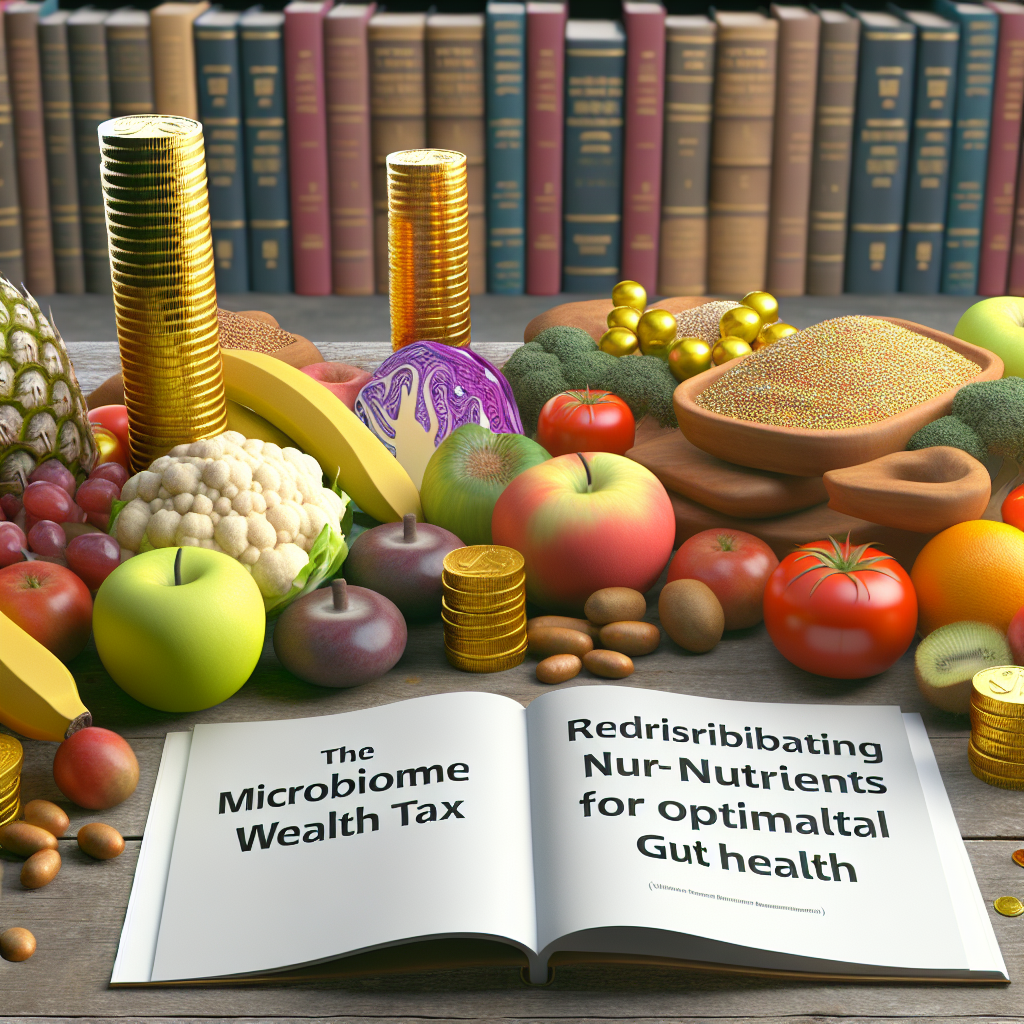
The Microbiome Wealth Tax: Redistributing Nutrients for Optimal Gut Health
—
Introduction
In recent years, the growing interest in gut health has led to extensive research on the human microbiome, the diverse community of microbes living in our intestines. Often termed the “second brain” due to its profound impact on overall health, the gastrointestinal microbiome is crucial for digestion, nutrient absorption, immune system functioning, and mental health. One intriguing concept from this research is the “Microbiome Wealth Tax.”
The Microbiome Wealth Tax is a metaphor to describe how our gut distributes nutrients, akin to an economic wealth tax redistributing money. Ideally, this system ensures every cell receives necessary nutrients for enhanced metabolic health and disease resistance. A disruption, similar to economic inequality, can lead to health issues.
Our microbiome, made up of trillions of bacteria, viruses, and other microorganisms, plays a fundamental role in nutrient distribution. It breaks down food substances the body alone cannot digest, synthesizes essential vitamins, regulates fat storage, and trains the immune system. However, when the microbiome balance is upset by poor diet, stress, or antibiotic overuse, gut health—along with overall health—can suffer. This imbalance is linked to conditions like irritable bowel syndrome (IBS), obesity, type 2 diabetes, and even mental health disorders like depression and anxiety. Understanding and nurturing our gut’s microbiome is crucial for holistic health, affecting both physical and mental well-being.
—
Features
Scientific studies support the concept of the Microbiome Wealth Tax and underscore the critical role of gut health in overall wellness. A pivotal study published in the peer-reviewed journal [Nature](https://www.nature.com/articles/nature08137) revealed that a diverse microbiome is essential for nutrient harvesting and metabolic adaptability. This diversity allows for a wider range of polysaccharides to be broken down, facilitating enhanced nutrient absorption.
Further research in the [Journal of Gastroenterology](https://www.springer.com/journal/535) highlights how specific bacterial species within our gut, such as Bacteroidetes and Firmicutes, ferment undigested carbohydrates into short-chain fatty acids, essential for colon health. This process ensures nutrients are repurposed, aiding cellular health and energy metabolism—a vivid illustration of nutrient redistribution.
A study in [Cell Host & Microbe](https://www.cell.com/cell-host-microbe/home) found that individuals with a richer gut microbiome composition had lower body weight and were less prone to conditions such as obesity and diabetes. This finding underscores the significance of nutrient redistribution by the microbiome in promoting better health outcomes.
These studies collectively emphasize the microbiome’s role as a mediator of health through effective nutrient distribution. The analogy of a Microbiome Wealth Tax vividly illustrates the connection between microbial diversity and optimal health, much like a society thrives on equitable wealth distribution.
—
Conclusion
The Microbiome Wealth Tax serves as a powerful reminder of our gut’s intricate role in health maintenance. Ensuring a balanced and diverse microbiome enables optimal nutrient distribution, enhancing digestion and holistic well-being. Poor diet and lifestyle can disrupt this balance, leading to health challenges. By practicing mindful eating habits, managing stress, and exercising judicious use of antibiotics, we nurture our microbiome for optimal function.
Embracing this concept highlights our proactive role in health preservation. Our daily choices—such as diet, stress management, and lifestyle—enrich our microbiome ecosystem, ensuring its wealth benefits all body systems, fostering improved health and longevity.
—
Concise Summary:
The Microbiome Wealth Tax is a metaphor for the gut’s role in optimal nutrient distribution, akin to wealth redistribution in economics. A balanced microbiome, influenced by factors like diet and stress management, is crucial for metabolic health and resistance to diseases like IBS, obesity, and diabetes. Scientific studies from journals like Nature and Cell Host & Microbe underline the importance of microbial diversity for nutrient absorption and overall health. The Microbiome Wealth Tax concept emphasizes the proactive role individuals can play in maintaining gut health through lifestyle choices, ensuring long-term wellness.

Dominic E. is a passionate filmmaker navigating the exciting intersection of art and science. By day, he delves into the complexities of the human body as a full-time medical writer, meticulously translating intricate medical concepts into accessible and engaging narratives. By night, he explores the boundless realm of cinematic storytelling, crafting narratives that evoke emotion and challenge perspectives.
Film Student and Full-time Medical Writer for ContentVendor.com