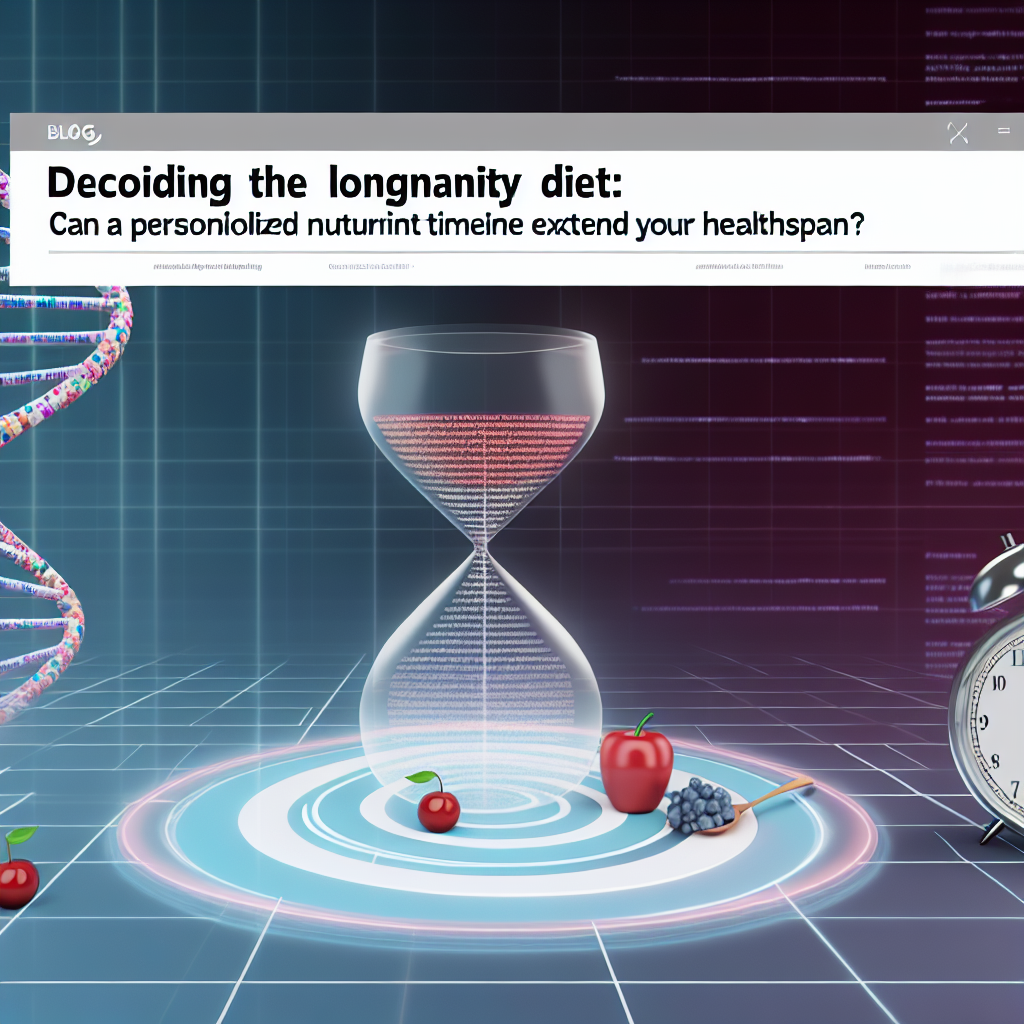
Decoding the Longevity Diet: Can a Personalized Nutrient Timeline Extend Your Healthspan?
Introduction
The search for longevity is as old as humanity itself, with diverse cultures having sought various methods to extend life and enhance its quality. In modern times, this quest has grown into a scientific journey, converging on the idea of a “longevity diet.” With research progressing rapidly, scientists and nutritionists are increasingly advocating for dietary approaches that not only add years to life but also life to years. At the heart of this discussion is the notion of a personalized nutrient timeline—a customized dietary regimen tailored to an individual’s biological composition and life stage. Could this be the cornerstone of extending one’s healthspan, which refers to the period of life spent in good health, free from the chronic diseases that often accompany aging?
The concept of a personalized nutrient timeline is intriguing, considering the unique health profiles shaped by our genetic makeup and environmental influences. Each individual’s nutritional needs evolve throughout their life stages, requiring shifts in dietary intake to optimize health outcomes. A nutrient timeline that adapts to these needs could be key to sustaining a vibrant, disease-free life well into old age. By integrating insights from genetics, epigenetics, and nutrition science, a personalized longevity diet aims to maximize the body’s regenerative potential while minimizing age-related decline.
This personalized approach aligns with the principle that one-size-fits-all dietary recommendations may not be optimal for everyone. Factors such as metabolic rate, hormone levels, and lifestyle choices can vary significantly between individuals, necessitating dietary plans that are highly customized. The implications of such tailored nutrition are profound, potentially addressing the rising tide of chronic diseases like diabetes, cardiovascular diseases, and neurodegenerative conditions that plague modern society.
In this article, we will explore the scientific underpinnings of the longevity diet, examine its potential to optimize healthspan, and highlight key studies that underscore its effectiveness. Join us as we delve into the possibilities unlocked by a personalized nutrient timeline, offering a promising frontier in the pursuit of long and healthy lives.
Features
Recent investigations into the longevity diet have yielded fascinating insights, spurred on by studies that blend traditional dietary wisdom with cutting-edge research. One prominent study conducted by Valter Longo et al. at the University of Southern California has been pivotal in elucidating the concept of fasting-mimicking diets (FMDs) as a means to promote longevity. The research demonstrates that periodic caloric restriction can trigger cellular rejuvenation processes such as autophagy, wherein cells remove damaged components, thus reducing the risk of age-related diseases [Study Link](https://pubmed.ncbi.nlm.nih.gov/25045709/).
Furthermore, the connection between specific dietary patterns and extended healthspan is supported by the Blue Zones research. This study investigates regions with a high prevalence of centenarians, such as Okinawa, Japan, and Sardinia, Italy. Findings consistently show that diets rich in plant-based foods, healthy fats, and minimal protein intake—particularly from animal sources—are associated with increased lifespan and healthspan [Blue Zones Study](https://www.bluezones.com/).
On a genetic level, advancements in nutrigenomics have unlocked a deeper understanding of how individual genetic variations affect dietary responses. A study published in *Nature Reviews Genetics* highlights the influence of dietary components on gene expression related to aging, showing that personalized nutrition strategies can help delay the onset of age-related disorders by modulating these genetic factors [Genetic Study](https://www.nature.com/articles/nrg1656).
The emerging field of microbiome research also supports the concept of a personalized nutrient timeline. Research from the American Gut Project indicates that gut microbiota composition varies significantly among individuals and is shaped by dietary habits. A tailored diet that supports a healthy microbiome may enhance nutrient absorption, bolster immunity, and improve metabolic health, thus contributing to longevity [Gut Project](https://www.ncbi.nlm.nih.gov/pmc/articles/PMC4245616/).
Conclusion
As we look to the future of health and wellness, the potential for a personalized nutrient timeline as part of a longevity diet offers an exciting avenue for extending our years of health. This approach is poised to revolutionize how we understand and consume food, shifting the paradigm from generalized dietary guidelines to highly specific nutritional regimens that align with individual needs.
The convergence of genetic insights, microbiome science, and dietary research suggests that the key to a long and healthy life might not lie solely in what we eat, but in when and how we eat it, tailored to our unique biological rhythms. While more research is needed to refine these personalized interventions, the foundation has been laid for future innovation in dietary science.
As individuals, embracing a longevity-focused mindset means adopting lifestyle changes that incorporate the principles of personalized nutrition. By doing so, we can hope to not only add years to our lives but also vitality and well-being to those years. Embracing this journey is an investment in a life well-lived—fully present, healthy, and rich with possibility.
Concise Summary
The quest for longevity has evolved into a scientific journey exploring personalized dietary regimens, known as nutrient timelines, tailored to individual genetic and environmental profiles. By integrating insights from genetics, epigenetics, and nutrition science, these diets aim to prolong healthspan—the portion of life spent in good health. Recent studies, including those on fasting-mimicking diets, Blue Zones, and nutrigenomics, highlight how tailored nutrition can enhance cellular function and reduce chronic disease risks. Embracing a longevity-focused lifestyle could revolutionize health by aligning dietary practices with unique biological needs, thus extending life with vitality and well-being.

Dominic E. is a passionate filmmaker navigating the exciting intersection of art and science. By day, he delves into the complexities of the human body as a full-time medical writer, meticulously translating intricate medical concepts into accessible and engaging narratives. By night, he explores the boundless realm of cinematic storytelling, crafting narratives that evoke emotion and challenge perspectives.
Film Student and Full-time Medical Writer for ContentVendor.com