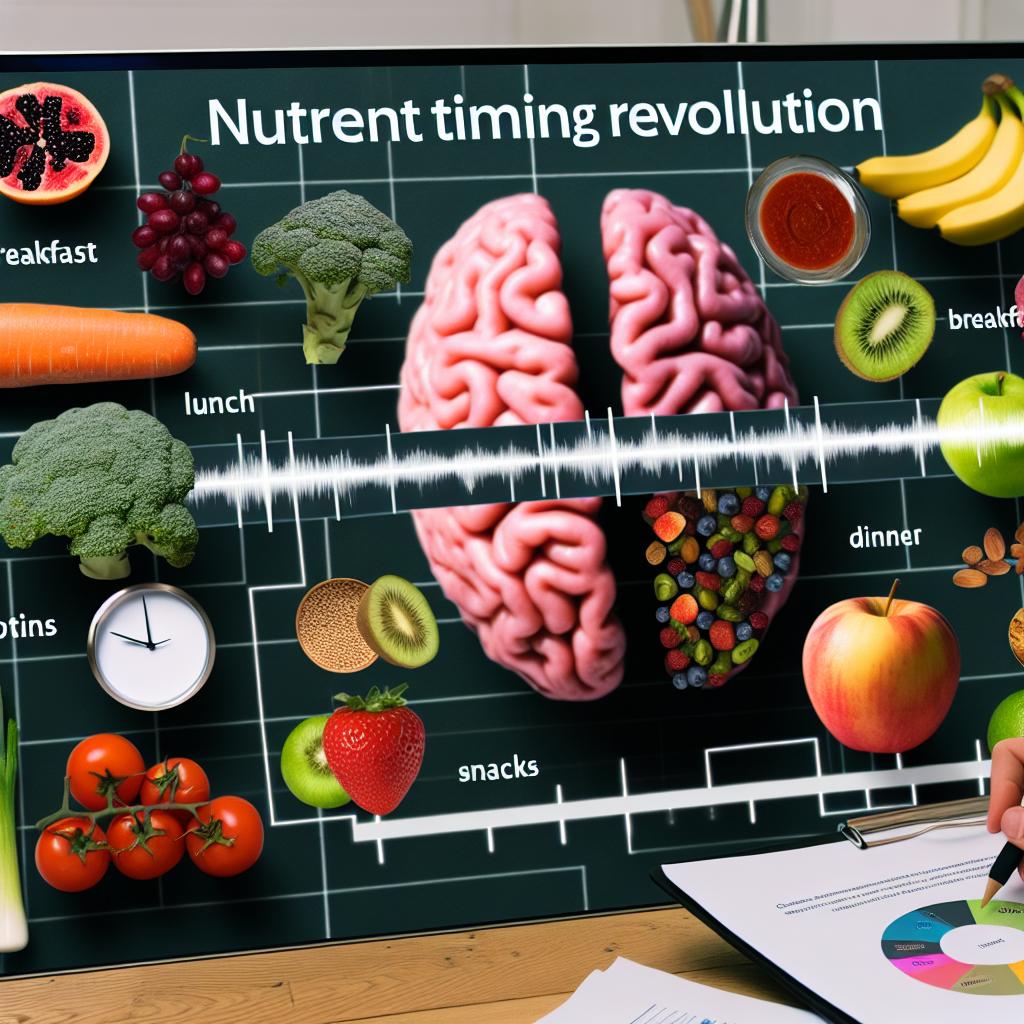
The Nutrient Timing Revolution: Enhancing Mental Resilience Through Strategic Food Intervals
Introduction
In the whirlwind of modern life, mental resilience has emerged as an indispensable quality—one that enables individuals to navigate the myriad challenges thrown their way. Mental resilience is the capacity to recover quickly from difficulties, an essential trait needed in both personal and professional realms. Today, an increasing number of people are looking towards natural strategies to enhance this resilience, traditionally seen as a psychological construct but getting a fresh scientific perspective as part of a holistic well-being approach. Enter the concept of Nutrient Timing—a revolutionary strategy that promises significant boosts to mental resilience.
Nutrient Timing involves the strategic consumption of nutrients at specific times throughout the day to optimize both body and mind performance. Although it gained initial traction among athletes aiming to enhance physical performance and recovery, recent advancements in nutritional science have highlighted its profound implications on cognitive function and emotional health. The very notion of connecting food timing to psychological resilience is indicative of the expanding understanding of the brain-gut connection.
With stress levels at an all-time high and mental health challenges becoming increasingly prevalent, the quest for natural, lifestyle-based solutions has never been more urgent. The integration of nutrient timing into daily life represents a paradigm shift, offering a novel way to support mental health by harnessing food’s inherent power. Foods consumed at specific intervals can directly influence mood, cognitive clarity, and even emotional stability. By aligning our eating patterns with our body’s natural rhythms, individuals can optimize mental alertness during peak productivity hours while enabling better relaxation during downtime.
This burgeoning field draws on interdisciplinary insights from nutrition, psychology, and neuroscience. By leveraging findings from these diverse areas, nutrient timing emerges as a holistic framework capable of redefining our approach to mental resilience. As individuals increasingly seek natural, sustainable mechanisms for enhancing cognitive health, nutrient timing presents itself as a promising, accessible tool for everyday life.
Features
Several professional and medical studies stand as testament to the profound impact of nutrient timing on cognitive health. One groundbreaking study by the International Society of Sports Nutrition highlights the effectiveness of nutrient timing in improving endurance and recovery in athletes. These physical benefits hinted at deeper, systemic effects—including mental well-being. The timing of macronutrient intake—carbohydrates and protein in particular—has been noted to influence psychological resilience. This is integral to understanding how nutrient timing extends beyond the physiological realm into neurology and emotional stability. [Study Reference](https://journals.lww.com/acsm-essr/Abstract/2014/04000/Nutrient_Timing_Revisited__Is_There_a_Post_Exercise.3.aspx)
Moreover, research from Harvard Medical School elucidates the role of meal frequency and composition on cognitive health. It points to a direct correlation between blood glucose levels, which can be moderated by meal timing, and mental performance. Controlled blood sugar levels facilitate better mood regulation and cognitive functioning, underscoring how nutrient timing can mitigate mood swings and enhance focus. This makes a compelling case for strategically scheduled meals that align with natural circadian rhythms, echoing the tenets of nutrient timing to bolster mental resilience. [Harvard Health](https://www.health.harvard.edu/nutrition/why-blood-sugar-matters)
Another significant study published in the journal *Neuropsychobiology* explored nutrient timing’s relationship with neurotransmitter function. The researchers underscored how certain nutrients consumed at strategic times can influence serotonin production—a critical neurotransmitter involved in mood regulation. By targeting nutritional interventions at specific times in sync with the body’s innate biological clock, individuals could amplify their mental resilience naturally. This research provides further scientific grounding to the notion that ‘when we eat’ is as crucial as ‘what we eat’ in maintaining emotional homeostasis. [Neuropsychobiology](https://www.karger.com/Article/FullText/446783)
Combined, these studies illustrate a compelling argument for including nutrient timing as part of a comprehensive strategy for enhancing mental resilience naturally.
Conclusion
Nutrient timing holds the potential to revolutionize how we approach mental resilience, offering a natural, holistic method to bolster our psychological fortitude amidst life’s challenges. By capitalizing on the strategic intervals of nutrient intake, individuals can harness a non-pharmacological avenue to enhance mood, mental clarity, and emotional regulation. As scientific understanding continues to evolve, the insight gleaned from interdisciplinary research underscores the myriad benefits of aligning eating patterns with our body’s innate rhythms.
Considering the daily pressures that modern people face, incorporating nutrient timing into one’s lifestyle presents an achievable, sustainable strategy for improving not just physical health, but psychological robustness as well. As we delve deeper into the brain-gut connection and the unfolding science behind nutrient timing, it becomes abundantly clear that this strategic approach could be pivotal in supporting mental health naturally. As the conversation surrounding mental well-being broadens globally, nutrient timing will undoubtedly emerge as a cornerstone in the domain of natural health interventions.
References
1. [International Society of Sports Nutrition. Nutrient Timing: Revisited.](https://journals.lww.com/acsm-essr/Abstract/2014/04000/Nutrient_Timing_Revisited__Is_There_a_Post_Exercise.3.aspx)
2. [Harvard Health. Why Blood Sugar Matters.](https://www.health.harvard.edu/nutrition/why-blood-sugar-matters)
3. [Neuropsychobiology. Nutrient Timing and Neurotransmitters](https://www.karger.com/Article/FullText/446783)
Concise Summary:
Nutrient Timing is a strategic approach to consuming food at specific intervals to enhance both physical and mental resilience. Originally popular among athletes, it has shown benefits for mood, cognitive function, and emotional stability, highlighting the importance of aligning eating patterns with natural body rhythms. Research from nutrition, psychology, and neuroscience supports its role in enhancing mental resilience by optimizing neurotransmitter functions and stabilizing blood glucose levels. This natural, holistic strategy offers a sustainable means to support mental health and overall well-being amidst life’s challenges.

Dominic E. is a passionate filmmaker navigating the exciting intersection of art and science. By day, he delves into the complexities of the human body as a full-time medical writer, meticulously translating intricate medical concepts into accessible and engaging narratives. By night, he explores the boundless realm of cinematic storytelling, crafting narratives that evoke emotion and challenge perspectives.
Film Student and Full-time Medical Writer for ContentVendor.com