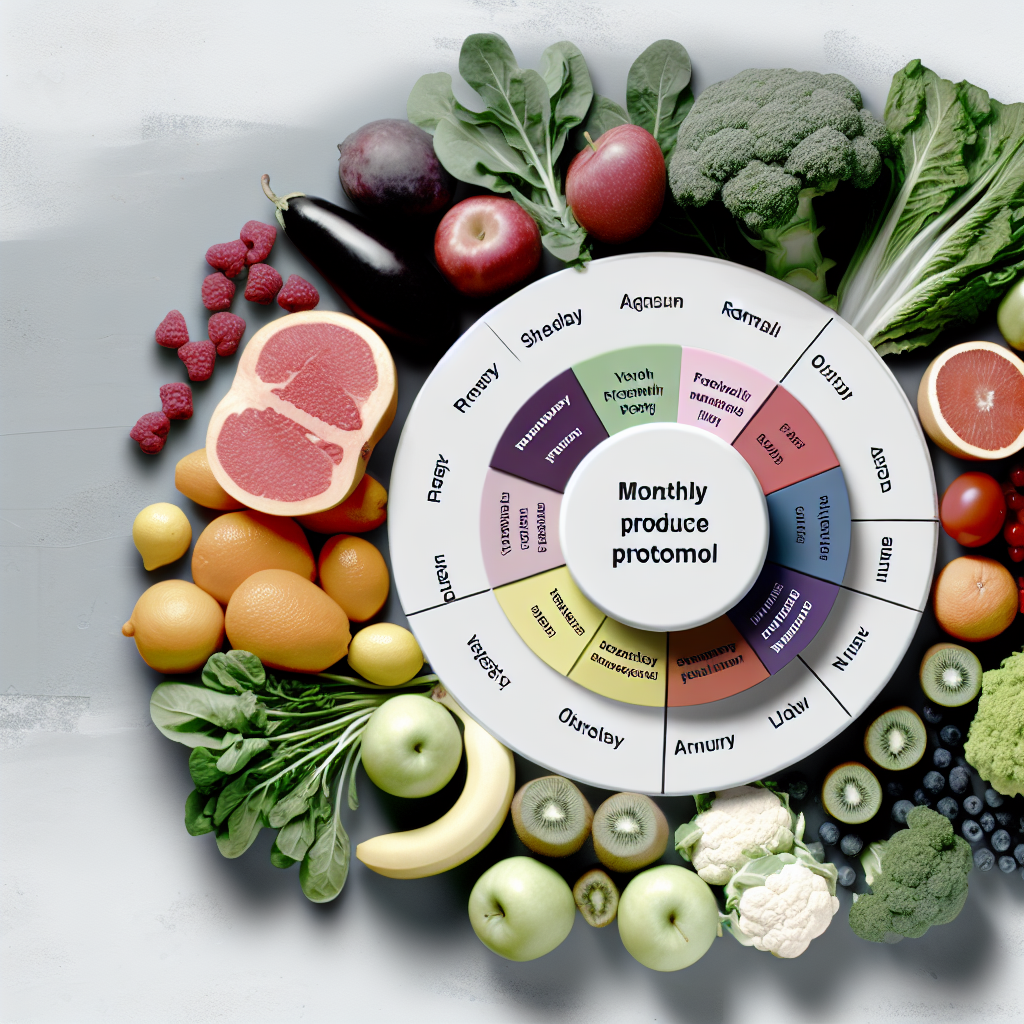
Seasonal Eating – Monthly Produce Protocol
Introduction: Embracing the Seasons in Your Diet
In an increasingly globalized world, where **strawberries** can be found on supermarket shelves in the dead of winter and **root vegetables** year-round, the concept of **seasonal eating** can often seem antiquated. Yet, returning to the rhythm of the Earth’s **natural cycles** brings a host of benefits, both for our **health** and the **environment**. **Seasonal eating** refers to aligning our diets with the timing of fruits, vegetables, and other foodstuffs as they ripen naturally according to the time of year. This approach not only supports local agriculture but also optimizes the **nutritional value** of what we consume.
Eating seasonally ensures that our diet is constantly varied, as different foods come and go throughout the year. This diversity is key to obtaining a wide range of nutrients essential for maintaining health and preventing chronic diseases. For instance, the **antioxidants** found in **tomatoes** and **bell peppers**, which peak during the summer, support our skin during sun exposure, while **winter squashes** provide vital vitamins to boost immunity during the colder months. Moreover, **seasonal produce** is more flavorful and nutrient-dense since it spends less time traveling from farm to table and can be harvested at its peak ripeness.
Economically, **seasonal produce** tends to be less expensive because it’s more abundant. It also reduces the carbon footprint associated with transportation from distant locales and minimizes reliance on energy-intensive growing methods like greenhouses in the off-season. Local farmers benefit too, as buying in season helps support local agriculture and keeps rural communities thriving. From an environmental perspective, **seasonal eating** conserves resources, diminishes **greenhouse gas emissions**, and encourages sustainable farming practices. With climate change a pressing concern, such small yet impactful lifestyle choices can contribute to preserving our planet. By adopting a monthly produce protocol, individuals can embrace the benefits of seasonal eating and improve their overall well-being. This practice invites us to connect more closely with the natural world, making meal preparation an act of appreciation and intentionality.
Features: The Science Behind Seasonal Eating
The benefits of eating seasonal produce extend beyond just taste and economics. Scientific studies have shown that fruits and vegetables contain varying levels of nutrients depending on when they are harvested. A study published in the International Journal of Food Science & Nutrition highlighted that **spinach** harvested during its peak season contained higher levels of **vitamin C** compared to spinach grown out of season. This is largely due to the conditions under which they are grown. Seasonal crops naturally align with the environment’s light, temperature, and soil conditions, leading to optimal nutrient synthesis.
Research on traditional diets from the **Blue Zones**—regions known for their high concentration of centenarians—supports the health benefits of seasonal eating. These communities primarily consume locally available, seasonal produce, which is believed to contribute to their longevity and lower incidence of chronic diseases. Their diets are rich in fruits, vegetables, whole grains, and legumes, eaten at the peak of their freshness. This connection between dietary habits and their exceptional longevity is a testament to the power of **seasonal eating**.
Furthermore, **seasonal eating** encourages **biodiversity**. Modern agriculture often focuses on mass-producing a limited number of crops throughout the year, but by shifting our consumption patterns to align with natural playbooks, we encourage the preservation and cultivation of a wider range of plant species. This **biodiversity** supports **ecosystem resilience**, which is crucial in the face of climate change. Environmental scientists stress the ecological advantages of seasonal agriculture. A shift towards seasonal and local food systems decreases dependency on harmful fertilizers and pesticides that contribute to soil degradation and water pollution. It promotes agricultural methods focused on soil health and crop rotation, reducing the need for chemical interventions.
In a healthcare context, practitioners of natural medicine underscore the relationship between seasonal eating and body physiology. Traditional Chinese and **Ayurvedic medicine** associate dietary choices with seasonal body changes, advocating for heavier, warming foods in the winter that provide energy and resilience against cold, while lighter, cooling foods in the summer help regulate body temperature.
Conclusion: Adopting the Seasonal Eating Approach
Embracing a monthly produce protocol is a holistic approach to health that benefits individuals, communities, and the planet. By eating in tune with seasonal cycles, we not only capture the peak flavor and nutritional benefits of produce but also contribute to sustainable agricultural practices and biodiversity. It’s a mindful choice that aligns personal health with ecological preservation.
Transitioning to seasonal eating does not need to be an overnight change. Start small by incorporating one or two seasonal items into your weekly grocery list and gradually build upon this foundation as each month brings different offerings. Attend local farmers’ markets or seek out community-supported agriculture (CSA) programs to explore fresh, local produce. For those interested in natural cures and wellness, aligning dietary habits with nature’s rhythm aligns the mind and body, providing grounding and balance in our fast-paced lives. By doing so, we nurture not just our own health, but the health of the world around us.
**References:**
1. [“Seasonality and Dietary Requirements: A Seasonal Study of Spinach, Using Nutritional Analysis.” International Journal of Food Science & Nutrition.](https://www.tandfonline.com/doi/full/10.1080/09637486.2010.499726)
2. [“Lessons From ‘Blue Zones’: The Health Habits That Lead To A Longer Life.” National Geographic.](https://www.nationalgeographic.com/foodfeatures/blue-zones-healthy-diet/)
3. [“The Impact of Climate Change on Food Security and Biodiversity.” Environmental Research Journal.](https://www.journals.elsevier.com/environmental-research)
Concise Summary
**Seasonal eating** aligns diets with nature’s cycles, offering health, economic, and environmental benefits. It enhances nutrient intake, supports local farmers, and reduces carbon footprints. Studies show that seasonal produce is richer in vitamins and more flavorful. Regions like **Blue Zones** highlight longevity linked to local, seasonal diets. **Biodiversity** is promoted, sustaining ecosystems and reducing reliance on harmful agro-chemicals. Incorporating seasonal foods gradually and engaging with local markets can align personal wellness with ecological sustainability, making a notable difference for both individual health and the environment.

Dominic E. is a passionate filmmaker navigating the exciting intersection of art and science. By day, he delves into the complexities of the human body as a full-time medical writer, meticulously translating intricate medical concepts into accessible and engaging narratives. By night, he explores the boundless realm of cinematic storytelling, crafting narratives that evoke emotion and challenge perspectives.
Film Student and Full-time Medical Writer for ContentVendor.com