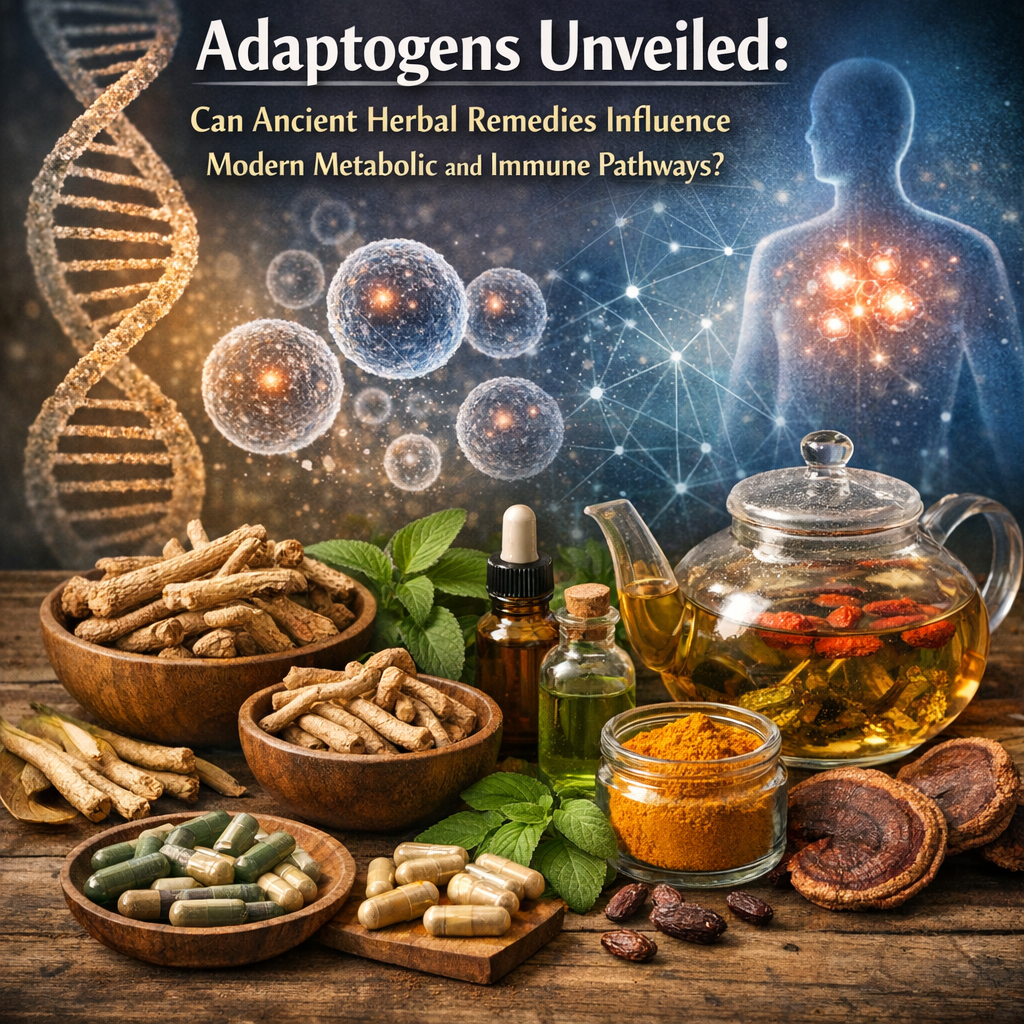
Adaptogens Unveiled: Can Ancient Herbal Remedies Influence Modern Metabolic and Immune Pathways?
Introduction
In an era where rapid technological advancement often overshadows the subtle artistry of nature, the resurgence of adaptogens brings an intriguing interplay between ancient wisdom and modern science. Adaptogens, a class of non-toxic plants, have been utilized for centuries, revered in traditional Ayurvedic and Chinese medicine for their ability to enhance the body’s resilience to stress. Yet, as holistic approaches gain traction in the contemporary wellness sphere, the question arises: Can adaptogens truly influence modern metabolic and immune pathways?
At their core, adaptogens are believed to stabilize physiological processes and promote homeostasis, making them appealing allies in combating the stresses of modern life. As we grapple with heightened stress from digital overload, poor diet, and sedentary lifestyles, the potential role of adaptogens in optimizing health has become a focal point. Certain plants, such as ashwagandha, Rhodiola rosea, and holy basil, have gained prominence for their purported abilities to enhance physical and mental performance, increase energy levels, and bolster the immune system.
In recent years, researchers have embarked on unraveling the mysteries behind these botanicals. Unlike conventional pharmaceuticals that target specific symptoms or disease pathways, adaptogens offer a broad-spectrum approach, purportedly enhancing the body’s intrinsic adaptive mechanisms. By modulating the hypothalamic-pituitary-adrenal (HPA) axis and the sympathoadrenal system, adaptogens may help regulate the body’s response to stress, thereby aiding in the maintenance of balance amidst the chaos of life.
This exploration into the relevance of adaptogens is not solely for those seeking alternative remedies but also captures the curiosity of health professionals eager to integrate holistic therapies into evidence-based practice. As we journey through this fascinating realm, we must ask: Are these botanical wonders capable of supporting our metabolic and immune systems in measurable ways? Or are they simply remnants of ancient folklore, lacking empirical substantiation in our medically modern world?
Features
The scientific investigation of adaptogens has advanced significantly over the past few decades, providing promising insights into their effects on metabolic and immune pathways. One notable study conducted by the Swedish Herbal Institute explored the impact of Rhodiola rosea on fatigue reduction and stress resistance. The randomized, double-blind, placebo-controlled trial demonstrated that Rhodiola significantly decreased symptoms of fatigue and improved mental performance in individuals experiencing stress-related burnout ([NCBI](https://www.ncbi.nlm.nih.gov/pmc/articles/PMC3155223/)). These findings suggest that Rhodiola could play a vital role in enhancing both mental and physical stamina.
Another pivotal research focus is on ashwagandha, a herb renowned in Ayurvedic medicine. In a study published in the ‘[Journal of Dietary Supplements](https://www.tandfonline.com/doi/full/10.1080/19390211.2012.641941)’, ashwagandha was shown to significantly reduce cortisol levels and reduce stress and anxiety in patients. The reduction in cortisol, a key stress hormone, indicates that ashwagandha may bolster the body’s stress response, preserving metabolic balance and supporting immune efficiency.
Further supporting adaptogens’ potential as immune modulators, a study featured in the ‘[Journal of Traditional and Complementary Medicine](https://www.sciencedirect.com/science/article/pii/S2225411011000063)’ investigated the effects of Panax ginseng on immune function. The research revealed that ginseng supplementation improved immune cell activity, including an increase in natural killer cell activity and T-cell proliferation, suggesting an enhancement in the body’s defense mechanisms.
While promising, it’s imperative to consider that the efficacy of adaptogens can vary greatly depending on individual biochemistry, the quality of herbal supplements, and lifestyle factors. Modern researchers advocate for expanded studies and clinical trials to further elucidate the specific pathways through which adaptogens act, aiming to bridge the gap between ancient medicinal wisdom and contemporary scientific validation.
Conclusion
As modern science continues to explore the depths of these ancient remedies, it becomes increasingly clear that adaptogens hold potential as multifaceted tools in the quest for health and well-being. While historical usage and emerging studies support their role in enhancing stress resilience and immune function, embracing adaptogens necessitates a nuanced approach, combining traditional knowledge with rigorous scientific endeavor. As our understanding evolves, the potential integration of adaptogens into mainstream medical practice may offer a complementary pathway in managing the complexities of modern life. Whether as preventative measures or therapeutic aids, adaptogens invite us to explore the intersection of nature and science, ultimately fostering balance in a world that craves equilibrium.
Concise Summary
Adaptogens, heralded in traditional Ayurvedic and Chinese medicine, are gaining attention for their potential to enhance resilience to stress and bolster immune function. Modern research highlights their ability to modulate the hypothalamic-pituitary-adrenal axis, potentially leading to reduced fatigue and improved mental performance. Notably, studies show promising results for Rhodiola rosea in reducing fatigue, ashwagandha in lowering cortisol levels, and Panax ginseng in enhancing immune cell activity. Despite promising findings, the efficacy of adaptogens varies, necessitating further research to integrate ancient wisdom with modern scientific validation.

Dominic E. is a passionate filmmaker navigating the exciting intersection of art and science. By day, he delves into the complexities of the human body as a full-time medical writer, meticulously translating intricate medical concepts into accessible and engaging narratives. By night, he explores the boundless realm of cinematic storytelling, crafting narratives that evoke emotion and challenge perspectives.
Film Student and Full-time Medical Writer for ContentVendor.com