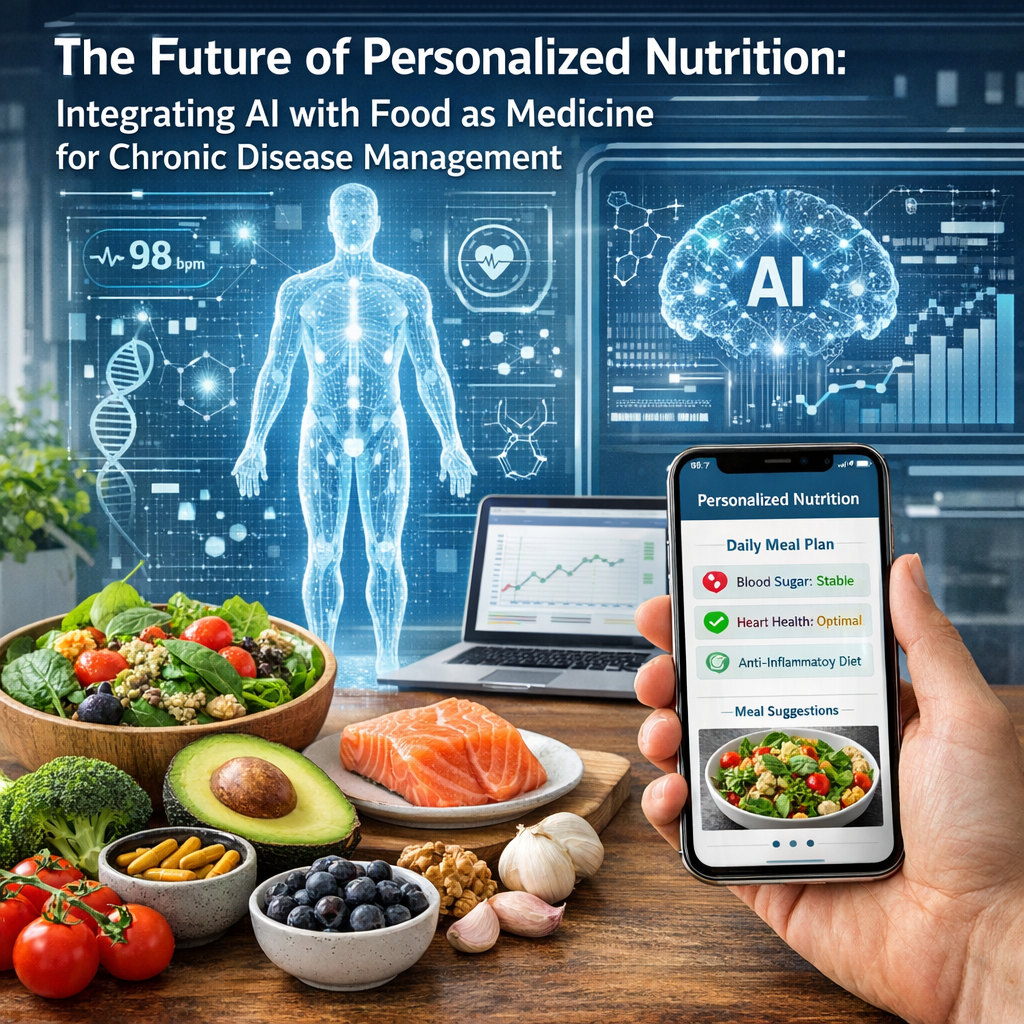
The Future of Personalized Nutrition: Integrating AI with Food as Medicine for Chronic Disease Management
Introduction
In recent years, the integration of technology with traditional health strategies has paved the way for innovative solutions in managing chronic diseases. Among the most promising advancements is the concept of personalized nutrition, which utilizes artificial intelligence (AI) to tailor dietary plans specifically designed for individual needs. This approach is grounded in the belief that food can act as medicine, a notion that is gaining traction in both holistic and scientific communities.
Chronic diseases such as diabetes, cardiovascular disorders, and autoimmune conditions are on the rise worldwide, often due to lifestyle factors including poor diet and lack of exercise. Conventional treatments typically involve medication and generalized dietary advice, which may not adequately address the unique nutritional requirements of each patient. This is where AI-driven personalized nutrition steps in, offering a revolutionized method of dietary intervention. By analyzing a person’s genetic makeup, microbiome, lifestyle, and even preferences, AI can help craft precise dietary guidelines that align with an individual’s specific health needs, thus optimizing the potential for managing or even reversing chronic conditions.
The foundation of personalized nutrition lies in the vast amounts of data that technological advances have made available. AI systems can now leverage this data to identify patterns and predict outcomes with remarkable accuracy. For example, machine learning algorithms can analyze data from genetic tests to predict how an individual may respond to specific nutrients, thus providing insights on which foods can significantly impact health. Moreover, AI can continuously learn from ongoing dietary behaviors, improving its recommendations as more data becomes available.
As our understanding of how food interacts with our biology deepens, the potential for food as medicine grows. AI plays a crucial role in this shift by providing a level of personalization that was previously unattainable through traditional healthcare methodologies. By optimizing dietary choices for long-term health benefits, AI-driven personalized nutrition not only promises improvements in individual health outcomes but also contributes to a broader understanding of how diet impacts disease management on a population level.
Features
The integration of AI into personalized nutrition is backed by several compelling studies and professional insights. For instance, [research published in the journal *Nature*](https://www.nature.com/articles/s41591-018-0173-5) highlights how AI can predict an individual’s glycemic response to food, paving the way for personalized dietary interventions that could significantly benefit those with or at risk of type 2 diabetes. This study, conducted by researchers from the Weizmann Institute of Science, demonstrates the potential of machine learning algorithms in understanding the complex interactions between dietary intake and metabolic responses.
Further strengthening the case for AI in nutrition, a comprehensive review published in the [*Journal of Personalized Medicine*](https://www.mdpi.com/2075-4426/10/4/152) discusses various AI applications in the field, including dietary recommendations, gut microbiome analysis, and predictive models for nutrient deficiencies. These developments highlight how AI can facilitate the identification of nutritional imbalances and the creation of dietary plans that align with an individual’s health goals.
Moreover, the field of nutrigenomics, which explores the relationship between an individual’s genetic makeup and their response to diet, benefits greatly from AI integration. A study in the [*American Journal of Clinical Nutrition*](https://academic.oup.com/ajcn/article/109/1/1/5239675) explores AI-driven nutrigenomics as a tool for not just understanding diet-gene interactions but also for developing actionable dietary guidelines that promote health and disease prevention.
AI-driven personalized nutrition also has the potential to enhance the effectiveness of food-as-medicine approaches for managing chronic conditions. As detailed in a study found in [*BMJ Nutrition, Prevention & Health*](https://nutrition.bmj.com/content/early/2019/07/08/bmjnph-2019-000001), personalized dietary interventions can support better management of disorders like irritable bowel syndrome by recommending foods that mitigate inflammation and other symptoms.
Conclusion
The future of personalized nutrition, particularly in the context of managing chronic diseases, is incredibly promising. By marrying AI with the ancient concept of food as medicine, we can create a holistic approach that not only improves individual health outcomes but may also shift how we understand and treat chronic illnesses at large. This innovative pathway offers hope for a future where chronic disease management is not solely reliant on pharmaceuticals but is profoundly intertwined with optimizing dietary intake to meet specific health needs.
As AI technology continues to advance, its applications in personalized nutrition will likely expand, offering more robust, data-driven solutions to manage health conditions. This synergistic relationship between technology and nutrition heralds a new dawn for personalized healthcare, where the precision of tech-driven insights guides each individual’s journey to better health. By embracing this personalized approach, we can aim for a more targeted, effective, and sustainable strategy for chronic disease management, ultimately transforming how we perceive and use food in our daily lives.
Concise Summary
The integration of artificial intelligence (AI) with personalized nutrition is revolutionizing chronic disease management by tailoring dietary plans to individual needs. By analyzing vast data such as genetic makeup and microbiome, AI provides precise dietary guidelines that optimize health outcomes. Notable studies highlight AI’s role in predicting glycemic responses, identifying nutritional imbalances, and enhancing nutrigenomics. This personalized approach reduces reliance on pharmaceuticals and emphasizes food as medicine, promising a future of tailored, effective chronic disease management that transforms our understanding and use of food.

Dominic E. is a passionate filmmaker navigating the exciting intersection of art and science. By day, he delves into the complexities of the human body as a full-time medical writer, meticulously translating intricate medical concepts into accessible and engaging narratives. By night, he explores the boundless realm of cinematic storytelling, crafting narratives that evoke emotion and challenge perspectives.
Film Student and Full-time Medical Writer for ContentVendor.com