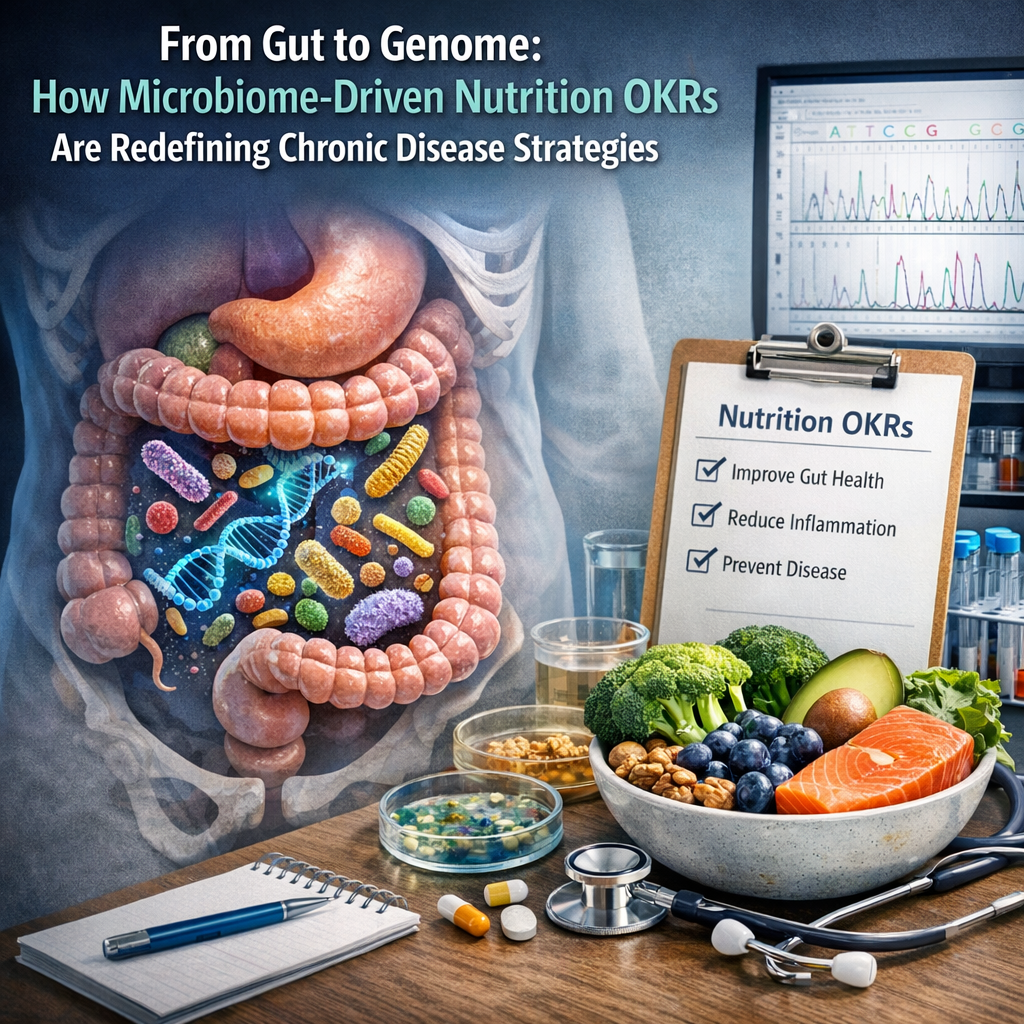
From Gut to Genome: How Microbiome-Driven Nutrition OKRs Are Redefining Chronic Disease Strategies
Introduction
The field of chronic disease management is witnessing a transformation as microbiome research reveals the crucial role of the gut microbiome in health. Recent advancements illustrate the interactions between gut bacteria and body functions in chronic diseases like diabetes, obesity, and inflammatory bowel disease (IBD). Microbiome-driven nutrition and Objectives and Key Results (OKRs) are emerging as groundbreaking strategies to combat chronic conditions and enable personalized healthcare. This approach involves using scientific insights to tailor dietary patterns, optimize microbiome diversity, and boost beneficial microbial activity.
Disruptions in the microbiome can lead to conditions like inflammation and metabolic issues. This has prompted a focus on microbiome-driven nutrition, which helps manage chronic diseases by setting clear objectives and measurable outcomes via OKRs. This personalized approach not only improves health outcomes but also mitigates the healthcare burden globally.
Features
Numerous studies underscore the potential of microbiome-driven nutrition in managing chronic diseases. A pivotal study in *Nature Medicine* highlighted the link between microbiome diversity and type 2 diabetes, finding that individuals with diverse gut microbiomes had reduced risk of insulin resistance. [Read the study](https://www.nature.com/articles/s41591-019-0461-2).
Another study in *Cell Host & Microbe* demonstrated how dietary components like dietary fibers and polyphenols influence the gut microbiome, reducing inflammation. [Explore more](https://www.cell.com/cell-host-microbe/fulltext/S1931-3128(19)30077-X).
Additionally, research from the *American Journal of Clinical Nutrition* linked the Mediterranean diet to enhanced gut microbiome diversity, highlighting its role in managing diseases like cardiovascular disease and obesity. [Discover the findings](https://academic.oup.com/ajcn/article/110/6/1389/5551408).
These studies bolster the case for microbiome-driven nutrition strategies, advocating for personalized interventions to manage and prevent chronic diseases effectively.
Conclusion
The shift towards microbiome-driven nutrition OKRs marks a pivotal point in chronic disease management, offering a path to personalized and preventive care. By understanding the microbiome’s role, healthcare professionals can tailor nutritional strategies to improve patient outcomes. Embracing this proactive approach and leveraging scientific insights can redefine chronic disease management, transforming healthcare systems and optimizing patient health.
References
1. [Nature Medicine Study on Microbiome Diversity and Type 2 Diabetes](https://www.nature.com/articles/s41591-019-0461-2)
2. [Cell Host & Microbe Study on Dietary Components and Gut Microbiome](https://www.cell.com/cell-host-microbe/fulltext/S1931-3128(19)30077-X)
3. [American Journal of Clinical Nutrition on Mediterranean Diet and Gut Microbial Diversity](https://academic.oup.com/ajcn/article/110/6/1389/5551408)
Concise Summary:
The article discusses the transformative role of microbiome-driven nutrition in chronic disease management through personalized healthcare solutions. Utilizing Objectives and Key Results (OKRs), healthcare providers can personalize dietary interventions, promoting beneficial microbiome diversity and activity. Key studies highlight the link between microbiome diversity and reduced risk of chronic conditions like type 2 diabetes, with dietary components positively influencing inflammation and gut diversity. This approach signifies a shift from reactive to proactive care, emphasizing preventative strategies for better health outcomes and elevating the standards of chronic disease management.

Dominic E. is a passionate filmmaker navigating the exciting intersection of art and science. By day, he delves into the complexities of the human body as a full-time medical writer, meticulously translating intricate medical concepts into accessible and engaging narratives. By night, he explores the boundless realm of cinematic storytelling, crafting narratives that evoke emotion and challenge perspectives.
Film Student and Full-time Medical Writer for ContentVendor.com