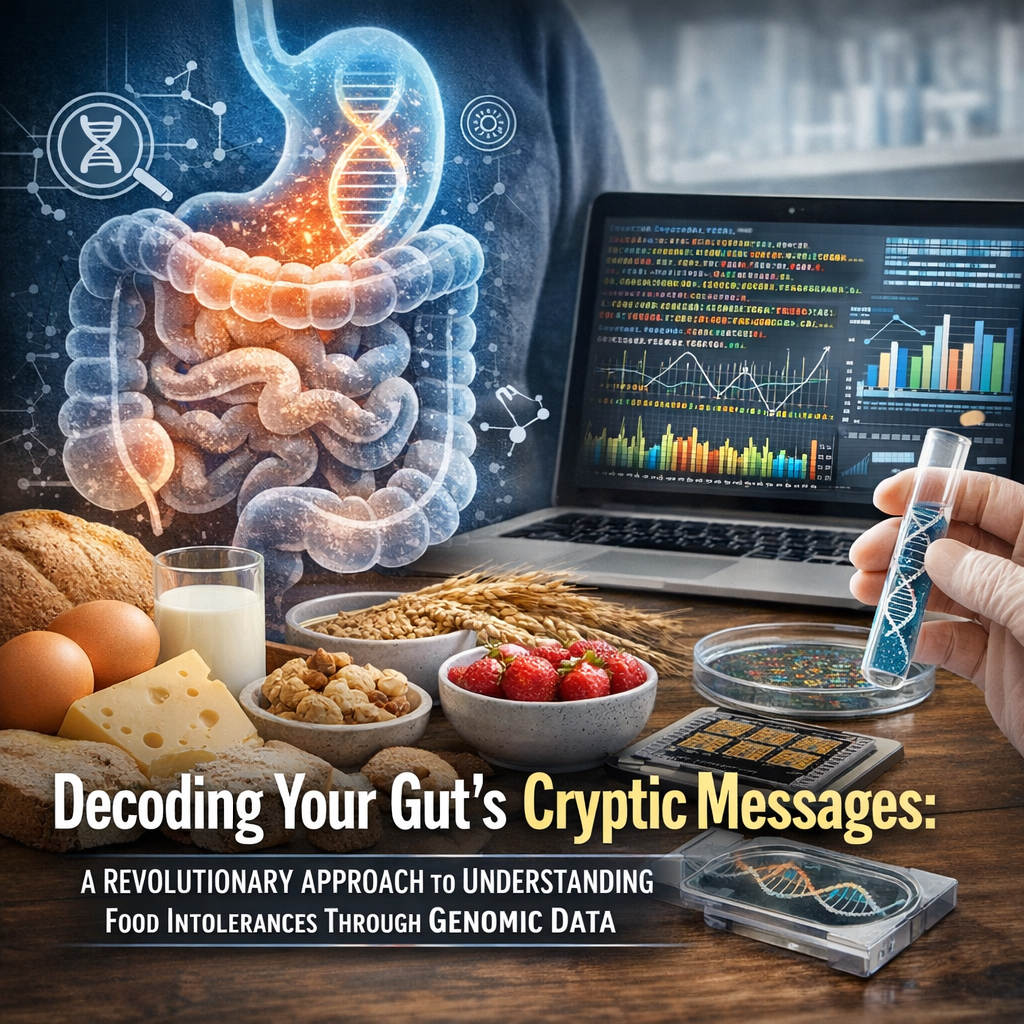
Decoding Your Gut’s Cryptic Messages: A Revolutionary Approach to Understanding Food Intolerances Through Genomic Data
Introduction
In recent years, the world has witnessed a surge in the number of individuals reporting symptoms of food intolerances and sensitivities. Unlike allergies, which trigger an immediate immune response, food intolerances present a more cryptic and delayed set of symptoms, causing digestive distress, fatigue, headaches, and more. For many, identifying the root cause of these symptoms becomes a painstaking process of food eliminations and trials. But what if the answers to these enigmatic digestive issues lie within our very own DNA? Recent advancements in genomic research are paving the way for a new understanding of food intolerances, offering hope for precise, personalized dietary recommendations and an improved quality of life.
The gut, often referred to as the “second brain,” plays a critical role in not just digestion but also in our overall health and well-being. Its microbiome—a complex community of bacteria, fungi, and other microorganisms—requires a delicate balance to function optimally. Disruptions in this microbiome can lead to food intolerances and other digestive issues. However, deciphering these secretive signals from our gut has historically been challenging due to the myriad of factors involved.
Enter the realm of genomics—a field that examines the entirety of an organism’s genes. Advances in genomic data have revolutionized how we understand the intricate relationship between our genes and the foods we consume. Genetic testing can now reveal specific predispositions to food intolerances, offering an unprecedented glimpse into how our bodies interact with various nutrients.
The prospect of using genomic data to decode food intolerances is not just theoretical; it’s becoming a practical reality for many. With this personalized approach, individuals can bypass the one-size-fits-all dietary advice often seen in today’s nutrition landscape. Instead, they can make informed, data-driven dietary choices tailored to their unique genetic makeup. This revolutionary approach not only promises relief from the distressing symptoms of food intolerances but also heralds a new era of personalized healthcare that honors both our genetic individuality and collective need for optimal gut health.
Features
Numerous professional and medical studies have explored the intersection of genetics, gut health, and food intolerances, providing a scientific foundation for this emerging paradigm. A key study published in the journal *Nature Microbiology* emphasizes the role of the gut microbiome in mediating the body’s response to different foods. By analyzing the genomic data of gut microbiota, researchers discovered significant variations in how individuals metabolize and tolerate common dietary components like gluten and lactose. This study underscores the potential of using genomic insights to tailor dietary recommendations to individual microbiome compositions.
Another pivotal study appearing in the *American Journal of Clinical Nutrition* highlighted the association between genetic markers and lactose intolerance. By examining DNA samples from diverse populations, researchers pinpointed specific genetic variants linked to the body’s ability to digest lactose effectively. These findings confirm that genetic predispositions play a crucial role in food intolerances, reinforcing the value of genomic data in crafting personalized nutrition strategies.
Additionally, an intriguing study conducted by scientists at Stanford University used genomic sequencing to predict susceptibility to gluten intolerance. By correlating specific gene expressions with gluten sensitivity, the research team successfully identified at-risk individuals, providing a non-invasive alternative to conventional diagnostic methods such as biopsies or elimination diets.
These studies collectively highlight the transformative potential of genomic data in understanding food intolerances. They lay the groundwork for practical applications, where genomic insights can guide personalized nutrition interventions, leading to improved digestive health and symptom management. Further research and clinical trials are exploring the potential to decode additional intolerances, such as those related to the FODMAP group of carbohydrates.
Conclusion
The journey to understanding food intolerances is complex and deeply personal, but genomics offers a revolutionary roadmap. By delving into the cryptic messages of our gut and leveraging the power of genomic data, individuals can uncover precise, actionable insights that transcend traditional dietary advice. This cutting-edge approach promises not only tailored dietary interventions but also an enhanced quality of life for those grappling with food intolerances.
As our understanding of the body’s genetic makeup continues to evolve, so too will our capacity to address fundamental issues of gut health and food intolerances with unprecedented precision. The future of personalized nutrition is bright, offering hope and healing to millions who have long searched for answers within the confines of their digestive tracts.
References
1. [Nature Microbiology: Gut microbiome interactions with diet](https://www.nature.com/articles/s41564-019-0569-x)
2. [American Journal of Clinical Nutrition: Genetic variants and lactose intolerance](https://academic.oup.com/ajcn/article/108/3/423/5048662)
3. [Stanford University Study on Gluten Intolerance: Genomics and gluten sensitivity](https://med.stanford.edu/news/all-news/2019/05/genetic-study-reveals-new-insights-into-gluten-sensitivity.html)
### Concise Summary
Recent advancements in genomic research offer a revolutionary approach to understanding food intolerances. By analyzing individuals’ genetic makeup and their gut microbiome, researchers can now identify specific predispositions to intolerances, such as those related to gluten and lactose. This personalized, data-driven method paves the way for tailored dietary recommendations, transcending generic nutritional advice. Genomic insights hold the promise of improved digestive health and enhanced quality of life for those experiencing food intolerances, signaling a new era in personalized nutrition and healthcare.

Dominic E. is a passionate filmmaker navigating the exciting intersection of art and science. By day, he delves into the complexities of the human body as a full-time medical writer, meticulously translating intricate medical concepts into accessible and engaging narratives. By night, he explores the boundless realm of cinematic storytelling, crafting narratives that evoke emotion and challenge perspectives.
Film Student and Full-time Medical Writer for ContentVendor.com