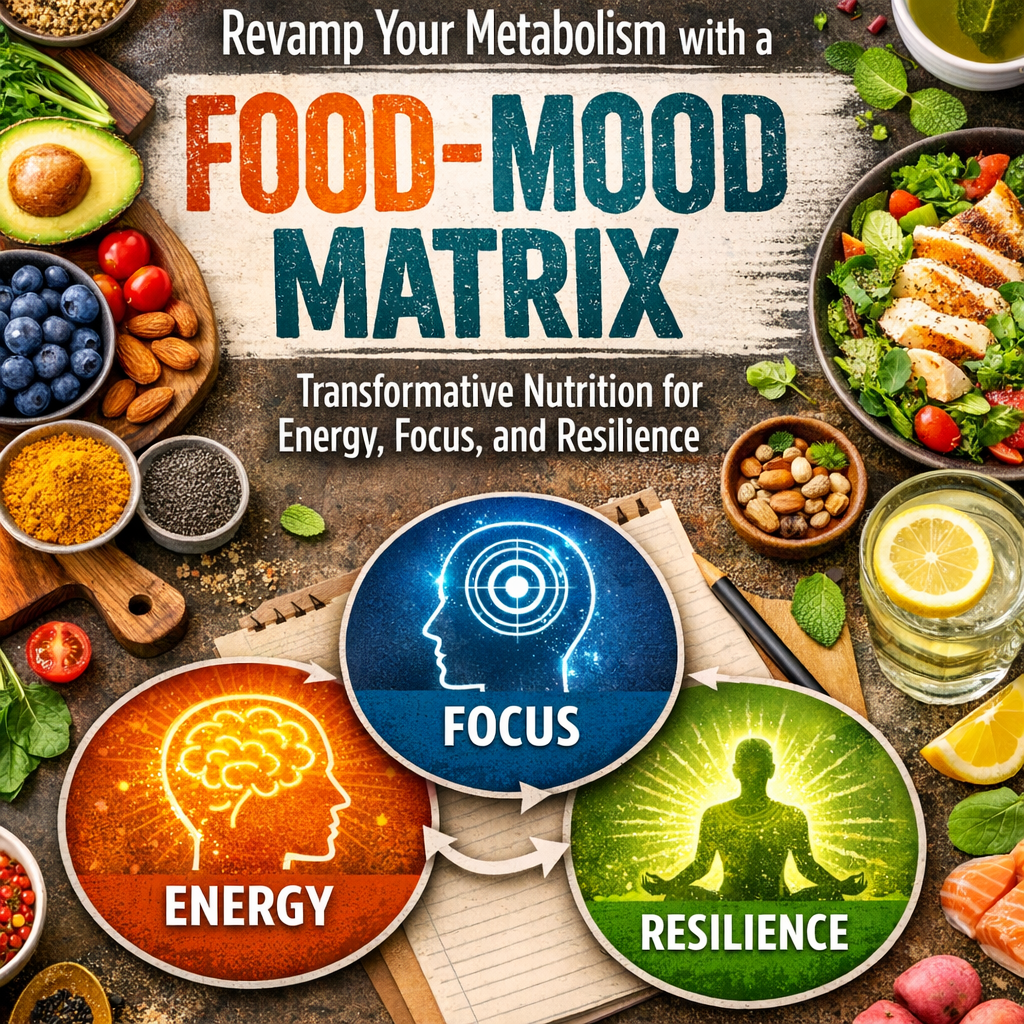
Revamp Your Metabolism with a Food-Mood Matrix: Transformative Nutrition for Energy, Focus, and Resilience
In today’s fast-paced world, many of us have encountered days when we feel mentally drained, lack focus, or simply don’t have the energy to push through. While several factors contribute to these states, including stress and sleep patterns, nutrition plays a pivotal role in our overall well-being. Enter the concept of the ”Food-Mood Matrix,” a framework designed to help individuals harness the power of nutrition to revamp their metabolism, boost energy levels, enhance focus, and build resilience against everyday stresses.
The idea behind the Food-Mood Matrix is rooted in the connection between what we eat and how we feel, both physically and mentally. Just as certain foods can make our bodies sluggish, others can invigorate and sustain us. For instance, the antioxidants in berries have been shown to improve cognitive function, while omega-3 fatty acids in fish can reduce symptoms of depression. Understanding how specific nutrients affect our mind and body can empower us to make informed decisions, transforming our diet into a tool for improved mental and physical health.
In recent years, scientific communities have increasingly acknowledged the significant impact of diet on mental health. A 2017 study published in *BMC Medicine* highlighted the benefits of a Mediterranean diet supplemented with fish oil in improving symptoms of depression. Furthermore, the gut-brain axis—the communication pathway between the gut microbiota and the brain—illustrates how gut health profoundly influences our mood and energy levels. Probiotics, prebiotics, and a general balance of good bacteria play critical roles in this matrix, with a healthy gut contributing to a healthier mind.
Adopting a food-mood strategy might sound overwhelming, but it can start with simple adjustments, such as incrementally incorporating nutrient-dense foods and staying hydrated. Balance is key: complex carbohydrates provide a steady release of energy, lean proteins maintain stamina, while healthy fats aid brain function. Herbal treatments like ginseng, known for its energy-enhancing properties, and ashwagandha, renowned for its stress-reducing effects, can also complement dietary changes, offering natural and therapeutic benefits.
Features
Delving into the scientific research behind the Food-Mood Matrix reveals intriguing findings. For instance, a study conducted by *The American Journal of Clinical Nutrition* found that low-GI diets composed of whole grains, nuts, and green leafy vegetables were directly associated with improved mood states and reduced levels of fatigue. Furthermore, individuals following a nutrient-rich diet exhibited heightened resilience to stress compared to those with nutrient-poor diets. This indicates that a well-balanced diet not only affects our energy but also our capacity to cope with life’s challenges.
Medical and health professionals are increasingly recommending omega-3 fatty acids, found abundantly in fatty fish like salmon, as vital for brain health. A clinical trial published in *Neuropsychobiology* corroborated these findings, indicating that participants who supplemented with omega-3s experienced improved cognitive function and emotional stability. Similarly, folate, which is present in abundance in leafy greens, legumes, and fortified grains, has been linked with reduced symptoms of depression. A systematic review published in *The Journal of Nutrition* found a consistent association between low folate levels and an increased risk of depression.
On the herbal front, adaptogens have shown promise in supporting mental and physical resilience. Rhodiola rosea, a plant known for its adaptogenic properties, has been the focus of various studies due to its ability to reduce fatigue under stress. Similarly, a *Phytomedicine* study revealed that participants taking rhodiola supplements reported significant improvements in energy and mood compared to the placebo group.
Moreover, incorporating probiotics and prebiotics into your diet can sustainably improve gut health. A *Frontiers in Neuroscience* article discussed how certain strains of probiotics like Lactobacillus rhamnosus could influence central nervous system functions and lower anxiety levels. Integrating these nutritional and herbal strategies into a holistic Food-Mood Matrix offers a multitude of benefits, enhancing not only metabolic function but also overall mental health and wellness.
Conclusion
In conclusion, revitalizing your metabolism through the Food-Mood Matrix isn’t just about dieting; it’s about adopting a lifestyle that nurtures both mind and body. By consciously choosing foods rich in essential nutrients and incorporating beneficial herbs and adaptogens, we can foster an environment that promotes better mental health and higher energy levels. This holistic approach emphasizes sustainability and balance, allowing for enhanced focus and resilience in the face of life’s ups and downs. Whether it’s through the inclusion of omega-3 fatty acids, the consumption of low-GI diets, or the introduction of adaptogenic herbs, the journey to a revitalized metabolism begins with mindful, purposeful eating. Let the Food-Mood Matrix guide you towards a more vibrant, energetic, and focused life.
Concise Summary
The Food-Mood Matrix is a framework that emphasizes the connection between diet and mental well-being. It suggests that nutrition plays a crucial role in our metabolism, energy levels, focus, and resilience against stress. Foods rich in antioxidants, omega-3 fatty acids, and adaptogenic herbs like ginseng and ashwagandha can enhance cognitive function and reduce symptoms of depression and stress. This approach encourages a balanced diet, including probiotics and prebiotics for gut health, to foster a sound mind and body, ultimately leading to a more vibrant and energized life.

Dominic E. is a passionate filmmaker navigating the exciting intersection of art and science. By day, he delves into the complexities of the human body as a full-time medical writer, meticulously translating intricate medical concepts into accessible and engaging narratives. By night, he explores the boundless realm of cinematic storytelling, crafting narratives that evoke emotion and challenge perspectives.
Film Student and Full-time Medical Writer for ContentVendor.com