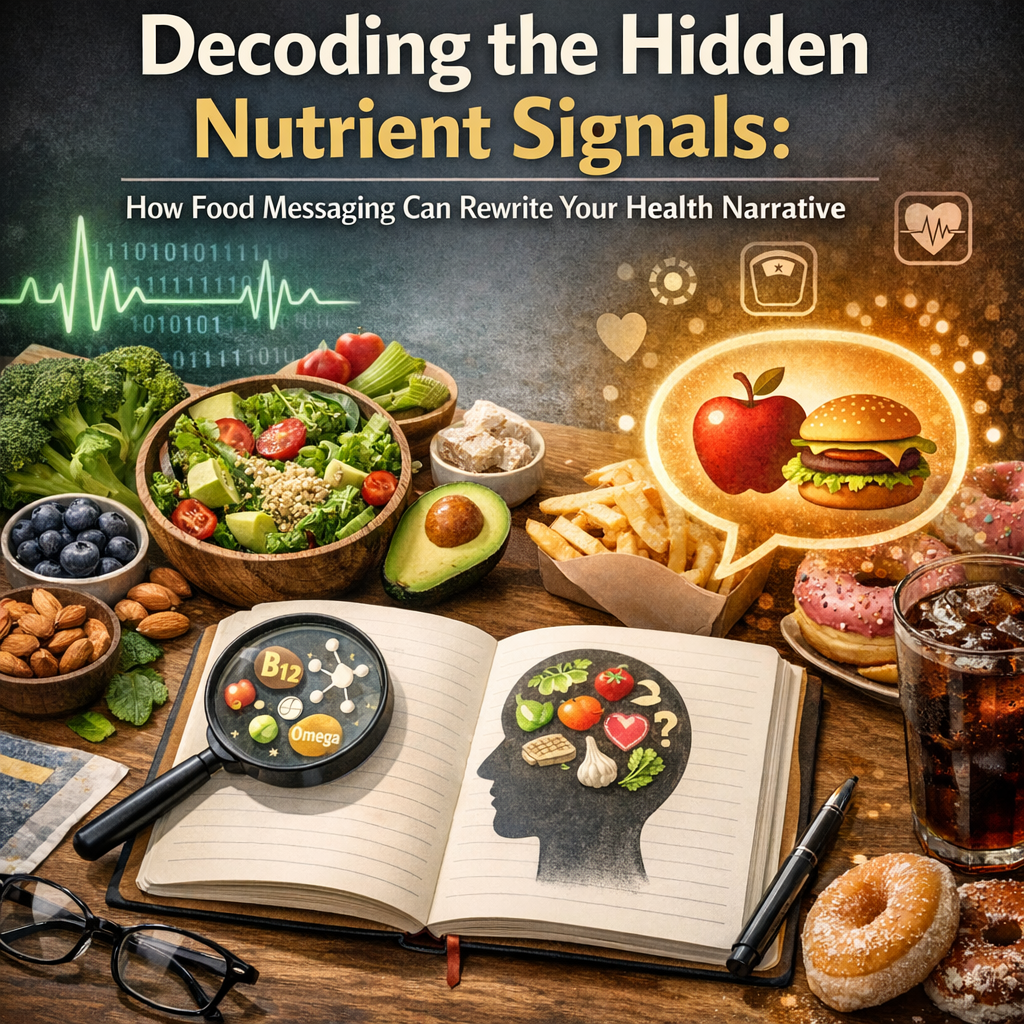
Decoding the Hidden Nutrient Signals: How Food Messaging Can Rewrite Your Health Narrative
In the ever-evolving landscape of nutrition and wellness, the idea that food communicates with our bodies on a molecular level is gaining traction. This is not merely about understanding what we consume but deciphering the messages that natural foods convey to our cells. The realignment of our health trajectory through diet is indeed possible when we start recognizing food not just as a source of calories but as a composer of biochemical symphonies that influence our bodily functions.
Many of us are aware of the basic nutritional advice: consume more vegetables, avoid trans fats, and moderate sugar intake. But the underlying conversation is richer and more complex. Each food item carries its own bioactive compounds, or ”nutrient signals,” that interact intricately within our biological systems. This interaction can influence gene expression, metabolism, and even the rate of cellular aging. Natural remedies, homeopathic solutions, and herbal treatments stem from millennia-old traditions that appreciate the innate complexities of these nutrient dialogues.
Enter the world of superfoods like turmeric, ginger, and kale, along with ancient practices such as Ayurveda and Traditional Chinese Medicine. These aren’t just trends; they’re testaments to how food messaging has been used to manage chronic conditions and enhance well-being. For instance, turmeric’s active compound curcumin is not only a potent antioxidant but also has anti-inflammatory properties that can influence health at the cellular level by modulating pathways and signaling molecules.
Scientific understanding is also beginning to unravel how prebiotics and probiotics found in fermented foods communicate with our gut microbiome, playing a pivotal role in maintaining immunity and mental health. Personalized nutrition now recognizes these biochemical conversations, aiming to tailor diets to individual genetic make-up and microbiomes. The burgeoning field of nutrigenomics is dedicated to understanding how specific nutrients can optimize gene function, shifting the paradigm from a one-size-fits-all approach to a personalized one.
The ongoing exploration into food’s molecular messaging suggests promising potential in addressing modern health epidemics like obesity, diabetes, and heart disease. Thus, reimagining our health narrative through the intelligent selection of foods that support our individual biological processes could lead the future of well-being.
Features: Professional and Medical Studies
The relationship between diet and gene expression is being rigorously studied, with notable research emerging from the field of nutrigenomics. A study published in the journal ”Nutrients” emphasizes that bioactive components in foods can modulate the expression of genes, thus influencing chronic disease markers. These gene-nutrient interactions provide a basis for tailoring nutritional interventions that bridge the gap between molecular research and practical dietary strategies.
Furthermore, a prominent publication in ”The American Journal of Clinical Nutrition” has highlighted the role of polyphenols, found in foods like berries and green tea, in signaling pathways that contribute to heart health and cancer prevention. The research outlines how these compounds aid in cellular communication by interacting with cell receptor sites, thus altering disease progression or metabolic function.
The gut microbiome’s influence on overall health has also been documented extensively. Research from ”Nature Medicine” reveals that fermented foods and fiber can significantly alter the composition and function of gut microbiota, impacting mental health, immunity, and inflammation. This suggests that food messaging isn’t confined to DNA and genes but also includes our extensive bacterial ecosystems.
Finally, a study in the ”Journal of Alternative and Complementary Medicine” underscores the effectiveness of herbal remedies like echinacea and ginseng in enhancing immune response via their phytochemical constituents. These findings advocate for a nuanced comprehension of how herbal compounds can serve as facilitators of health through organic nutrient signaling.
Conclusion
Decoding the nutrient signals in our food offers a novel perspective on health. It empowers individuals to redefine their health journey by making informed dietary choices that resonate with their unique biology. The future of health lies in an ambitious understanding and practical integration of these complex nutrient dialogues. As more research unveils the intricate messages encoded in natural foods and herbal remedies, the potential for transformative health narratives becomes increasingly feasible. Understanding and harnessing these nutrient signals can lead the way in reshaping dietary recommendations and personal health strategies, promising a more customized and effective approach to well-being.
Concise Summary:
Exploring food as a communicator within our biological systems aims to redefine health, focusing on nutrient signals influencing gene expression, metabolism, and cellular aging. Integrating modern findings with ancient practices like Ayurveda enhances personalized nutrition approaches. Research in fields like nutrigenomics highlights dietary impact on chronic diseases, gut microbiome functions, and immune responses, representing a shift from general to personalized dietary strategies, enabling informed health narratives through food’s molecular messaging.

Dominic E. is a passionate filmmaker navigating the exciting intersection of art and science. By day, he delves into the complexities of the human body as a full-time medical writer, meticulously translating intricate medical concepts into accessible and engaging narratives. By night, he explores the boundless realm of cinematic storytelling, crafting narratives that evoke emotion and challenge perspectives.
Film Student and Full-time Medical Writer for ContentVendor.com