Unlocking Nutritional Genomics: How Your Genes Influence Your Ideal Diet Plan
Introduction
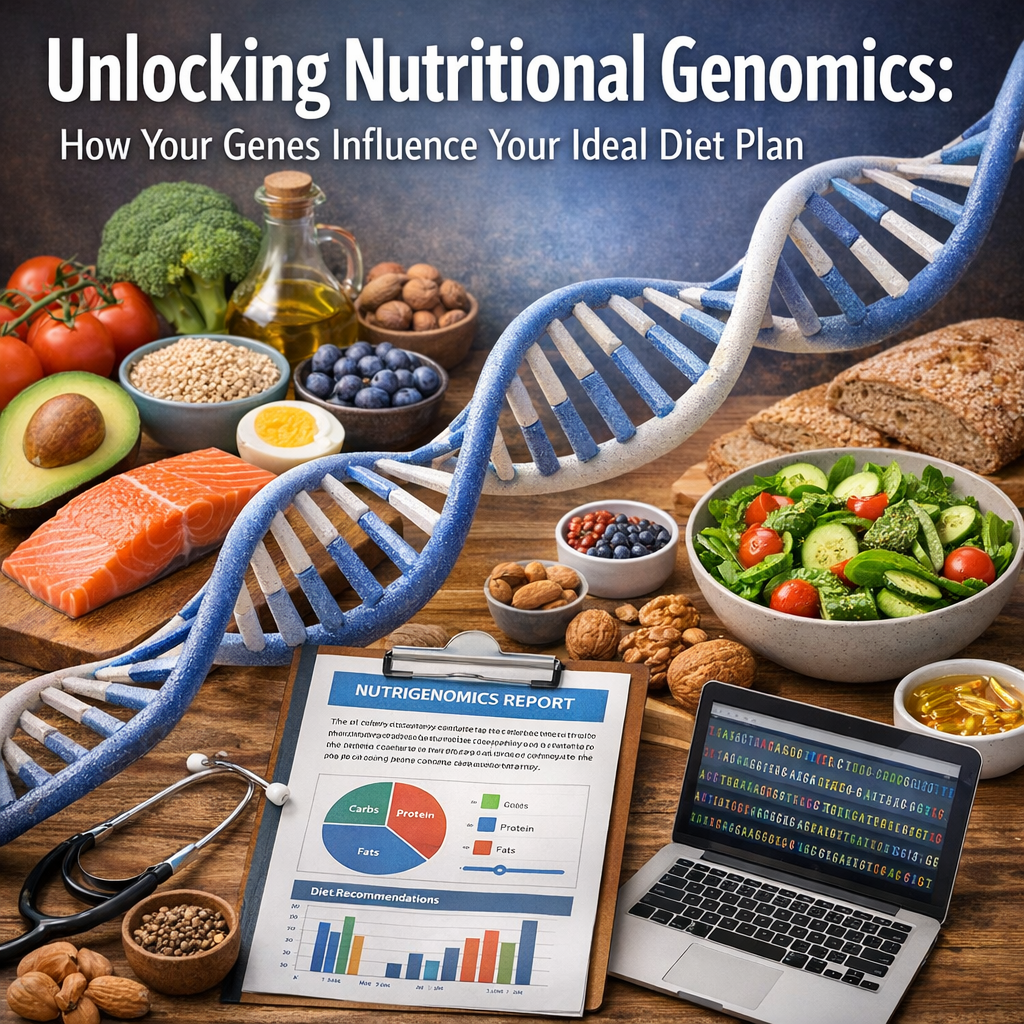
The allure of personalized nutrition is no longer just a dream but a burgeoning reality thanks to advancements in the field of nutritional genomics. Nutritional genomics, also known as nutrigenomics, studies how our genes interact with the foods we consume and how these interactions can influence our health and wellness. This emerging field combines the science of genetics, nutrition, and health to explore how individual genetic differences affect one’s response to nutrients and dietary needs. Imagine crafting a diet plan that doesn’t just aim for weight loss or address an allergy but optimally supports your body’s unique genetic makeup, promoting longevity and vitality.
To understand the implications of nutritional genomics, consider the common observation that different people respond differently to the same diet. This discrepancy might lead some individuals to drop pounds on a low-carb regimen, while others notice no change. The reason for this variance often lies deep within one’s genetic code. Our genes influence metabolic efficiency, nutrient absorption, and even taste preferences, suggesting that a one-size-fits-all approach to nutrition is obsolete.
Underlying this personalized nutrition model is the detailed knowledge of genetic variations, particularly single nucleotide polymorphisms (SNPs), which are small changes in the DNA sequence that can affect how genes function. By analyzing these variations, scientists are beginning to prescribe diets that consider an individual’s unique genetic landscape, resulting in tailored dietary recommendations that aim to optimize health outcomes. Over time, this research pathway may culminate in groundbreaking shifts in how we approach nutrition as part of an integrative health plan.
In an era where we can sequence a person’s genome in a short span, nutritional genomics offers transformative potential. As more people embrace this integrative approach, the possibility grows for significant improvements not only in individual well-being but also in the general public’s health. Unlocking the secrets of nutritional genomics brings us closer to tailoring lifestyle interventions based on our genetic dispositions, ultimately leading to more informed, mindful dietary choices.
Features
Recent scholarly studies have illuminated the profound impact of genes on nutrient interaction and overall dietetics. For example, research conducted by the National Institutes of Health (NIH) has verified that individuals carrying a particular variant of the APOA2 gene may experience more substantial improvements in cholesterol levels when they adopt a lower saturated fat diet compared to those without the variant. This signifies how small genetic differences can alter the way our bodies react to common dietary macronutrients.
Furthermore, The American Journal of Clinical Nutrition published findings demonstrating how variations in the PPARG gene influence lipid metabolism and insulin sensitivity, impacting one’s predisposition to metabolic conditions like type 2 diabetes upon consuming a high-fat diet. Understanding such genetic intricacies enables healthcare professionals and nutritionists to recommend more effective diet plans that mitigate potential health risks for genetically susceptible individuals.
In another critical study, the European Journal of Nutrition highlights how specific gene-nutrient interactions affect antioxidant metabolism. The study identified that the GSTT1 gene deletion could diminish an individual’s ability to detoxify and process certain dietary antioxidants. Consequently, individuals with this genetic deletion might require a diet rich in alternative antioxidant sources to achieve optimal health outcomes.
Studies also underscore the importance of gene-environment interactions; how the interplay of genetic factors and dietary habits can evoke varied health responses. For instance, gene variations in MTHFR can influence homocysteine levels and thus heart health, which may be modulated by tailored vitamin B intake. These unfolding discoveries place nutritional genomics on the cutting edge of preventive medicine, paving the way for data-driven dietary advice designed to holistically improve health outcomes.
Despite promising developments, integrating genetic insights into routine nutritional consultations remains a challenge. Limitations include high upfront costs for genetic testing and the present incompleteness of datasets correlating specific gene variants with dietary practices. Nevertheless, as research advances and access to genetic testing widens, the practical applications of nutritional genomics are likely to expand, offering deeper insights and practical applications for everyday nutrition.
Conclusion
As science deepens its understanding of the human genome, the intersection of nutrition and genetics offers exciting potential to revolutionize dietary recommendations and health outcomes. Nutritional genomics has paved the way for highly personalized dietary interventions that consider an individual’s unique genetic blueprint. While the journey towards entirely customized nutrition remains in its infancy, the potential benefits promise groundbreaking changes in tailoring diet plans for improved well-being and disease prevention.
As studies continue to expand our comprehension of gene-diet interactions, individuals can anticipate more precise recommendations tailored to genetic predispositions, ultimately allowing for individualized dietary strategies that enhance health and quality of life. With these advancements, nutritional genomics stands to shift our approach to dietary wellness, making personalized nutrition not just a far-off possibility but an imminent frontier.
References
– National Institutes of Health. [NIH Website](https://www.nih.gov/)
– The American Journal of Clinical Nutrition. [American Journal of Clinical Nutrition](https://academic.oup.com/ajcn)
– European Journal of Nutrition. [SpringerLink Journal](https://link.springer.com/journal/394)
Concise Summary: Nutritional genomics, also known as nutrigenomics, examines how genes influence dietary responses and needs. By understanding genetic variations such as SNPs, scientists can create personalized diet plans that optimize health. Studies show that genes like APOA2 and PPARG impact cholesterol and lipid metabolism, while MTHFR affects heart health. Despite current challenges, such as the expensive genetic testing, the field promises to revolutionize nutrition by providing data-driven, individualized dietary recommendations enhancing well-being and disease prevention. As genetic testing becomes more accessible, personalized nutrition will progressively improve public health.

Dominic E. is a passionate filmmaker navigating the exciting intersection of art and science. By day, he delves into the complexities of the human body as a full-time medical writer, meticulously translating intricate medical concepts into accessible and engaging narratives. By night, he explores the boundless realm of cinematic storytelling, crafting narratives that evoke emotion and challenge perspectives.
Film Student and Full-time Medical Writer for ContentVendor.com